
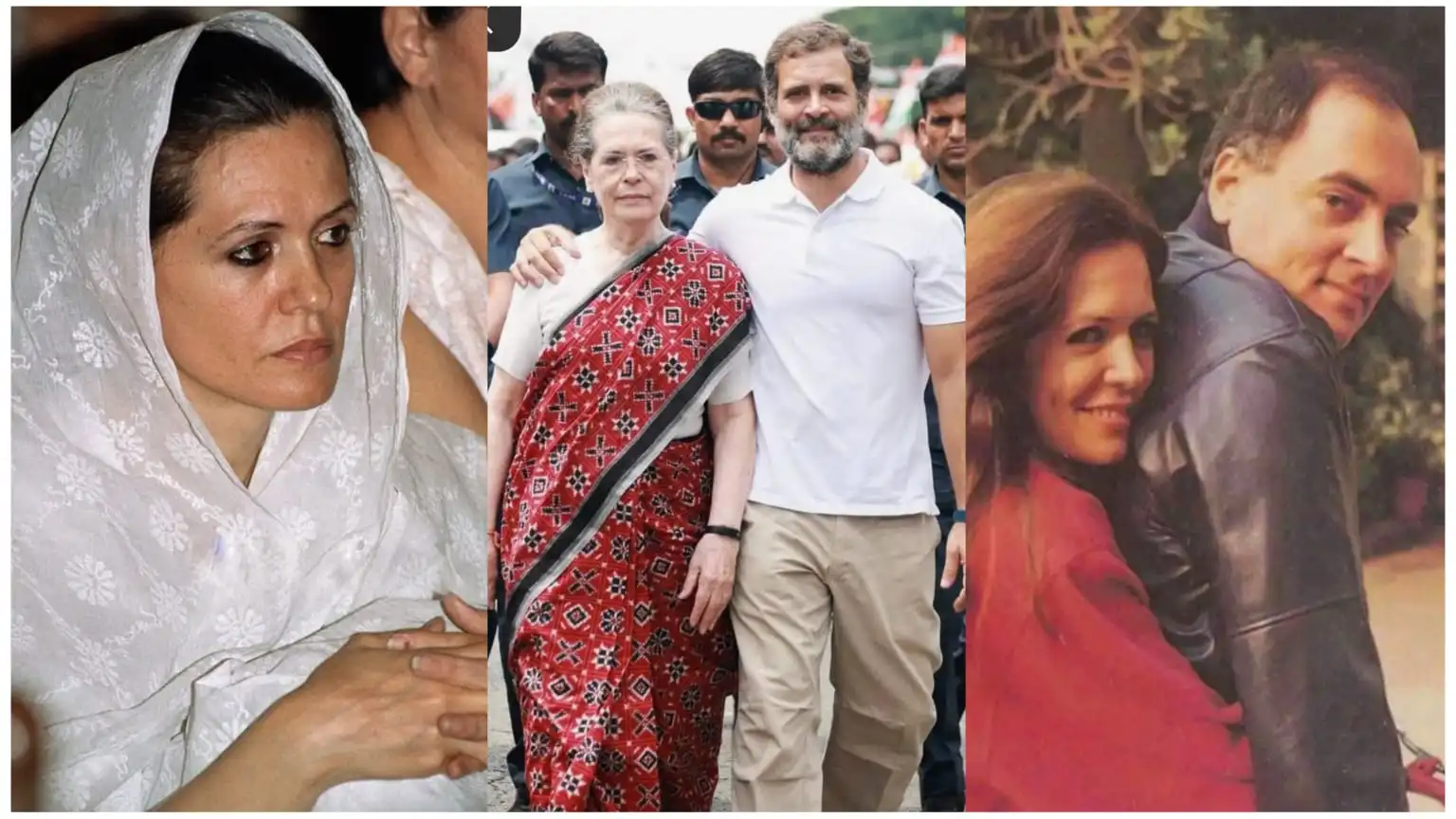
Indira Gandhi was shot by her own bodyguards at her Delhi residence on the morning of 31 October 1984 and was declared dead later that day. Rajiv was at a political rally in West Bengal when the news reached him. He flew back to Delhi, landing at around 3:30 pm, and was taken straight to the hospital, where Sonia Gandhi was waiting.
She writes that she wanted a few quiet moments alone with her husband. Instead, he told her he had been asked to take over as prime minister.
A Plea Born of Fear
According to the extract, the news made her both angry and frightened. After watching her mother-in-law die, she could not bear the thought of losing Rajiv too. She says she cried, urged him to say no, and asked him to think of himself and the children. In the account, she tells him that the people around him would kill him too.
Rajiv’s answer, in her telling, was grim. He said they would kill him anyway. That same day, he was sworn in as prime minister.
A Fear That Followed Sonia Gandhi for Years
This was not a passing worry. Earlier accounts of Sonia Gandhi’s life say she fought hard to keep Rajiv out of politics after his brother Sanjay died in a plane crash in 1980, and that she feared politics could mean a violent death for him. He was assassinated by a suicide bomber while campaigning in Tamil Nadu on 21 May 1991. The memoir’s account of 1984 places that fear at the start of a long, painful chapter.
What Else the Book Covers
The New York Times, whose review has been reprinted in the Indian press, describes the book as sprawling, deeply personal and at times harrowing. It says the memoir presents her years leading the Congress as a politics of martyrdom rather than ambition. The book covers her life with the Nehru-Gandhi family, her entry into politics, and her decision to step aside as prime minister in 2004.
A Book That Has Stirred Politics
As with most things connected to the Nehru-Gandhi family, the book has not stayed out of the political arena. Reports say the BJP has criticised it, while Congress figure Sam Pitroda defended it, saying it is her own story to tell. Booksellers in India have reported strong interest. Readers will likely judge the book according to their own views of the family and the party.
Why the Story Resonates
Whatever one’s politics, the passage describes a human scene: a young wife, a mother of two children, standing in a hospital after one of the most shocking assassinations in modern South Asian history, begging her husband to refuse a job that every instinct told her would cost him his life. The book’s title, Belonging, hints at how an Italian-born woman came to feel part of a family whose history was written in grief.
The Bottom Line
Belonging offers a close look at a family under unimaginable pressure. Whether readers see it as a memoir of love, loss or politics, the account of 31 October 1984 is already one of its most talked-about scenes.