
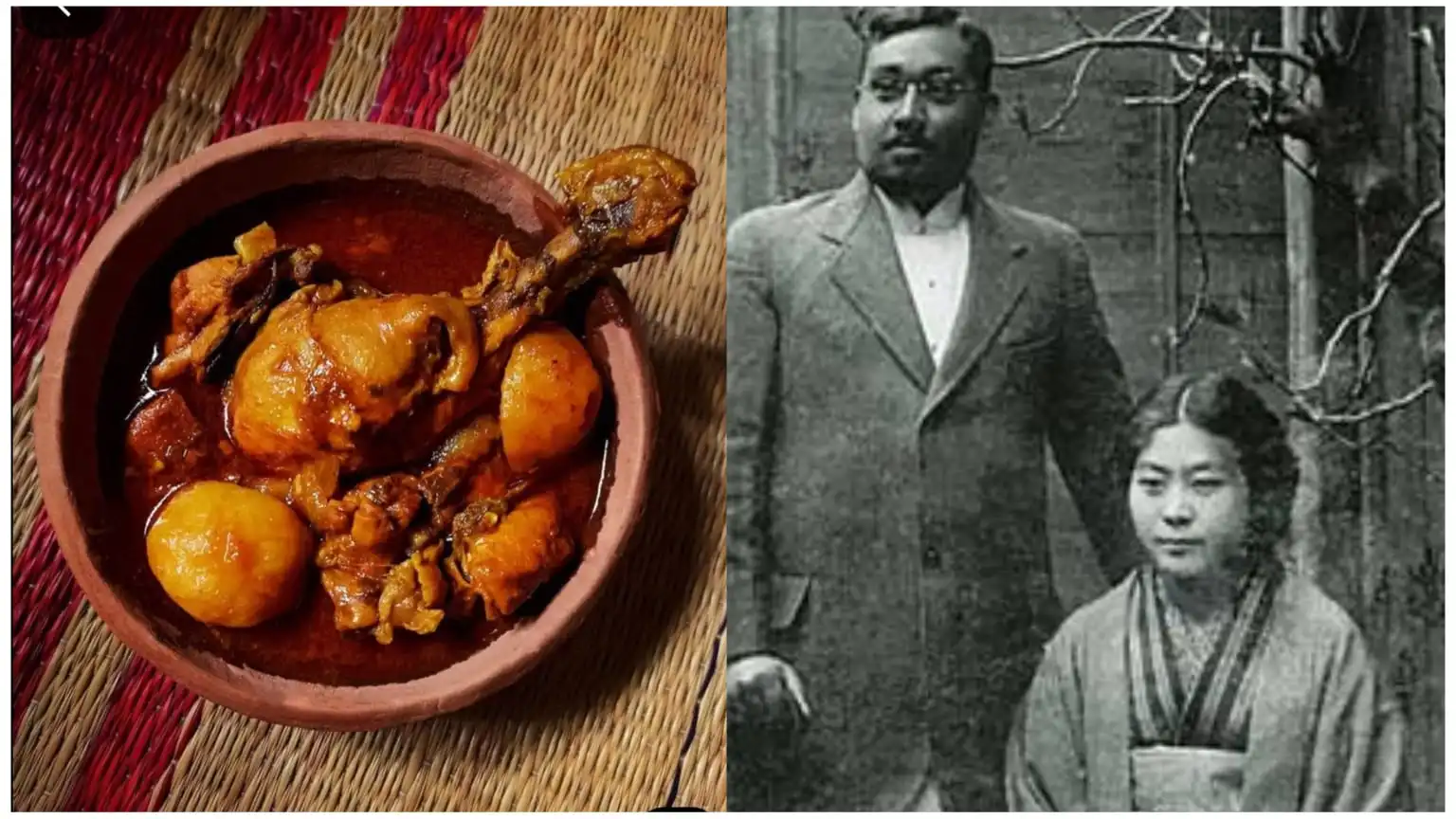
In Tokyo, many people know a different Bose from the one history books celebrate. Rash Behari Bose, an Indian revolutionary on the run from the British, is remembered in Japan for something delicious: a plate of Indian curry that changed how the country eats.
A Fugitive Arrives in Japan
Bose arrived at the docks of Kobe on June 8, 1915, after fleeing India. When British pressure to hand him over grew, influential Japanese supporter Toyama Mitsuru arranged shelter at the Nakamuraya bakery in Shinjuku, owned by the Soma family.
From Hiding Place to Family Home
The Somas sheltered him, and a strong bond grew. Bose learned Japanese, and he later married Toshiko Soma, the family’s daughter, in 1918. The family loved the Indian chicken curry he introduced at home, and it slowly moved from the family table to public tastes.
1927: Curry Joins the Menu
In 1927, Nakamuraya formally introduced Indian curry on its menu. Bose helped turn the bakery into a restaurant with a curry counter, and reports say he chose the spices and supervised the cooking. It was more expensive than the common British-style curry, but it became popular, and he came to be known as the Bose of Nakamuraya.
A Curry With a Message
Some accounts say the dish kept the taste of Bengal, with a simplicity like a light chicken jhol. Professor Takeshi Nakajima argued the curry was part of Bose’s anti-colonial struggle, an attempt to win back India’s food culture from British hands. Japan already knew British-style curry, so his version offered something closer to the original.
A Love Story Behind the Spice
The dish is often described as a taste of love and revolution, tied to the Somas’ care for Bose and his marriage. Some storytellers also link its recipe to the cooks in his household, but those details are told differently from one source to another.
The Legacy Today
Bose died on January 21, 1945, aged 58. Nakamuraya’s curry has been sold in ready-to-eat packs since 2001, and in 2015 his family’s descendants opened Nakamuraya Manna, a 100-seat heritage restaurant. Curry is now so loved that in a 2008 survey, 10,000 people called it Japan’s national dish.
Why the Story Still Matters
Bose is remembered for politics, but his curry shows how food can carry memory, identity and gratitude across borders. A fugitive’s kitchen became a lasting bridge between India and Japan.
Discover Food with Bangla Pulse
1. Wondering which traditional Bangladeshi dishes are slowly disappearing from our kitchens?
Take a delicious trip into the past with these lost recipes and forgotten traditional dishes of Bangladesh.
2. Love Ilish but want to move beyond the usual preparation?
These classic Ilish recipes bring some of Bangladesh’s favourite fish dishes to your kitchen.
3. Think you know Bangladeshi cuisine? You may be missing these hidden gems.
Discover lesser-known Bangladeshi dishes that deserve a place on every food lover’s list.
4. Looking for something warm, comforting and seasonal when the monsoon arrives?
Try these healthy monsoon comfort food recipes inspired by homestyle flavours.
5. Weekend plans but no idea what to cook? Why not make biryani?
From familiar favourites to exciting variations, here are 7 biryani recipes to try this weekend.