Bangladesh’s Water Resources Minister has said the country does not want its friendly ties with India to deteriorate over the long-pending Teesta water-sharing agreement, while urging New Delhi to weigh Dhaka’s interests as it pursues its own, according to a report from Business Standard. Speaking at a seminar in Dhaka, Minister Shahiduddin Chowdhury Anee said India is a friendly country, and while it has its own interests, Bangladesh has interests of its own too.
Why the River Matters So Much to Bangladesh
The minister also spoke about the stakes involved for Bangladesh’s northern communities. Describing the issue as a major challenge, he said people in five to six northern districts had high expectations after years of suffering from river erosion and related problems, adding that if the country fails to move forward, the damage faced by those families will only increase.
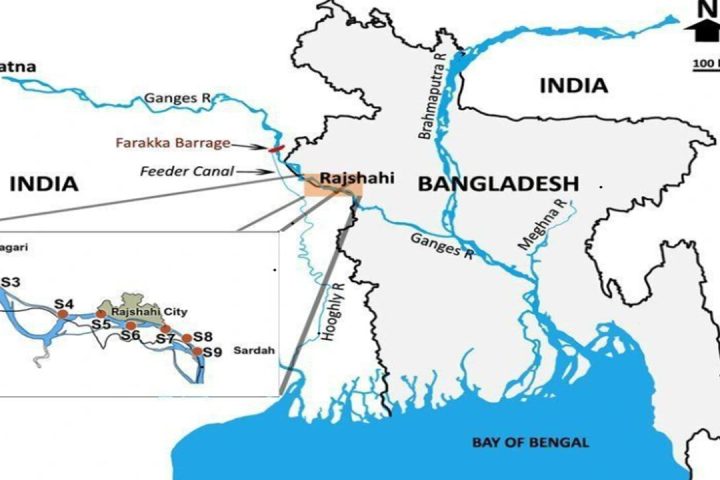
The Teesta originates in Sikkim and flows through West Bengal before entering Bangladesh, where it eventually joins the Jamuna, the Bangladeshi name for the Brahmaputra. The river holds importance for both sides. It is vital for agriculture and livelihoods in northern Bangladesh, while it also supports irrigation and power generation in West Bengal, home to several hydropower projects in its upper catchment.
Decades of Talks, No Final Deal
The dispute has dragged on since the 1980s without resolution. India and Bangladesh have discussed sharing the Teesta’s waters since that decade, with an interim arrangement reached in 1983 giving 39 per cent of the flow to India and 36 per cent to Bangladesh.
A draft agreement nearly came together in 2011 ahead of a leader-level visit to Dhaka, but it was never formalised, largely due to opposition from the West Bengal state government, which holds significant say over water-sharing decisions under India’s federal structure.
A Separate but Related Deadline
The Teesta issue is distinct from Bangladesh’s other major river agreement with India. It is separate from the Ganges Water Sharing Treaty, signed in 1996 for a 30-year term and due to expire in December 2026.
The two countries share 54 transboundary rivers, addressed through the Joint Rivers Commission. With that treaty’s expiry approaching, water-sharing questions between the two countries are drawing renewed attention on multiple fronts at once.
Discover More Stories Worth Your Time
Find Which Airport Hotels Fit?
Discover convenient hotels near Dhaka Airport for short layovers and overnight stays.
Learn How Rohingya Youth Lead?
Explore how young Rohingya are advancing education and gender equality in refugee camps.
Explore Why Colombia Declared Emergency?
Discover what the powerful earthquake means for Colombia and the latest emergency response.
Check Why Jaya’s Sarees Trend?
Discover why Jaya Ahsan’s elegant saree looks continue captivating fans online.
See Where Hasina’s Crisis Leads?
Explore the accountability debate surrounding Hasina, India, and Bangladesh’s political future.
Bangladesh Also Looking to China
Frustrated by the lack of progress with India, Dhaka has increasingly turned elsewhere for help managing the river. During a visit to China in June, Bangladesh and Beijing agreed to deepen cooperation on the Teesta River Comprehensive Management and Restoration Project, with China offering support for the plan’s feasibility study.
Experts note, however, that while China can assist with dredging and embankment work, it cannot address the core dry-season shortage, since that depends on how much water India releases upstream.
With the Ganges treaty set to expire later this year and the Teesta dispute still unresolved after more than four decades, water-sharing is set to remain a defining and sensitive issue in Dhaka-Delhi relations.
The minister’s comments suggest Bangladesh wants to keep pressing its case through diplomatic channels without letting the disagreement spill over into wider tensions, even as it explores other avenues to secure the river’s future.
Summary: Bangladesh’s Water Resources Minister says Dhaka does not want the decades-old Teesta water dispute to hurt its relationship with India, even as the two countries remain far from a final agreement on sharing the river’s dry-season flow.