
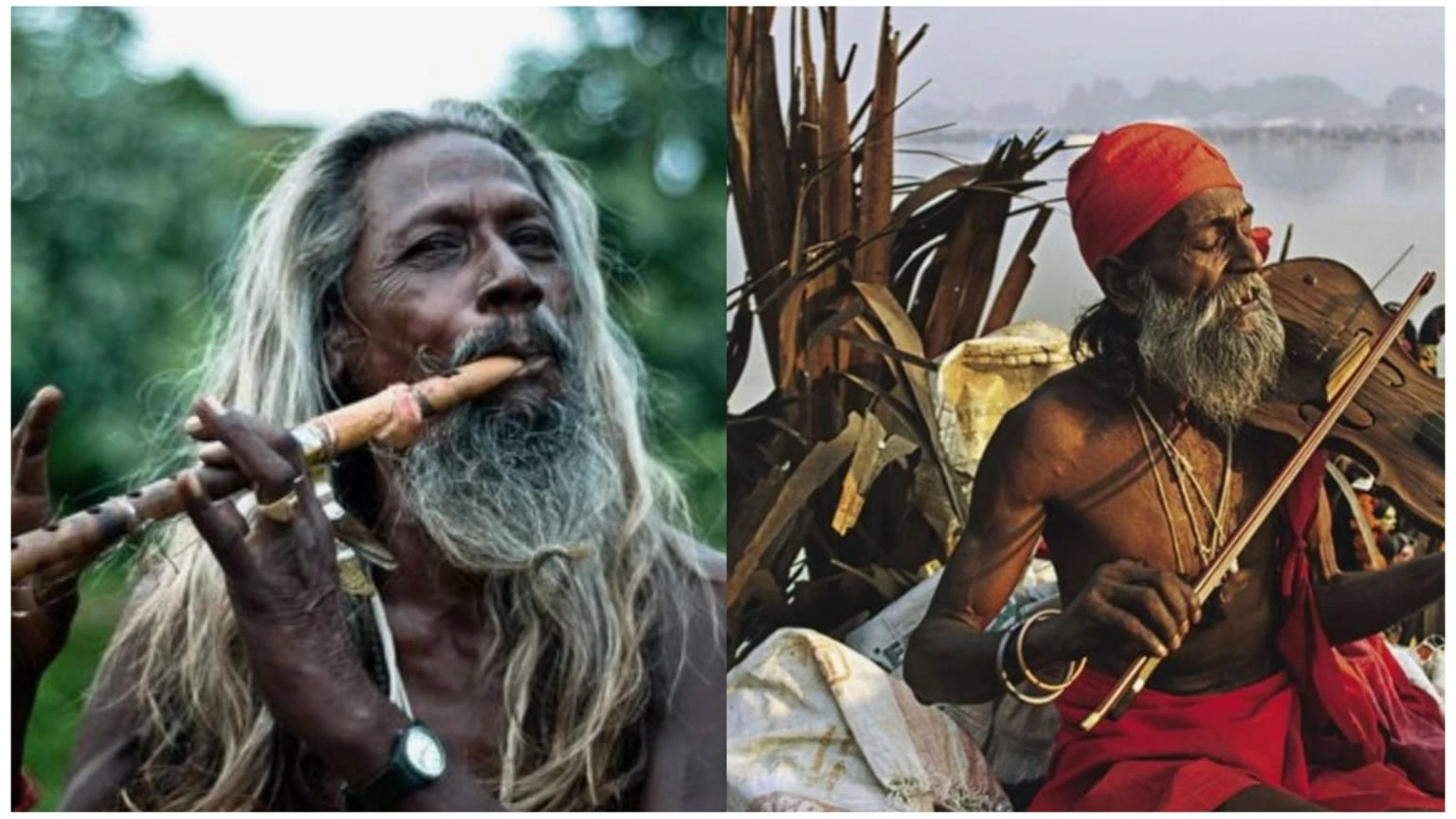
Winter night in Kushtia, an ektara hums in the dark; a voice begins to sing of the body, the heart, and a God no temple or mosque can hold. The singer is dressed in a patched robe. No one in the circles asks if he is a Hindu or a Muslim. That’s been the silent rebellion of the Bauls, the wandering minstrels of Bengal, for more than two centuries.
Who Are Bauls?
The Bauls are a spiritual community and musical tradition found in Bangladesh and the Indian state of West Bengal. They borrow from Hinduism, Buddhism and Sufi Islam, but UNESCO says they have a unique identity. Many make a living by singing from village to village and have long been a marginalised community.
Their songs are oral. They were passed from teacher to pupil and never committed to writing.
The Baul Philosophy: God Lives in the Body
At the centre of Baul belief is the moner manush, the man of the heart. It is a divine presence inside the human person. The Baul seeks not far-off shrines but looks within. This idea is referred to as dehatattva, the truth of the body. Rituals, priests and written scripture matter far less, because the divine is already inside every person.
Baul songs have so much dissent. They see caste, labels of religion and outward show as distractions. “Singing is the only real worship a Baul does,”.
Lalon Fakir and the Question of Identity
But no name is more associated with this tradition than Lalon Shah, or Lalon Fakir. He is believed to have lived between 1774 and 1890, and he is believed to have composed thousands of songs. Rabindranath Tagore helped popularise Lalon’s songs by collecting and publishing them.
Lalon’s songs poke at the idea of fixed identity. One of his most popular themes is the question of what visible mark of caste a person is born with and finding none. If no one is born with a religion stamped on his forehead, then the walls between communities are built by people, not by God.
Why the Message Travels Song
Baul music transcends borders because the culture of Bengal does not end at a border. The same songs are sung in West Bengal and in Bangladesh, and Indian Bauls have performed at Lalon’s shrine in Bangladesh. Songs cross any treaty line with language, melody and a shared way of asking questions of the world.
In 2005, UNESCO declared it a Masterpiece of the Oral and Intangible Heritage of Humanity. In 2008, it was inscribed on the Representative List of the Intangible Cultural Heritage.
A Tradition Lost in Time
The Cost of Rejecting Rigid Orthodoxy. At times, hardline groups in Bangladesh have branded Bauls heretics. Performers have reported threats, cancelled programs and attacks. In December 2024, Bauls and their supporters took to the streets of Dhaka to protest against such threats. The picture has changed over time, and some of the claims are difficult to independently verify.
Why This Folk Song Remains Relevant
In an age of increasing religious polarisation, the Bauls offer an alternative way of imagining belonging. They don’t ask people to leave their religion. They encourage them to look at the person next to them and see beyond a label. That idea has survived centuries of poverty, suspicion and pressure. So long as someone takes up an ektara to sing of the man of the heart, it is to keep travelling.
Discover Folk Culture With Bangla Pulse
1. Where are Baul festivals celebrated in Bangladesh during winter?
Baul festivals are celebrated in different parts of Bangladesh, including Kushtia and Sylhet, where folk music, spiritual traditions and cultural gatherings bring communities together. Read more about Baul festivals in Kushtia and Sylhet during winter.
2. Why is Kushtia famous for Baul music?
Kushtia is closely associated with Baul traditions and the legacy of Lalon Shah, whose songs explore humanity, spirituality and the search for truth. Discover more about Baul festivals in Kushtia and Sylhet during winter.
3. What can visitors experience at a Baul festival in Bangladesh?
Visitors can experience live folk performances, traditional instruments, spiritual songs and gatherings that celebrate Bengal’s musical heritage. Explore our guide to winter Baul festivals in Kushtia and Sylhet.
4. Why are Baul songs important to Bengali culture?
Baul songs express ideas about humanity, love, spirituality and inner freedom. Their distinctive musical style and philosophical themes have made them an important part of Bengal’s cultural heritage. Learn more about Baul festivals in Kushtia and Sylhet.
5. Is winter a good time to explore Baul culture in Bangladesh?
Winter can be a rewarding time to explore Baul culture, as cultural gatherings and folk music events may take place in different regions. Visitors should check local festival dates before travelling. Read our guide to Baul festivals in Kushtia and Sylhet during winter.