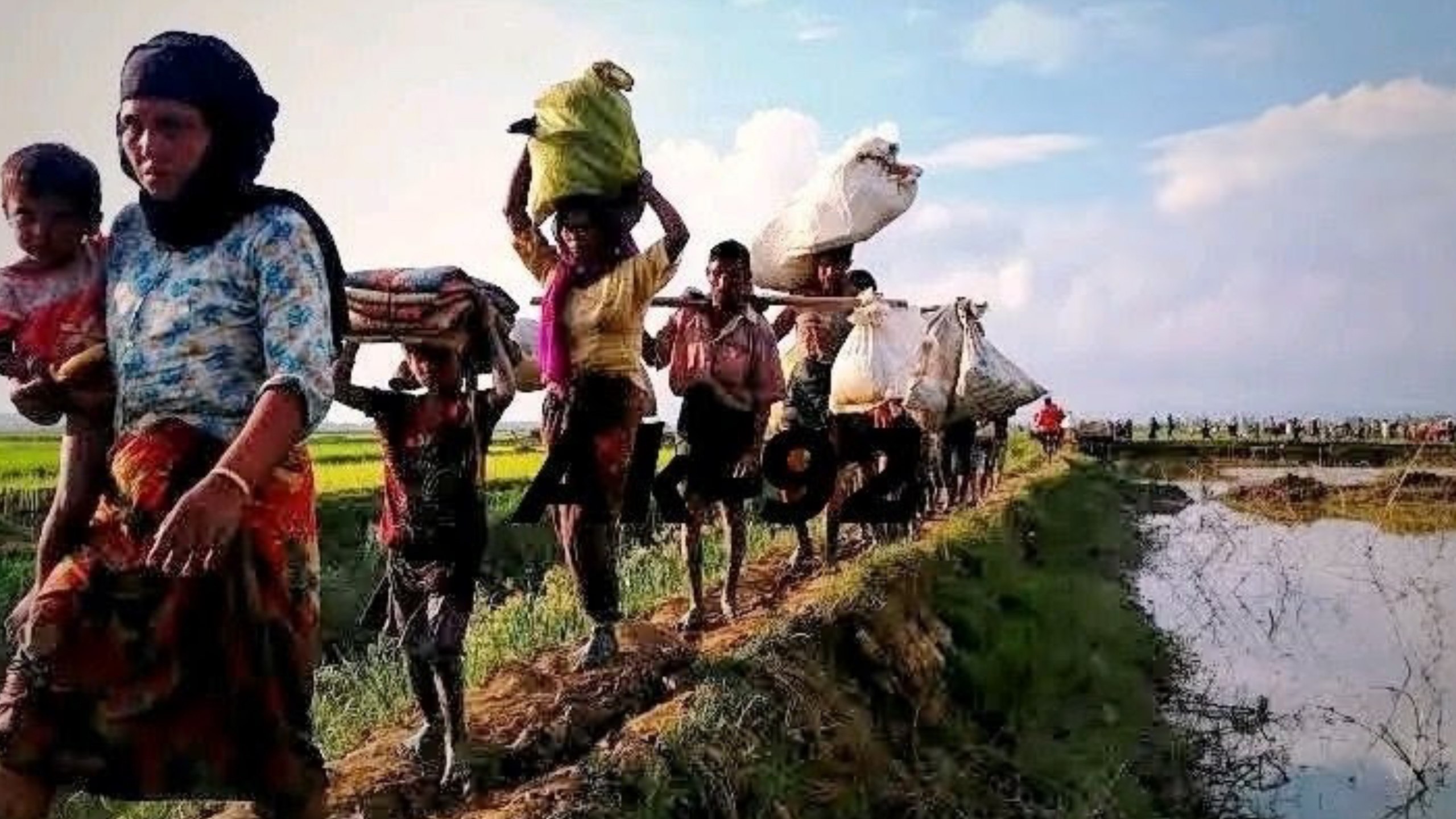
When people think of the Rohingya refugee crisis, the images that usually come to mind are of overcrowded camps, food rations and makeshift shelters in Cox’s Bazar. What gets far less attention is what happens to the roughly half a million Rohingya children growing up there once their basic survival needs are, however imperfectly, met. For many of them, school is not a guarantee. It is something that can disappear overnight when funding runs out, which is exactly what has been happening in 2026.
Schools That Open and Close on the Strength of Donor Funding
In June this year, UNICEF was forced to temporarily shut down most schools across the Rohingya camps because of a funding shortfall, disrupting learning for close to 150,000 children. Emergency fundraising eventually allowed classes to resume for children across all grade levels, but aid officials have been clear that this was a stopgap, not a fix. UNICEF has warned that a renewed shortfall expected in early 2026 could force schools to close again, this time putting more than 300,000 children’s access to education at risk.
“The children in these camps are 100 per cent dependent on aid, but that aid is sadly shrinking,” said UNICEF Goodwill Ambassador Orlando Bloom, after visiting the camps in November.
Bloom described meeting a 14-year-old boy named Aziz who dreamed of becoming an engineer so he could build a drone to show the world how much help Rohingya children need, a small window into how much these children are still hoping for despite the uncertainty around them.
Even When Schools Stay Open, What They Teach Is Shrinking
The funding crisis is not just closing schools outright; it is also hollowing out what is taught inside them. UNICEF has confirmed that early grade learners, from kindergarten through Grade 2, will no longer be taught English, science or social studies in the coming academic year. Only core subjects, including literacy, Burmese, mathematics and life skills, will be prioritised. No new textbooks or teacher guides are being procured, meaning children will have to reuse worn materials regardless of condition. End-of-year assessments and placement tests have been cancelled altogether, and volunteer teachers, who form the backbone of camp education, are being asked to keep working without pay.
A Ceiling That Existed Long Before the Funding Cuts
Even in better-funded years, Rohingya children in Bangladesh have faced structural barriers that go beyond any single budget shortfall. There is no secondary-level education accredited within the camps, and Rohingya children have no legal pathway to enrol in Bangladesh’s public or private school system outside the camps. Rights groups have documented for years that even where informal curricula exist, the lack of accreditation leaves children with no certified qualification at the end of it, undermining years of learning.
Around 235,000 refugee children aged 5 to 17 remain out of school entirely, a gap that has left many exposed to risks including child labour, early marriage and trafficking.
Discover More Stories Worth Your Time
Explore How To Buy Match Tickets?
Discover the easiest steps to secure cricket match tickets in Bangladesh.
Check Where Monsoon Travel Works?
Explore the best places to visit and areas to avoid during Bangladesh’s rainy season.
See Why India Visit Uncertain?
Discover how the Hasina extradition and Hadi murder case could affect Tarique Rahman’s India trip.
Find What Story Comes Next?
Explore what Tanim Noor may bring after Utsab and Bonolota Express.
Learn Why Saudi Invitation Matters?
Discover what the Saudi Crown Prince’s invitation could mean for Tarique Rahman’s upcoming visit.
Why This Should Not Be an Afterthought
Nearly a decade after the largest wave of Rohingya arrived in Bangladesh, an entire generation of children has now been born and raised inside the camps, with school often being the only structured part of their day and the only path toward a different future. When aid budgets are cut, education is frequently one of the first services to be scaled back, precisely because its effects are not as visibly urgent as a food shortage. But for children who have already lost their homes, their citizenship and their sense of stability, losing school as well risks locking an entire generation out of any real path forward, whether that eventually leads to repatriation, resettlement or a life in Bangladesh itself.
Aid agencies have been direct about what is needed: predictable, multi-year funding rather than emergency fixes that only keep classrooms open until the next shortfall hits. Until that changes, Rohingya children’s education will keep depending less on their own effort and more on how much the rest of the world is willing to pay attention.
Summary: Aid cuts have already forced the temporary closure of Rohingya refugee schools this year, and UNICEF warns the same could happen again. With more than 300,000 children at risk of losing access to education, the crisis in the camps is no longer just about survival; it is about the future these children are being denied.