
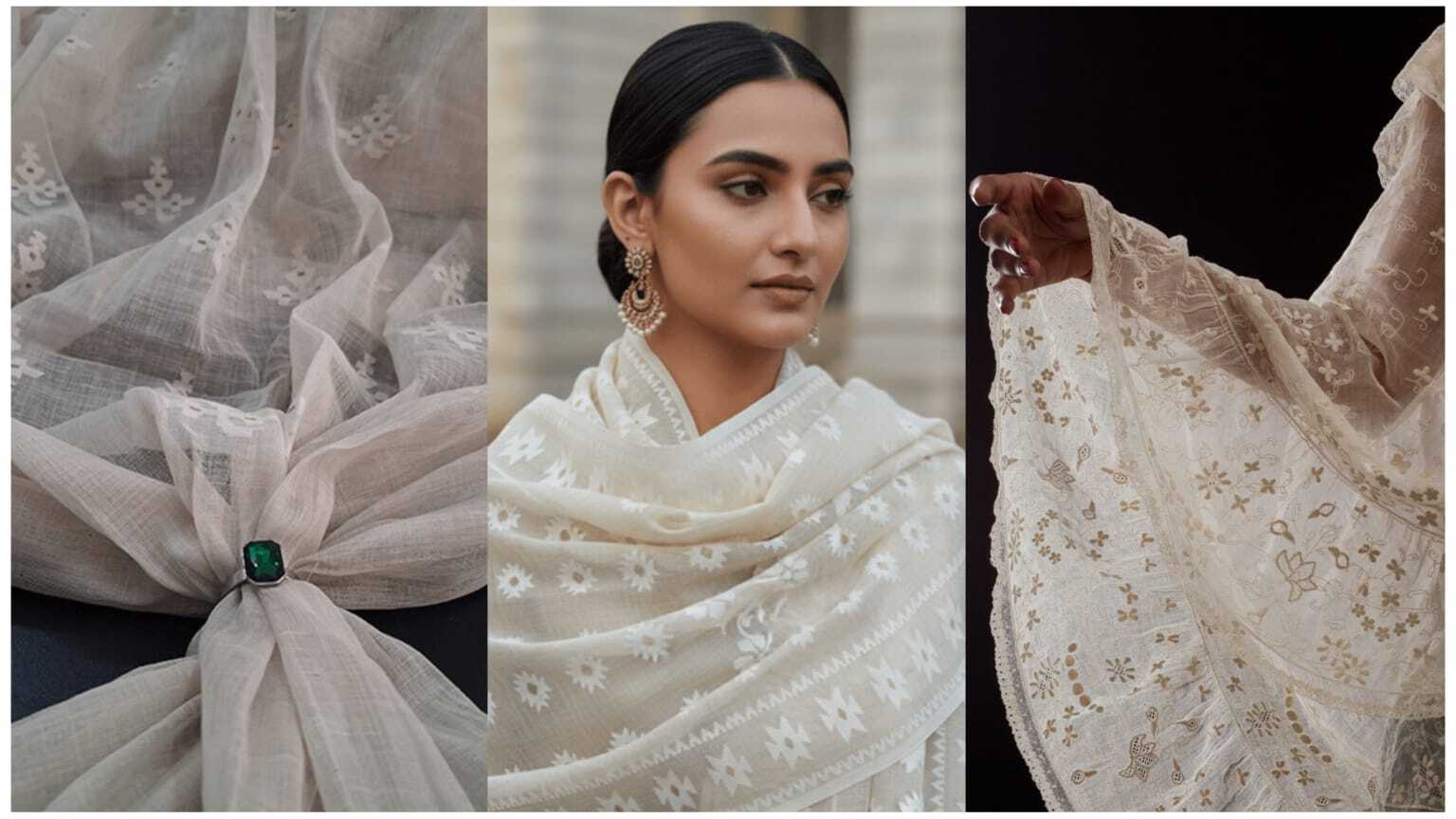
Dhakai muslin was once one of the world’s most desirable luxury textiles and was hailed as the “woven air” of Bengal. Cherished by royalty and across continents, the gossamer fabric went on to become a symbol of Bengal’s extraordinary weaving tradition. Today, a 300-strong initiative of Bangladeshi women is breathing new life into this historic craft.
For generations, many women in Bangladesh have had to do household work and look after family responsibilities without getting any recognition or having any independent source of income. Now, by engaging in muslin production, they are finding new avenues to convert traditional skills into a means of earning a livelihood.
A Lost Fabric Is Returning
Dhakai muslin was so fine that it was called ‘woven air’. It was coveted by European royal families, the Middle East and the Mughal Empire for its extraordinary softness and fine texture.
But the industry gradually declined during the British colonial period. The weaving communities of Bengal were hurt by competition from machine-made textiles, punitive taxes and the loss of traditional varieties of cotton. The special Phuti Karpas cotton also disappeared, causing more damage to the industry.
For nearly two centuries, the finest variety of Dhakai muslin was virtually missing from commercial production. Now, Bangladesh’s revival program is trying to revive the fabric and the traditional knowledge behind it.
Muslin helps 300 women find a new source of livelihood
The revival project provides a major opportunity for women from disadvantaged communities.
In June 2025, The Daily Star published a report that 327 women received training on muslin production. 300 had worked unpaid in the home before.
The program has enabled these women to acquire specialised skills in spinning superfine muslin yarn. Some have gone into supervisory and training jobs.
Mohsina Akhter, once a domestic worker in Cumilla, is now a supervisor and trainer at Dhaka Muslin House in Rupganj. She trains other women in the traditional craft and earns Tk 16,800 a month.
Another artisan, Marjia, earns Tk 550 daily from her work. She said the opportunity has given her more than a job, giving her dignity and the ability to support her family.
The arrangements also enable women to reconcile their professional obligations with family life. This makes the initiative especially important for women who previously had little access to paid work.
The Scientific Basis for the Resurgence of Dhakai Muslin
Reviving Dhakai muslin required more than training a new generation of artisans. The researchers also had to recover the raw material and traditional production techniques that gave the fabric its unique characteristics.
The revival program examined the rediscovery of Phuti Karpas, a special variety of cotton that has a historical association with the production of muslin.
Scientists tried to bring back the cotton and restore the old ways of spinning and weaving. More than 50 specialised tools used in the production process in the past were also reproduced.
The results have been dramatic. The revived Dhakai muslin yarn is reported to have reached metric counts between 731 and 750, as against ordinary cotton yarn, which normally ranges between 40 and 80 counts.
The exceptional fineness of the yarn gives the fabric a light, transparent character.
Dhakai Muslin Eyes Global Luxury Market
But now the revival is moving into commercial production from research and exhibitions.
The government is implementing the second phase of the project with a budget of Tk 18.5 crore, says a Bangladesh Sangbad Sangstha report of October 27, 2026.
Such fabric has been revived, and international luxury brands from the United States, France and Japan have taken an interest in the fabric. Bangladesh has also filled an international order for 500 yards of muslin.
The Dhakai Muslin House at Tarabo in Rupganj of Narayanganj is the centre of production and transfer of traditional technology to private sector entrepreneurs.
But the fabric is still expensive and time-consuming to produce.
The production cost of a muslin saree was initially estimated at Tk 3.6 lakh. Officials are trying to bring down the cost to Tk 1 lakh–Tk 3 lakh by increasing production.
It takes two to four weavers several months to make one sophisticated muslin saree.
Is a Forgotten Heritage a Sustainable Business?
Bangladesh is also looking for a regular supply of Phuti Karpas cotton. Contract farming arrangements are being developed in Kapasia, Rajshahi and Cumilla areas.
The government hopes that private sector participation, better cotton cultivation and increased production will eventually make the fabric more accessible.
In Bangladesh, Dhakai muslin was given Geographical Indication (GI) status in December 2020, cementing its image as a textile heritage of the country.
But the revival is important for more than just the export of international fashion and textiles.
The craft is a way for the 300 women who spent their days doing unpaid household work to earn money, gain professional skills and be financially independent.
Once the symbol of Bengal’s royal heritage, a fabric is now scripting a new chapter through the hands of village women. It’s not just about bringing back an old textile. It’s about recognising the people who have the expertise and the labour to keep that heritage alive.
Discover Traditional Art and Craft of Bengal with Bangla Pulse
What is Dhakai muslin, and how is Bangladesh reviving this historic textile?
Dhakai muslin is a traditional fine cotton fabric known for its exceptional lightness and delicate weaving. Efforts to revive this historic textile focus on preserving traditional weaving skills and supporting skilled artisans. Learn more in this report on the revival of Dhakai muslin in Bangladesh.
What are the traditional Jamdani motifs, and what do their names mean?
Jamdani sarees feature intricate woven motifs inspired by flowers, leaves, geometric patterns and other traditional designs. These motifs contribute to the cultural identity and artistic value of Jamdani textiles. Explore this guide to Jamdani motifs, their names and meanings.
How did British colonial rule contribute to the decline of Dhaka muslin?
The decline of Dhaka muslin is associated with several factors, including colonial economic policies, changes in textile markets and competition from machine-made fabrics. Read this historical report on British East India Company rule and the decline of Dhaka muslin.
Where can buyers find authentic Rajshahi silk sarees from Bangladesh?
Buyers interested in Rajshahi silk sarees can explore specialist sellers and online platforms offering traditional Bangladeshi textiles. Checking fabric details, seller credentials and product descriptions can help buyers assess authenticity. Find more information in this guide to buying authentic Rajshahi silk sarees online.
Where can women in Bangladesh find crochet websites and online resources?
Women interested in crochet can explore online resources for patterns, tutorials, handmade products and craft-selling opportunities. The right platform depends on whether they want to learn crochet, purchase supplies or sell their creations. Discover more through this guide to crochet websites for women in Bangladesh.