
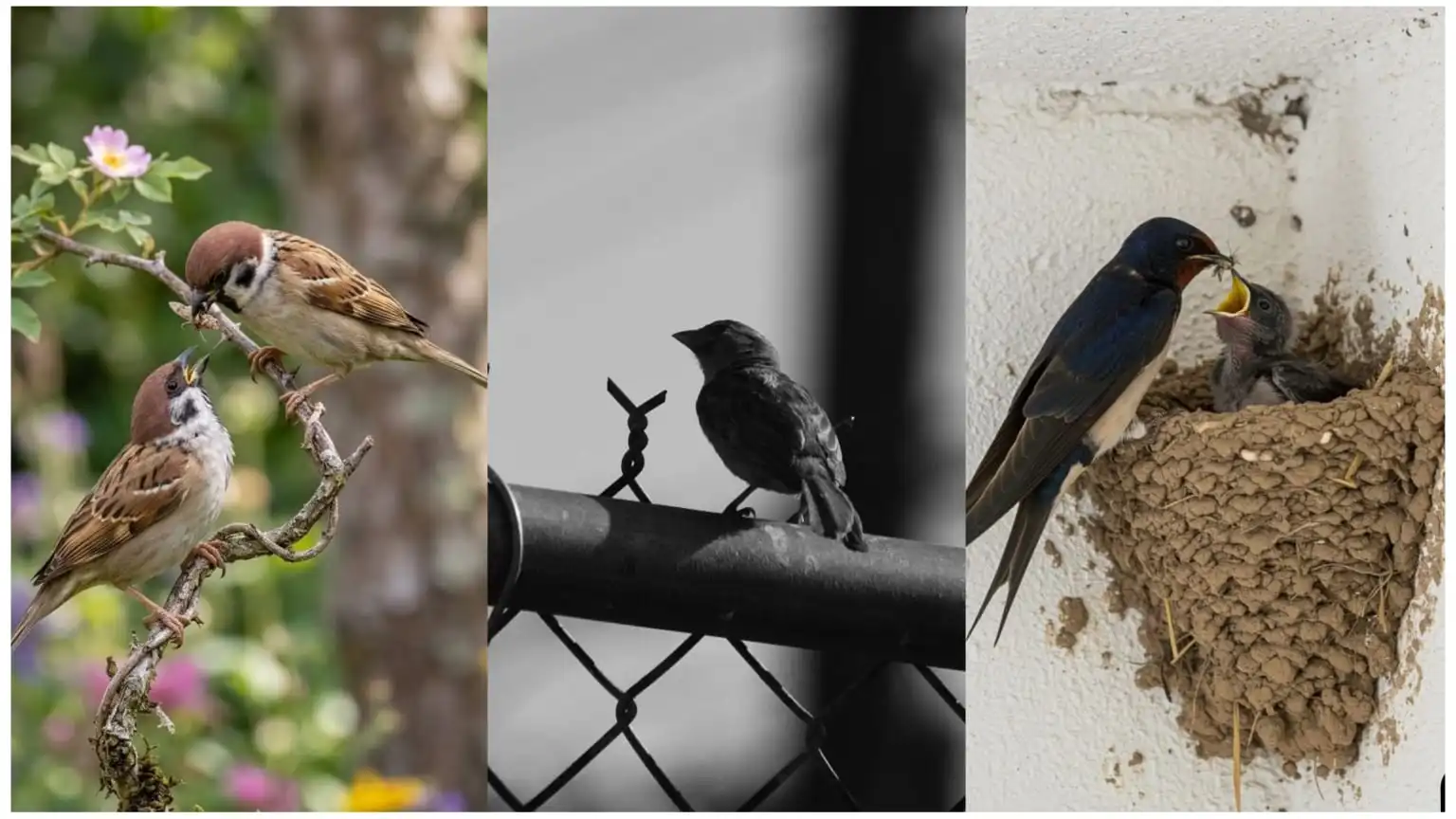
There was a time when a sparrow’s chirp was the first sound of the morning. Small brown birds hopped across courtyards, pecked at rice grains on the veranda and built nests behind the fan or inside a gap in the wall. For many city dwellers today, that sound has gone quiet.
How Bad Is the Decline?
The picture is mixed, but the worry is real. The International Union for Conservation of Nature still lists the house sparrow as a species of least concern globally, yet researchers say it is declining rapidly in many places.
The State of India’s Birds 2020 report found that sparrow numbers had steadied across the country as a whole, but there was a marked drop in large cities. A later 2025 update, as reported by the Daily Excelsior, places the species at moderate conservation priority, with an estimated annual decline of nearly 3%.
Older studies reported much sharper local falls. An Indian Council of Agricultural Research study cited in news reports found drops of up to about 88% in Andhra Pradesh and 70% to 80% in coastal areas. Treat these as snapshots from specific places and years, not a single national figure.
Where Did Their Homes Go?
House sparrows nest in small holes and gaps. Traditional tiled houses and old walls gave them plenty of space. Modern buildings made of reinforced cement concrete are smooth and sealed, so there are few cracks to nest in. Researchers say this loss of nesting sites is one of the main causes.
Where Did Their Food Go?
Adult sparrows eat seeds and grains, but their chicks need insects. Pesticides, tidy gardens and fewer weeds and shrubs mean fewer bugs and seeds. When chicks cannot find enough protein, fewer survive.
Other Pressures
Scientists have suggested several other factors:
- Loss of green spaces to concrete and paved plots
- Noise and air pollution in crowded cities
- Competition from crows and other birds
- Cats and other predators, and even accidents with ceiling fans
- Use of catapults in some areas
What About Mobile Phone Towers?
Many people blame mobile phone towers, and the idea has spread widely. But one study on sparrow decline concluded that towers were not the main reason. It pointed instead to loss of habitat and food, urbanization, noise pollution and the conversion of farmland into plots. The cause is complex, and no single factor explains everything.
Why It Matters
Sparrows are not just a nostalgic memory. Because they live close to people, their decline can signal that the urban environment is getting worse for wildlife. One member of the Animal Welfare Board of India has described their fall as a sign of a degrading environment.
How You Can Help
Small steps at home can make a difference:
- Put up a wooden nest box on a quiet wall or balcony, away from direct sun and rain
- Keep a shallow dish of clean water out every day, especially in summer
- Scatter a handful of millet or broken rice grains in a safe, cat-free spot
- Grow native shrubs and flowering plants that attract insects
- Avoid chemical pesticides in your garden
- Keep old wall cavities and eaves when repairing your home
Some campaigners have gone further. One man in Bihar, where the sparrow is the state bird, has gone from village to village handing out wooden nests. Delhi also has the sparrow as its state bird.