
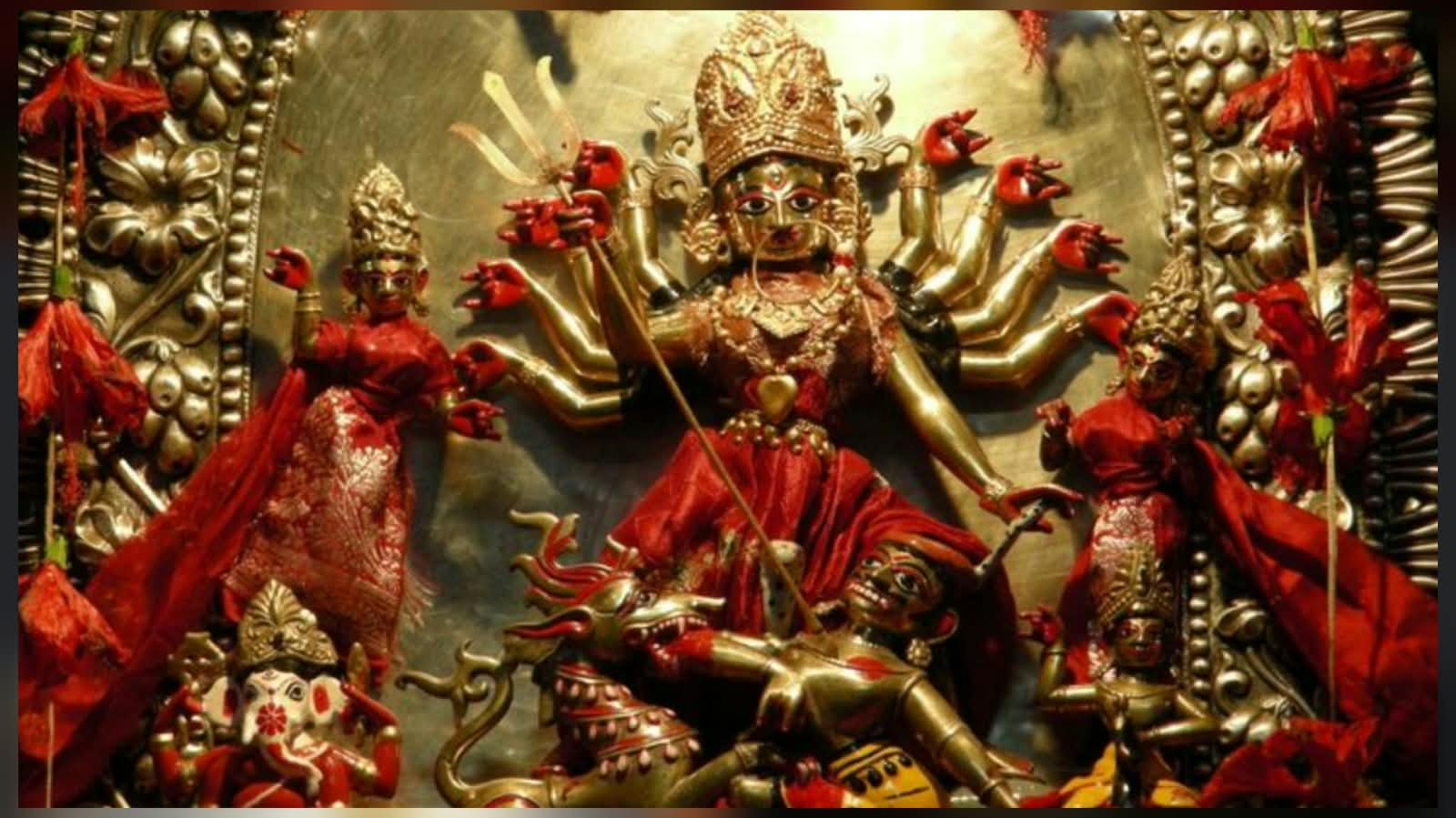
Sharadiya Durga Puja, the largest religious festival of the Bengali Hindu community, began across Bangladesh on 16 October. At Dhakeshwari National Temple in Dhaka, Kalparambha and Bihita Puja rituals formally opened the celebrations on Maha Shashthi. The festival will continue until 21 October.
A Shrine Wrapped in Legend
By tradition, the temple was built in the 12th century by Ballal Sen, a king of the Sena dynasty. Popular tradition says he found the Durga image buried in a forest and built a shrine for it. The name Dhakeshwari means “Goddess of Dhaka,” and many believe the city took its name from her. The temple’s current look cannot be dated to that period because of repeated repairs and rebuilding over the years.
Partition and a Replica
The 1947 Partition was a defining chapter. Caretakers moved the original idol to Kolkata, and a replica was later installed in Dhaka, so worship could continue. In 1996, the shrine was renamed Dhakeshwari National Temple.
The Rituals Ahead
On Maha Shashthi, devotees perform Bodhan, the ceremonial awakening of the goddess. Maha Saptami brings Nabapatrika, when nine plants representing forms of the goddess are bathed and worshipped. Maha Ashtami follows on Monday with Sandhi Puja, the transition between Ashtami and Navami. The temple’s programme lists Dashami and the farewell rites on 21 October, followed by the Bijaya procession.
After the Puja
A Bijaya Sammelani, a cultural programme, takes place on the adjoining parade ground a few days after the puja and draws leading performers from Dhaka’s music and film circles.
Government Support and Security
The government has extended the Durga Puja holiday to three days. Funding for puja mandaps has risen to Tk 5 crore from Tk 4 crore on the prime minister’s directive. The number of mandaps has grown by nearly 1,500 to 33,851. Authorities will use a mobile application previously deployed by the National Telecommunication Monitoring Centre to monitor events and share information on any untoward incidents. The Home Ministry has also asked for uninterrupted electricity at puja venues.
Why It Matters
For Dhaka’s Hindu community, the compound is both a place of worship and a civic landmark. Each year it hosts the city’s largest Durga Puja gathering, which makes it a symbol of continuity as well as faith.
Discover More Articles Worth Your Time
1. Who started the famous Durga Puja tradition in Taherpur, Bangladesh?
According to traditional historical accounts, Raja Kangsanarayan Roy organised Sharadiya Durga Puja in Taherpur around 1480 AD. Read more about the history of Raja Kangsanarayan and Taherpur Durga Puja.
2. What is the significance of Mahalaya in Durga Puja?
Mahalaya marks the beginning of the festive countdown to Durga Puja for many devotees. It is associated with devotional hymns, Agomoni songs, and the invocation of Goddess Durga. Explore the significance of Mahalaya 2026, its hymns, and Agomoni songs.
3. How much rice has been allocated for Durga Puja mandaps in Rajshahi in 2026?
The government allocated 289 tonnes of rice for 489 Durga Puja mandaps across Rajshahi district in 2026. Each mandap was allocated 600 kg of rice. Read more about the rice allocation for 489 Durga Puja mandaps in Rajshahi.
4. What are Agomoni songs, and why are they associated with Durga Puja?
Agomoni songs are traditional Bengali devotional songs welcoming Goddess Durga to her parental home. They express devotion, anticipation, and the emotional bond between Durga and her mother, Menaka. Learn more through this guide to Mahalaya hymns and Agomoni songs.
5. Why is Taherpur important in the history of Durga Puja in Bengal?
Taherpur is associated with a centuries-old tradition of autumn Durga Puja linked to Raja Kangsanarayan Roy. Its historical and religious significance makes it an important part of Bengal’s Durga Puja heritage. Discover more about Taherpur’s Durga Puja history and Raja Kangsanarayan.