
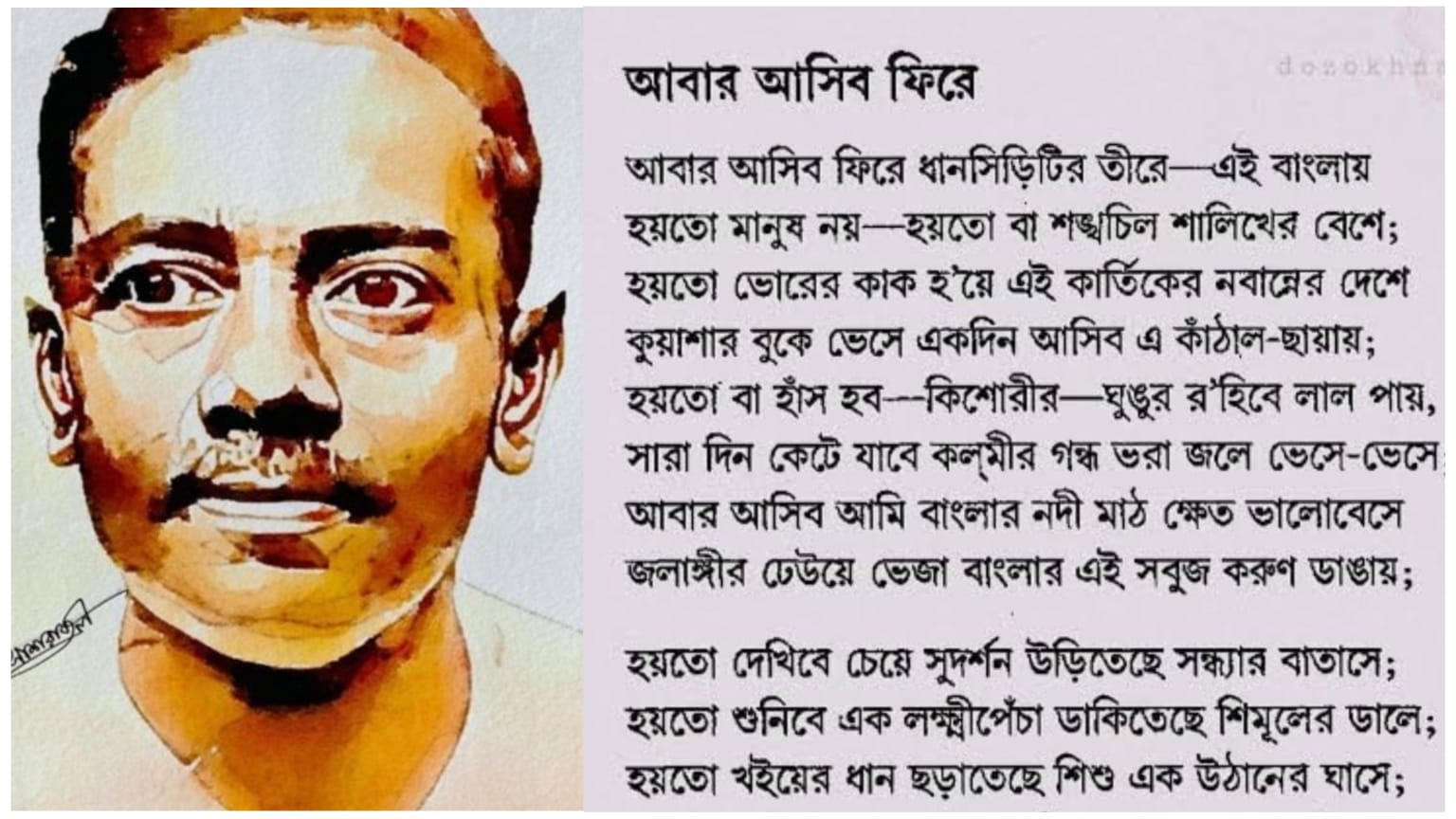
Remembering the Poet on His Death Anniversary: Jibanananda Das died on October 22, 1954, in Kolkata, about a week after a tram hit him on the street. He was 55. Today, readers across Bengal and Bangladesh remember him as one of the most distinctive voices in modern Bengali poetry.
A Boyhood in Barisal
Born in 1899 in Barisal, now in Bangladesh, Das grew up amid rivers, paddy fields, ponds and village paths. This delta landscape became the raw material of his poetry. Even after he moved to Kolkata and worked as a college teacher, he kept returning to the countryside in his imagination.
The Poet Who Painted with Nature
Das wrote less about grand ideas and more about small, sensory moments. He gave readers the feel of grass, the damp of leaves, the hush of dusk and the colours of the sky. His images were fresh and unusual, which set him apart from many poets of his time, who leaned on more conventional language.
Rupasi Bangla: A Love Letter to the Land
His sonnet sequence Rupasi Bangla, which means “Beautiful Bengal,” was published after his death. It is often called his most heartfelt tribute to the land. In these poems, the rivers, seasons, birds and village life of Bengal take centre stage, and the speaker longs to belong to this soil, even beyond death.
Seasons, Rivers and Birds in His Verse
Autumn mornings, the monsoon, twilight, kash flowers, owls, doves and wandering rivers recur across his work. Each carries a mood of quiet, nostalgia or longing. Rather than describing a scene from outside, Das makes the reader feel its atmosphere.
Beyond Nature: Loneliness and Time
Nature in Das’s poetry is not just decoration. It reflects the loneliness of modern life, the passing of time and a search for peace. Critics have often called him a solitary poet, and his landscapes mirror that inner world. Poems such as “Banalata Sen” remain among the best-loved in Bengali.
His Major Works
Das’s collections include Jhora Palak, Dhusar Pandulipi, Banalata Sen, Mahaprithibi and Satti Tarar Timir. He received the Sahitya Akademi Award in 1955, after his death. Much of his writing, including novels and stories, was published only after he died.
A Legacy That Still Walks Through Bengal’s Fields
Seven decades on, Das is still read in classrooms, quoted at literary events and loved by ordinary readers. For many, a walk through a village at dusk or a rain-soaked afternoon still brings his images to mind. That lasting link between poet and landscape is why he is remembered today.
Discover Literature With Bangla Pulse
1. Why did Taslima Nasreen return to Kolkata?
Taslima Nasreen’s return to Kolkata has attracted attention because of her personal connection with the city and her life in exile. Read more about the reported developments in Why Taslima Nasreen Returned to Kolkata: What We Know So Far.
2. Why did Tarique Rahman declare a Nazrul Year in Trishal?
Kazi Nazrul Islam remains an important figure in Bengali literature, music and cultural history. Learn more about the announcement and its cultural significance in Nazrul Year Declared by PM Tarique in Trishal.
3. Which Humayun Ahmed books should readers start with?
Readers exploring Humayun Ahmed’s writing can begin with some of his best-known novels and stories to experience his distinctive storytelling. Discover more recommendations in Most Famous Books by Humayun Ahmed You Should Read.
4. Which Nobel Prize laureates have Bengali or Bangladeshi roots?
Several Nobel Prize laureates have connections to Bengali heritage or Bangladesh. Explore the individuals and their achievements in Here Are the 4 Nobel Prize Laureates Who Have Bengali and Bangladeshi Roots.
5. How do Bengali people celebrate Pohela Boishakh?
Pohela Boishakh, the Bengali New Year, is celebrated through colourful festivities, traditional clothing, cultural programmes, music and Bengali food. Discover more about the traditions and celebrations in How Bengali People Celebrate Pohela Boishakh: A Colorful Holiday on the Bengali New Year.