
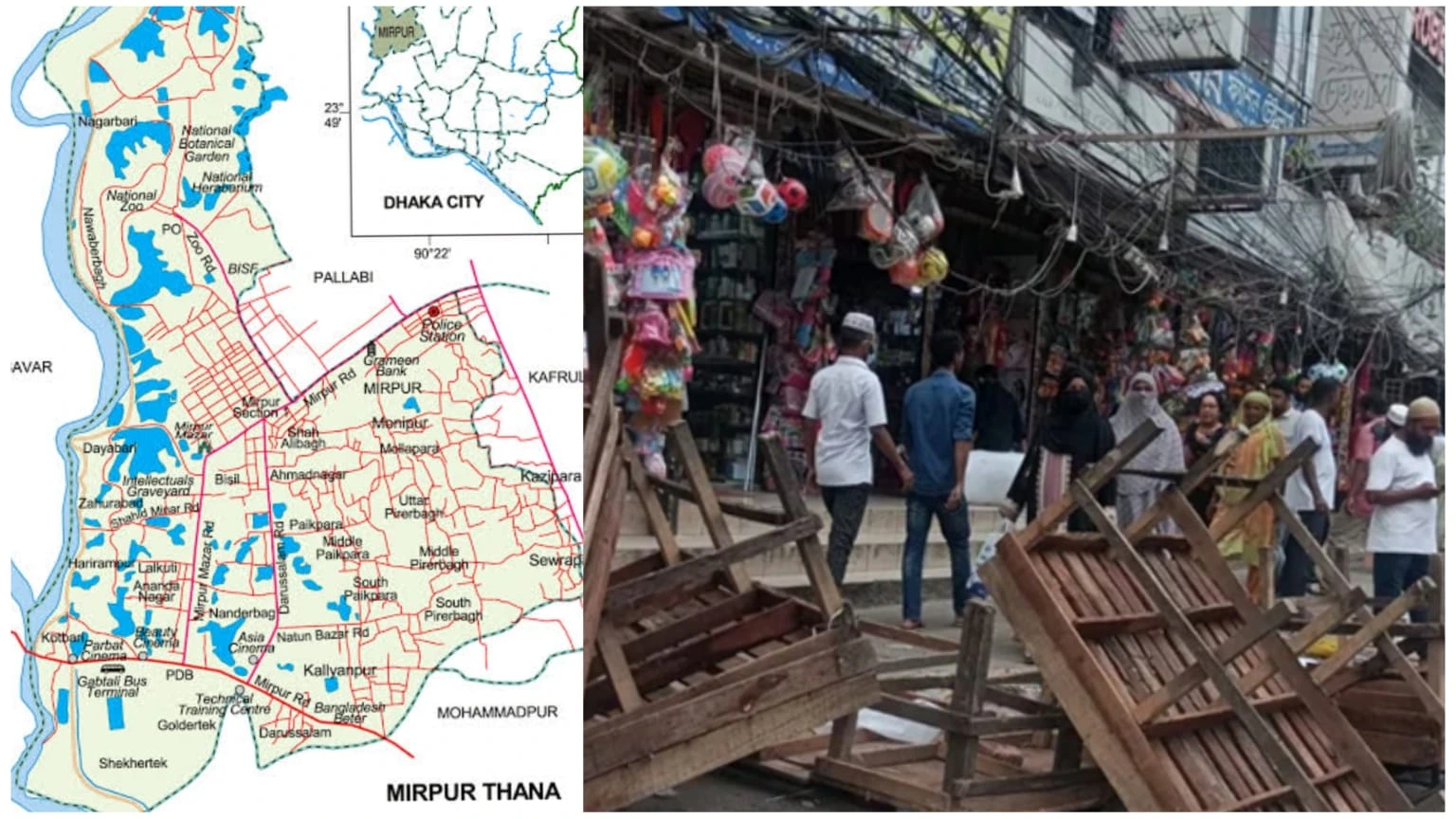
A drive to remove illegal shops from footpaths in Dhaka’s Mirpur area evicted some 2,000 shops. Hawkers were already setting up their stalls again within half an hour.
Clean in the morning, full by noon
Teams dismantled makeshift shops and confiscated goods, leaving pedestrians to have the walkways to themselves for a while. As soon as the teams moved off the hawkers started laying out their goods again at the same spots. The footpaths, which had just been emptied, filled up again as residents and commuters watched.
A Pattern We Know
The fast return is not a new thing. An hour after the earlier drive in Mirpur-1, hawkers were back and DNCC (Dhaka North City Corporation) had to launch a second operation. Five days after a drive on September 25, much of the cleared space around Shewrapara metro rail station was once again taken over by hawkers. The Mirpur-10 drive on September 30 had sparked clashes and burning of city corporation vehicles. There they kept watch on footpaths, the only reason they were clear for days.
Why it goes on
But officials say a drive alone is not enough and authorities must continue to monitor the area afterward. DNCC has said it will continue its drives and take tougher legal action against repeat offenders, including seizure of goods and arrests.
Hawkers say they depend on these stalls to feed their families and ask where they are supposed to go. Authorities have been relocating some vendors to designated spots in Mirpur but many are still on the footpaths. Reports have also highlighted the daily payments of Tk 50 to 100 made by hawkers to run their stalls.
What Residents Need
For pedestrians, footpaths are a daily war. Residents want permanent clearance, hawkers want rehabilitation. Without round-the-clock monitoring and proper relocation, Mirpur’s footpaths are likely to be filled up again after the next drive.
Discover More Stories Related to Tarique Rahman’s Japan Visit with Bangla Pulse
1. Why is Tarique Rahman visiting Japan, Türkiye and Saudi Arabia?
Tarique Rahman’s planned foreign visits aim to strengthen Bangladesh’s diplomatic, economic and strategic relationships. Japan is a key partner for trade and investment, while Türkiye and Saudi Arabia offer opportunities for climate cooperation, employment and investment. Read more about the Tarique Rahman Japan, Türkiye and Saudi Arabia visits.
2. What deals could Bangladesh sign during Tarique Rahman’s Japan visit?
Bangladesh and Japan could explore cooperation in trade, agriculture, fisheries, skilled employment, human resource development and environmental protection. Learn more about the potential agreements in this report on Tarique Rahman’s Japan visit and proposed deals.
3. How could Tarique Rahman’s Japan visit benefit Bangladesh’s economy?
The visit could help attract Japanese investment, expand export opportunities, create jobs and strengthen infrastructure and technology cooperation. Potential agreements could also support long-term economic ties between the two countries. Read the full report on potential deals during Tarique Rahman’s Japan visit.
4. Will Tarique Rahman discuss employment opportunities for Bangladeshi workers in Japan?
Employment opportunities and skills development are important areas of Bangladesh-Japan cooperation. Discussions may focus on skilled-worker recruitment, technical training and Japanese-language education to help Bangladeshi workers access employment opportunities. Explore the broader diplomatic agenda in the article on Tarique Rahman’s Japan, Türkiye and Saudi Arabia visits.
5. What are the key objectives of Tarique Rahman’s planned visits to Türkiye and Saudi Arabia?
The visits aim to strengthen Bangladesh’s international partnerships. Türkiye offers opportunities for climate diplomacy and cooperation, while Saudi Arabia remains important for labour migration, energy, investment and regional relations. Read more in the Bangla Pulse report on Tarique Rahman’s planned foreign visits.