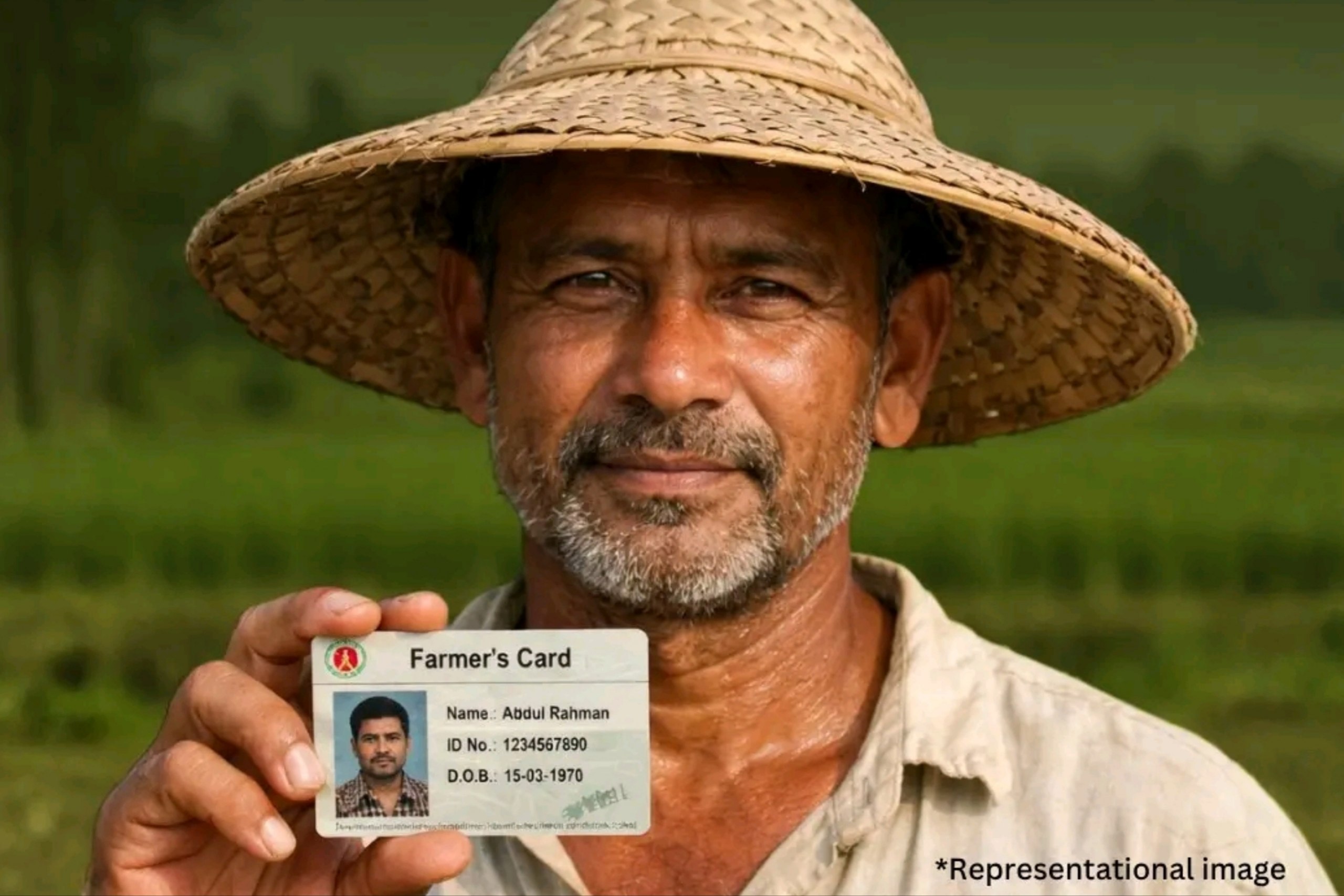
For decades, the agricultural subsidies in Bangladesh went through many layers of intermediaries before reaching the farmer. Leakage, middlemen and delayed distribution meant that the intended beneficiaries – small and marginal farmers – often got less than their fair share. The government’s new Farmers’ Card scheme aims to fundamentally change this system, putting the subsidy power directly in the hands of the farmer at the point of purchase.
Here’s everything you need to know about this watershed initiative.
What Is The Farmers’ Card Scheme?
The Farmers’ Card, locally known as কৃষক কার্ড (Krishok Card), is a digital identification and subsidy delivery card issued by the government for the registered farmers all over Bangladesh. The card is directly linked to a farmer’s NID, mobile number and land records. Where a cardholder visits an authorised dealer of fertiliser, seed or pesticide, the subsidy is automatically deducted at the point of sale. The farmer pays only the subsidised price, and there is no separate application, voucher or cash reimbursement process.
This is a departure from indirect subsidy to direct benefit transfer at the retail level, removing traditional supply chain distortions that have long afflicted the agricultural input distribution system of Bangladesh.
The Card covers the following subsidies
Farmers’ Card provides coverage for three broad categories of agricultural inputs:
Fertiliser Urea, DAP, MOP and TSP fertilisers are available at government fixed subsidised rates. Bangladesh’s budget for supporting agriculture has in the past been dominated by fertiliser subsidies, and the card ensures these subsidies reach the actual cultivator, rather than being eaten up by traders.
Seeds: Seeds of high-yielding variety (HYV) and certified seeds of rice, wheat, maize and vegetable crops are available at subsidised rates through authorised dealers of seeds registered under the scheme.
Pesticides and Agrochemicals: Some selected crop protection products from approved dealers are provided partial subsidy which helps to reduce the burden of input cost especially for smallholder farmers growing vegetables and cash crops.
Who can apply for the Farmers’ Card?
Its coverage is mainly for small and marginal farmers. Key criteria include:
Applicant must be a Bangladeshi citizen with a valid NID. They must be actively farming on owned or rented agricultural land. Farmers with up to 2.5 acres of land are given priority but medium-scale farmers may also qualify in some upazilas depending on local allocation. A lot of districts will also allow sharecroppers and tenant farmers with documented farming arrangements. Farmers need to be registered with their local Union Parishad/Upazila Agriculture Office.
Farmers’ Card Registration How to Apply for Farmers’ Card Registration will be done through the Department of Agricultural Extension (DAE) at the Upazila Agriculture Extension Office. The process comprises the following steps:
Visit the Upazila Agriculture Office in your area and ask for a Farmers’ Card application form. Submit a copy of your NID, land ownership or lease documents, recent passport size photographs and a mobile number registered on your name. At the field level, an agricultural officer (Block Supervisor or Sub-Assistant Agriculture Officer) may visit to verify your land and cultivation status. Once verified, your card will be digitally issued and linked to your NID and mobile number. Once your card is activated, you will receive an SMS confirmation.
Registration can also be done through the government’s Krishi Batok helpline or DAE’s online portal in fully operational areas.
Use of the Card at the dealer’s shop
The card is meant to be easy to use, even for farmers with little digital literacy. Let them know when you visit an approved dealer that you want to buy inputs using your Farmers’ Card. The dealer enters or scans your card information into the point-of-sale system. The system will check your eligibility and open subsidy allocation. The discounted price is automatically applied and you pay only the lower price. An SMS is sent to your registered mobile number automatically giving you a transaction record.
Each card has a set annual quota for subsidy and the Upazila and District Agriculture offices keep a real-time track of the transactions to prevent misuse.
Why this Scheme is Important For Farmers in Bangladesh
Every year Bangladesh spends tens of thousand crore taka as agricultural subsidies. But surveys by BIDS and other research institutions have invariably shown that a significant portion of this subsidy does not reach smallholder farmers. The Farmers’ Card system brings accountability, traceability and efficiency to a historically opaque distribution chain.
For the small farmer in Rajshahi, Cumilla or Barisal, the practical effect is clear: lower input costs, no need to pay market price and wait for reimbursement, and protection against fertiliser adulteration by unregistered dealers.
Conclusion
The government’s new Farmers’ Card scheme is a huge leap forward in facilitating transparent and efficient delivery of agricultural subsidies in Bangladesh. The scheme removes the middlemen by linking subsidies to the identity of the farmer and allowing deduction at the point of sale in authorised dealers, so that fertiliser, seed and pesticide subsidies go to those who need them most. The farmers are being advised to get registered at the nearest Upazila Agriculture Office as early as possible for getting their card before the next cultivation season.
Discover More Stories Worth Your Time
See Why Lawyers Refused Defence?
Explore how public outrage shaped the legal response in the Ramisa murder case.
Learn What Tk 5000 Buys?
Discover the difference between budget and luxury Eid shopping at New Market
Explore How Metro Travel Changes?
Discover essential MRT Line-6 tips for smoother Eid-ul-Azha travel across Dhaka this year.
Check How Riyadh Air Helps?
Explore ticket prices, baggage rules, and booking details for new Dhaka-Riyadh flights.
Find Which Trains Get Coaches?
Discover extra Eid train services and how to secure tickets before the rush.
FAQs
Q1: Is Farmers’ Card available in all districts of Bangladesh?
The scheme has been rolled out gradually. As of 2025, the card is operational in a large number of upazilas of major agricultural districts in Mymensingh, Rajshahi, Rangpur, Cumilla and Barisal divisions. Coverage is being rolled out across the country steadily. Farmers in areas where the card is not yet activated are encouraged to register their interest at their Upazila Agriculture Office so that they are included in the next stage of rollout.
Q2: What if the farmer loses his/her Farmers’ Card or changes his/her mobile number?
In case of card lost or change of mobile number, the farmer has to go to their Upazila Agriculture Office with their NID and submit a card replacement or update request. The account and subsidy balance are secure as the card is digitally linked to the NID and not just physically linked to the card. Replacement card may be issued after re-verification of identity. Farmers are advised to keep their registered mobile number active for the purpose of receiving transaction alerts.
Q3. Is a sharecropper or tenant farmer who does not own land eligible for the Farmers’ Card?
Yes, in the majority of cases. The scheme acknowledges the fact that a large proportion of Bangladesh’s cultivators do not own the land on which they farm. Sharecroppers and tenant farmers can apply with a verifiable lease or sharecropping agreement and their NID. The application will be evaluated by the local Block Supervisor on the basis of actual cultivation activity. The inclusion is one of the most progressive features of the scheme as it targets the most economically vulnerable section of the farming community.