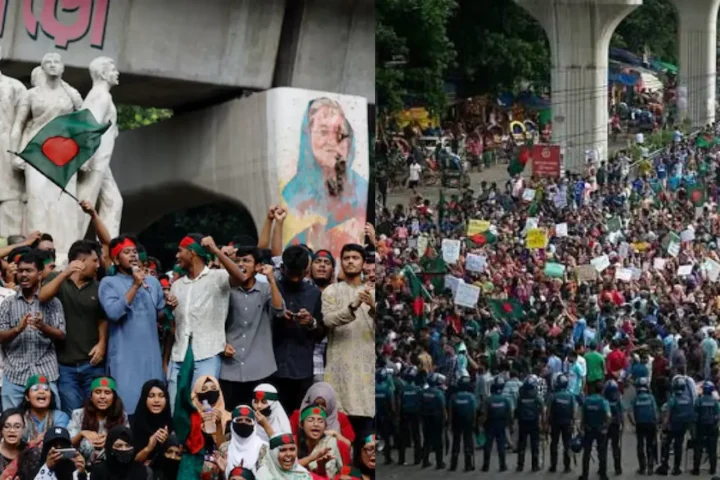

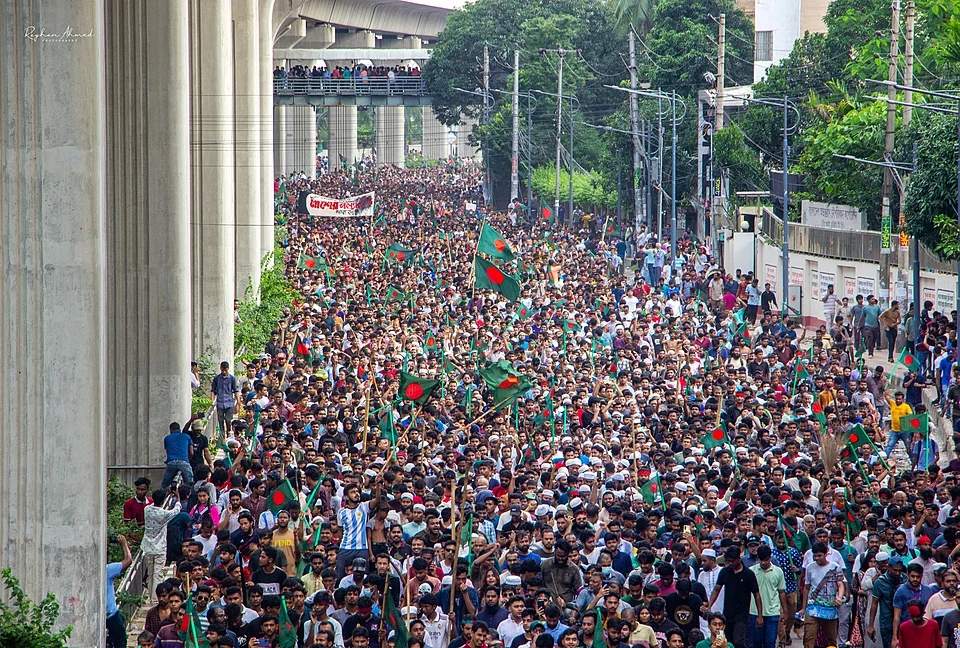
Two years on, the streets that once filled with tear gas and chanting students look ordinary again. But talk to almost anyone under thirty in Dhaka, and you’ll find the July Uprising is still the central fact of their political lives — the moment they stopped believing change was impossible and started learning how hard it is to actually deliver.
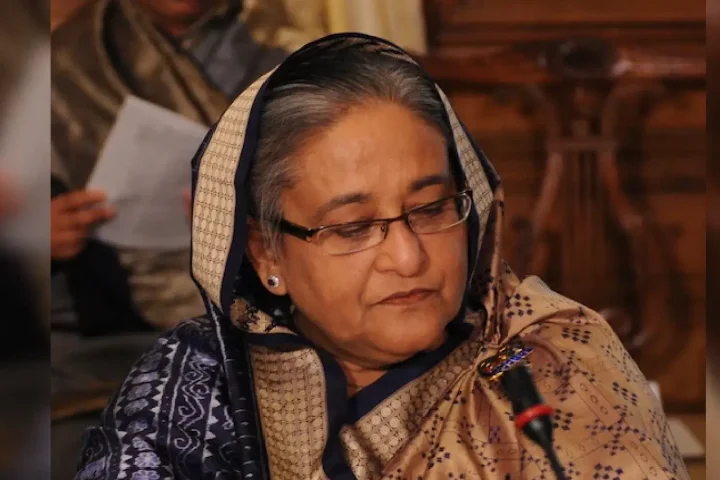
The uprising began, as these things often do, over something narrower than what it became. Its roots trace back to early June 2024, when the Supreme Court invalidated a 2018 circular that had redefined public-sector job quotas, and a coalition of university students responded with what started as peaceful protests for a fairer, more merit-based system. Within weeks it stopped being about quotas at all. By the time Prime Minister Sheikh Hasina fled to India on August 5, 2024, Dhaka’s streets were full of ordinary young people — students, but also workers and families — who made clear they didn’t just want one party swapped for another. They wanted the freedom to speak without fear, jobs based on merit rather than patronage, and a government that could actually be held to account.
That distinction — reform versus mere regime change — is the thread running through almost everything young Bangladeshis say now.
What the uprising taught a generation
For many, the deepest lesson wasn’t political at all. It was psychological. A generation that had largely resigned itself to seeking opportunity abroad, convinced meaningful change wasn’t possible at home, found that belief overturned almost overnight, replaced by a sense of resilience and ownership over the country’s direction. That shift — from cynicism to agency — is something even critics of how the aftermath unfolded still describe as real and lasting.
The other lesson was more sobering: moral clarity on the street doesn’t automatically convert into power in parliament. Analysts who studied the movement note it wasn’t an isolated outburst but the product of years of authoritarian governance, denied democratic voice, and a young population — Bangladesh’s under-35s make up more than half the country — determined to reclaim a future it felt had been foreclosed. That determination built a movement. It did not, it turned out, build a party machine.
From the street to the ballot box
The February 2026 general election was the uprising’s first real electoral test, and for many young activists it landed as a genuine gut-check. The National Citizen Party, the youth-driven force that grew directly out of the 2024 protests, secured only six seats in the 300-member parliament, exposing how difficult it is to turn street momentum into votes. Voters instead overwhelmingly backed the long-established Bangladesh Nationalist Party, a party that had already governed the country three times before, most recently in the early 2000s.
Part of this was tactical: many NCP supporters felt the party had effectively sidelined itself by choosing, that December, to run in coalition with another long-established force, the Islamist party Jamaat-e-Islami. Part of it was structural. Researchers who’ve studied the outcome point out that while the protests reshaped the political agenda around institutional reform and constitutional change, established parties still held the advantage of long-standing networks, disciplined organisation, and grassroots reach that a two-year-old movement simply hadn’t had time to build.
There’s also a generational irony worth sitting with. Some analysts read the result less as rejection of the uprising’s ideals and more as fatigue with confrontation itself — many young voters, after two years of upheaval, seem to have prioritised stability over further experimentation. The revolution’s children, in other words, may have voted for calm.
Not everything was defeat, though. Alongside the parliamentary vote, a referendum on the July National Charter — a package of 84 reforms including term limits, a bicameral parliament, and stronger checks on executive power — passed with just under 73 percent approval, giving the incoming government at least a mandate to legislate the kind of structural change protesters demanded, even if the protesters’ own party didn’t win the seats to enforce it.
Living with the aftermath
For some of the movement’s original organisers, the last year has been harder than the uprising itself. Reporting from the anniversary period describes activists confronting what one piece bluntly called learning what it means when a revolution eats its own — the gap between what was promised in the heat of the moment and what interim and elected governments have actually delivered. Youth unemployment, economic pressure, and the slow grind of institution-building don’t photograph as well as a toppled government, and for a generation that organised largely online and in the street, the shift to unglamorous policy work has been disorienting.
There’s also a harder question some young Bangladeshis are now sitting with: who filled the vacuum. Jamaat-e-Islami, a party with a fraught history tied to opposition against Bangladesh’s 1971 independence, spent the campaign moderating its public image and positioning itself as the anti-establishment alternative — a repositioning that unsettled many of the secular, pluralist voices who had driven the original protests.
What comes next
None of this reads as regret, exactly. It reads more like a generation recalibrating — trading the adrenaline of mass mobilisation for the slower, less satisfying work of holding an elected government to the promises made in its name. The July Charter referendum gives young reformers a legal foothold. Whether Bangladesh’s new BNP-led parliament — under Tarique Rahman, in the party’s first win in twenty years — actually uses that mandate for the anti-corruption and accountability reforms the uprising demanded, or drifts back toward old patterns of patronage politics, is the question that will define whether young Bangladeshis look back on 2024 as the start of something or as a moment that got away from them.
Either way, the generation that filled Dhaka’s streets says it isn’t going anywhere. It’s just learned, the hard way, that toppling a government and building a country are two very different jobs.
Summary: Bangladesh’s youth reflect on the July Uprising two years on: a landslide election loss for youth-led parties, a reform referendum that passed, and a generation learning that toppling a government is easier than building the one that follows.