

In the heart of the Delta, the area where the river splits into a thousand channels and lurking predators seem to be hiding under every mangrove root, the boatmen stop making noise.
He dips his hand in the water and says a prayer. A fisherman lights a stick of incense next to a small shrine. No one says it out loud, but everyone in the area knows who they are asking permission from. Not the forestry department. Not the authorities. They are asking for permission from the mighty King of the South.
Who Is Dakshin Rai, the Legend of Mangrove?
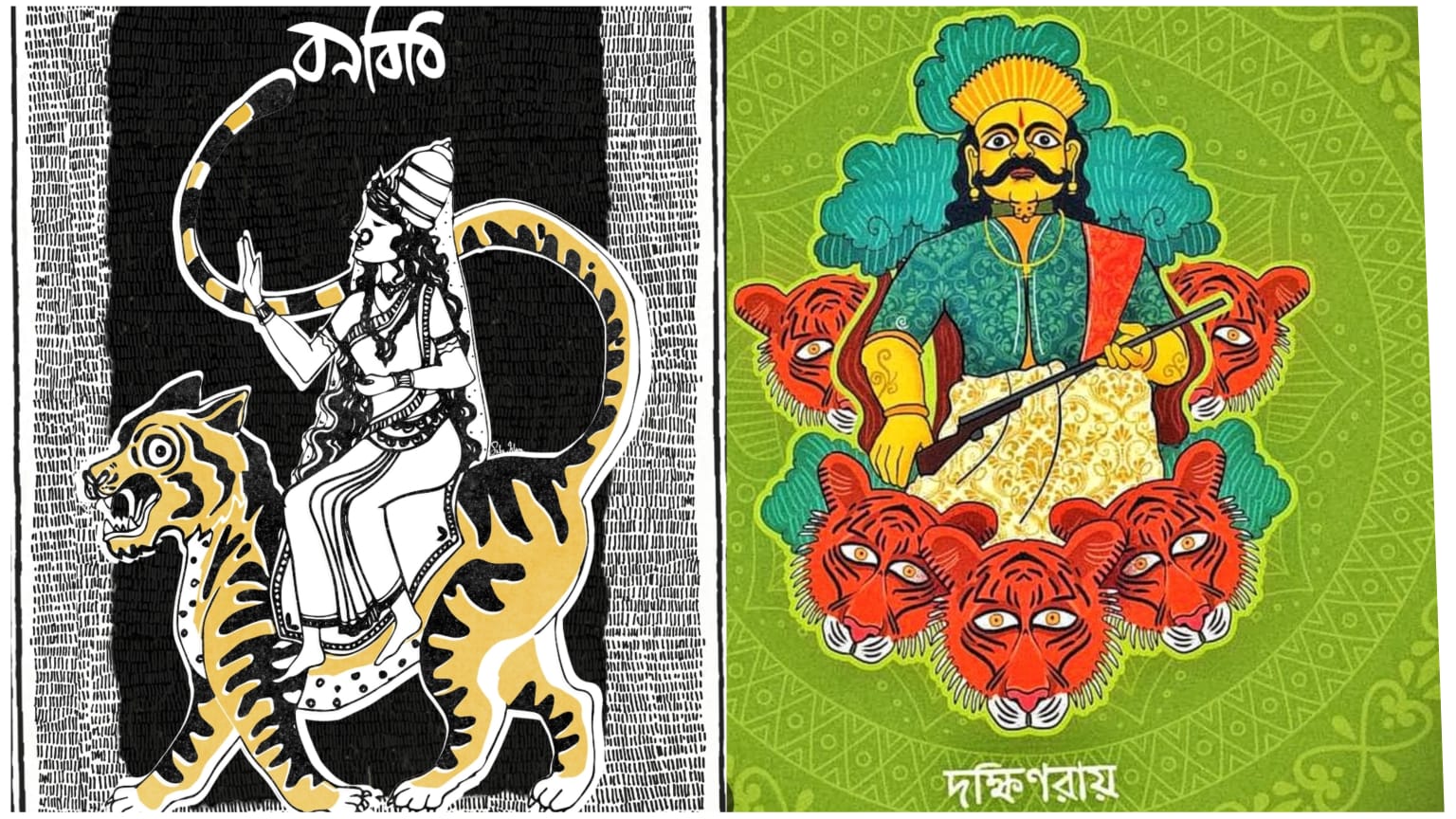
His name means ‘King of the South’ – a nod to the southern mangrove world of the Sundarbans. According to folk tradition, he is the lord of the beasts of the forest, demons and spirits and the being who commands the tiger or who sometimes appears as a tiger.
His appearance varies depending on who’s telling the tale. In some versions, he is a full tiger. In others, he is a human lord with tiger-like whiskers and stripes. This changing form is in accordance with his nature of ichha-rupi, one who can take any form he wishes. And that has some heft for people living next to real tigers. The creature in the reeds might be more than a creature watching.
The Legend of Bonbibi
Bonbibi Johuranama, and this account is the most famous. Dakshin Rai is a lord of the forest, who demands tribute or prey from every person coming to the jungle, and he is met by Bonbibi, the one who protects rainforests in a way that brings morals into the proceedings of mankind and the wild.
In the widely known version, Bonbibi overpowers Dakshin Rai but lets him go after he promises to never let tigers kill people. After that, he goes deep into the forest and becomes a tiger, thus being defeated but never really absent.
At the Bonbibi festival, the story is retold every year in January or February. This festival gathers both Hindu and Muslim communities under one roof to listen to this story.
The influence of belief in everyday life
For those who earn their living from the forest, this is not simply a lore from the past. Many of them pay reverence to Dakshin Rai and Bonbibi today at their shrines before entering the tiger territory to collect honey, cut wood, or fish. They seek blessings on their way to the safari.
Some people from the forest have a custom of putting on a tiger mask on the back of their heads. The purpose of this is to confuse the tiger coming from behind. Such a simple practice shows how spirituality and survival can be connected in this place.
A Quiet Style of Conservation
This belief works as an implicit conservation rule. Tigers are the representation of Dakshin Rai. Therefore, people believe it is taboo to harm tigers. Thus, this respect prevents poaching while preserving the importance of tigers in the ecosystem of the mangroves.
Dakshin Rai should not be seen as a mere demon. In older Bengali punthi literature, including the late seventeenth-century Raya-mangal, he is a powerful deity whose favour can protect his devotees. In the Bonbibi tradition, he is the wild, predatory side of the forest.
The two figures together provide a balanced view of the world. Bonbibi is the protector of the genuinely needy and humble who enter the forest. Dakshin Rai is the owner of the forest and its right not to be exploited. One granted mercy, the other warning, and the folk of the mysterious delta respected them both.
Why this Legend Lives On in the Folklore of the Bangladeshi Majhi Community
The Sundarbans is one of the world’s most perilous tiger habitats, and thousands of livelihoods depend on navigating it. In this context, Dakshin Rai continues to be a living framework for risk management, respect and learning to co-exist.
His worship is a simple message. The forest is not simply there to be extracted from. This is a shared domain, and anyone who enters must proceed with caution and restraint. As long as people rely on the mangroves, the King of the South will likely remain in their prayers.
Discover the Legend of the Sundarbans Delta with Bangla Pulse
1. Which venomous snakes are a real threat in Bangladesh, and how can people identify them?
From cobras and kraits to vipers, discover the venomous snakes found across Bangladesh and why they remain a serious concern.
2. Did you know a new island has emerged in the Sundarbans?
Explore the story behind the new island in the Sundarbans and what its appearance could mean for this fragile ecosystem.
3. Why are Bangladesh’s wild birds increasingly at risk from poaching?
Take a closer look at the illegal bird trade and poaching threatening the country’s wildlife.
4. What makes Sundarbans honey collectors enter one of the world’s most dangerous forests?
Their search for honey can bring them face-to-face with Royal Bengal Tigers. Discover why these collectors continue to risk their lives.
5. Is there more to the Sundarbans than science can explain?
From mysterious stories to local beliefs, explore the fascinating debate between science and superstition in the Sundarbans.