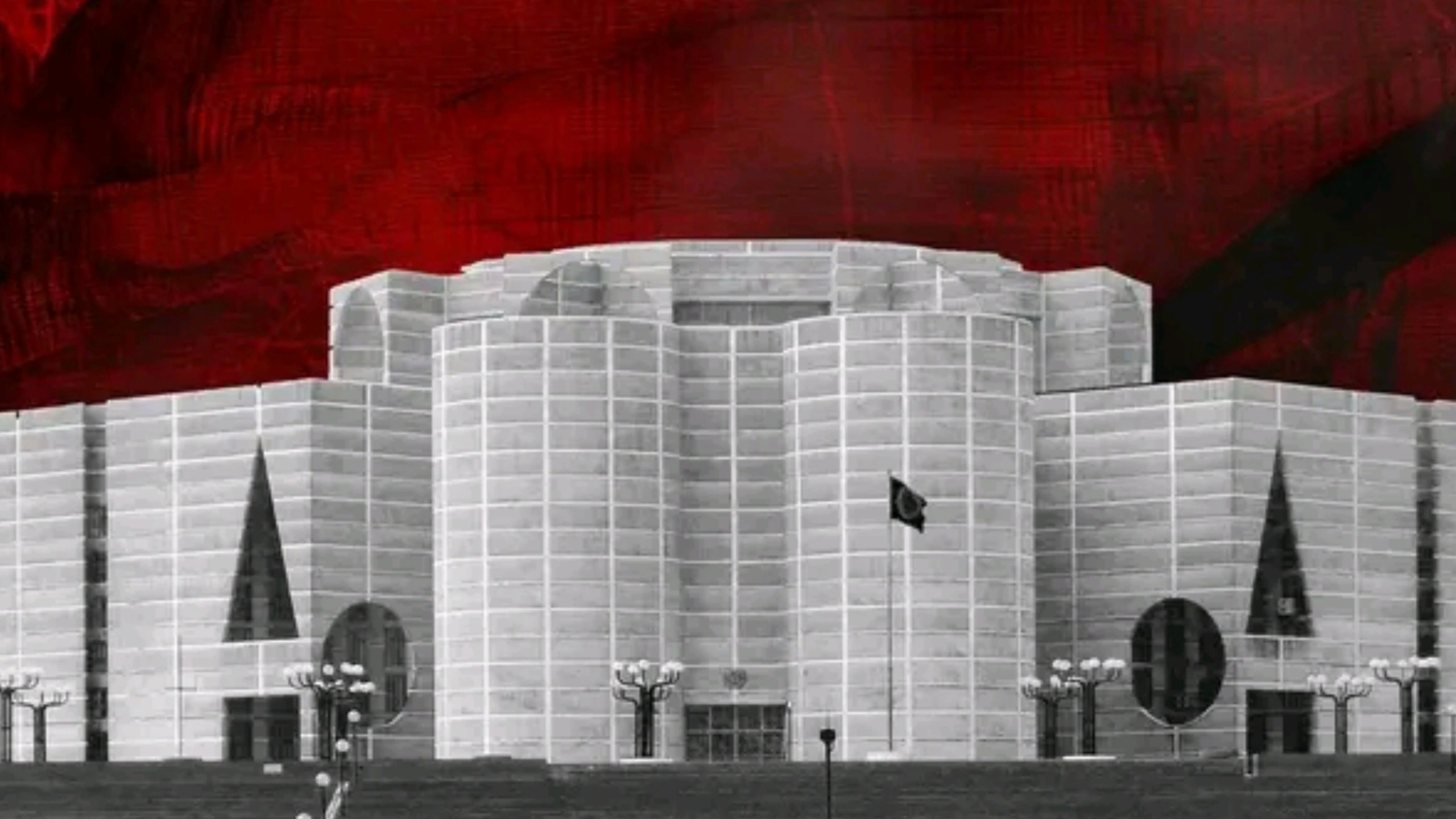
Bangladesh’s February 2026 vote was unusual in that it asked citizens two questions at once. The first was who should govern. The second was how much power that government should be allowed to hold. On both counts, voters delivered a clear answer. The Bangladesh Nationalist Party, led by Tarique Rahman, won 209 of 297 declared parliamentary seats, a commanding majority that ended the long shadow of the “two Begums” era and marked the country’s first credible election in nearly two decades. Alongside that vote, close to 60 per cent of voters approved the July National Charter, a reform package built on proposals for a bicameral parliament, prime ministerial term limits, expanded women’s representation, and stronger checks on executive power.
That combination, a landslide for one party and a popular mandate to constrain whoever holds power, was meant to be complementary. In practice, it has become a source of tension. The BNP now governs with an overwhelming majority in a system that the same electorate voted to make less majoritarian.
Jamaat’s Strong Second Place Complicates the Picture
Jamaat-e-Islami’s performance added another layer of complexity. The party won 68 seats, becoming the principal opposition force and emerging as more resilient than many expected, even as its campaign built partly around religious and identity appeals showed limits in areas with strong Sufi influence, such as Chittagong Division, Cumilla, and Sylhet. Jamaat did not offer a detailed constitutional blueprint of its own during the campaign, but it consistently backed reforms that would disperse power and increase institutional oversight, positioning it as a natural, if uneasy, ally of the Charter’s spirit even as it remained politically opposed to the BNP.
The student-led National Citizen Party, born out of the 2024 uprising that ousted Sheikh Hasina, added a third pole to this picture. Though it won just six seats, its symbolic weight as the movement that reshaped Bangladeshi politics gives it influence beyond its numbers, particularly on questions of reform sincerity.
The Boycott That Signalled Trouble Ahead
The clearest sign that the mandate would not translate smoothly into governance came almost immediately. When the BNP government was sworn in on February 17, it did so amid a boycott by the Jamaat-NCP coalition, who objected specifically to the sequencing of how July Charter reforms would be implemented. The dispute was not over whether reforms should happen, since all major parties had publicly supported the Charter, but over whether the BNP would prioritise consolidating its own government first or move quickly on the structural changes voters had approved.
This is the crux of Bangladesh’s unfinished business. The BNP’s public campaign position was unambiguous support for the Charter, framed as a safeguard against a return to one-party dominance. But reporting on the party’s internal dynamics has pointed to quiet unease among some BNP figures about specific provisions, particularly those limiting the prime minister’s role and redefining the balance between party leadership and government office. A party that has just won an overwhelming majority has less obvious incentive to move quickly on rules that would constrain that very majority.
What Implementation Actually Requires
The Charter’s provisions are not simple administrative tweaks. Establishing a bicameral parliament with a 100-member upper house, introducing enforceable prime ministerial term limits, and building durable mechanisms for judicial and parliamentary accountability all require legislation, institutional capacity, and, in several cases, further constitutional procedure. Analysts have noted that if implemented faithfully, the Charter could meaningfully redistribute institutional power and strengthen checks that were absent or eroded under previous governments. That “if” is doing a lot of work.
There is also an unresolved question of legitimacy that hangs over the entire process. The Awami League, the party that governed Bangladesh for most of the past two decades under Sheikh Hasina, was not permitted to field candidates in the election, and Hasina herself urged her supporters not to vote at all. Some observers have framed this exclusion as accountability for the 2024 crackdown that preceded her ouster. Others have called it a democratic deficit that leaves a significant segment of the electorate formally unrepresented in the very parliament tasked with finishing the reform project. Either way, it means the referendum’s mandate, however strong numerically, does not carry universal political buy-in.
Discover More Stories Worth Your Time
See How Microplastics Spread?
Discover why Bangladesh’s rivers, salt pans, and fish markets are raising concern.
Find Why Wetlands Face Threat?
Explore how invasive turtles are disrupting biodiversity in Dhaka’s waterways.
Learn Why Army Took Custody?
Discover the latest developments in the Brig Gen Miftah Uddin tribunal case.
Explore What Follows Shahabuddin’s Exit?
Discover how Bangladesh’s leadership could change after the president’s departure.
Check Why Assault Case Filed?
Explore the allegations involving actress Snigdha Chowdhury and the Ashiyan chairman.
A Test of Sincerity, Not Just Capacity
Bangladesh’s challenges since February have gone beyond constitutional sequencing. The new government has had to manage youth unemployment, cost of living pressures, and questions about press freedom and minority protections, all while international partners watch for signals on economic management and investor confidence. But the reform question sits underneath all of it, because it determines what kind of government Bangladesh will have going forward, one bound by the checks its own electorate demanded, or one that treats a landslide victory as a mandate to govern largely on its own terms.
The BNP has not rejected the Charter. It has not walked away from its campaign commitments. But the gap between endorsing reform in principle and delivering it in practice is precisely where Jamaat, the NCP, and a watchful electorate are now applying pressure. A landslide win settled the question of who leads Bangladesh. It has not yet settled the question of how that leadership will be constrained, and that remains the unfinished business of the 2026 referendum.
Summary: The BNP’s decisive February 2026 election win, paired with a successful referendum on the July National Charter, gave Bangladesh a rare dual democratic mandate. Yet months into Tarique Rahman’s government, disputes over how and when constitutional reforms will be implemented, along with friction with Jamaat-e-Islami and the NCP, show that winning power was only the first step in a much longer contest over the country’s political future.