

India has a new ship in the water, and it could matter more to Bangladesh than most people realise. On September 9, the Ministry of Earth Sciences launched ORV Sagar Manthan at the Rishi Bankim Shipyard in Kolkata, just across the border from Bangladesh’s western coastline. The vessel is not a warship or a patrol boat. It is a research platform built to study the ocean, and the ocean it will spend a lot of time in is the Bay of Bengal, the same body of water that sends cyclones toward Bangladesh nearly every year.
What Exactly Is Sagar Manthan
Sagar Manthan is an indigenous ocean research vessel built by Garden Reach Shipbuilders and Engineers for the National Centre for Polar and Ocean Research. It cost around Rs 840 crore, stretches 89.5 metres long, and weighs close to 5,900 tonnes. It is fitted with dynamic positioning, multibeam bathymetry systems, weather radar, and equipment for deploying autonomous underwater vehicles. The ship is expected to be fully operational by early 2028 and will eventually take over from the ageing ORV Sagar Kanya, which India bought from Germany back in 1983.
Why a Research Ship Matters for Cyclones
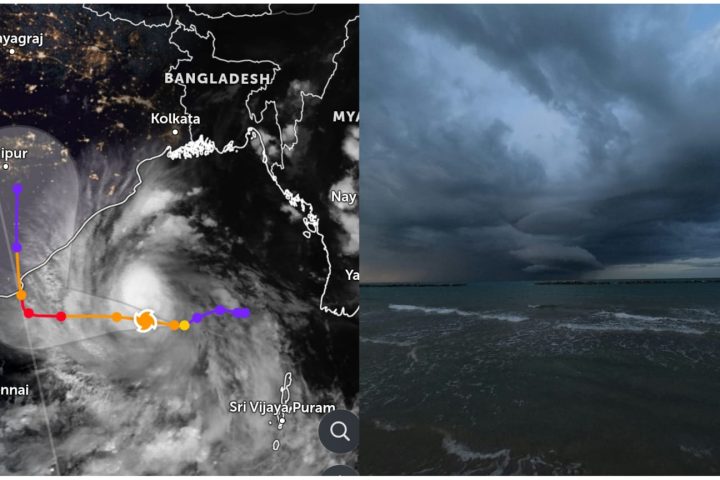
Cyclones in the Bay of Bengal form and grow stronger based on ocean conditions such as sea surface temperature, salinity, and the way heat moves between water and air. The more accurately scientists can measure these conditions, the better weather models become at predicting a storm’s path and strength. Sagar Manthan carries instruments for atmospheric observation and water column sampling, which means it can gather this kind of data directly from the sea rather than relying only on satellites. Over time, that extra layer of real ocean data can feed into the forecast models that agencies across South Asia use, including those that track storms heading toward the Bangladesh coast.
It is worth being clear that Sagar Manthan was not built specifically as a cyclone hunter. Its main job is deep ocean survey work under India’s Deep Ocean Mission, covering everything from seabed mapping to climate research in the Southern Ocean. Any benefit to cyclone forecasting would come as a side effect of better regional ocean data, not from a dedicated storm tracking mission.
What This Could Mean for Bangladesh
Bangladesh sits at the northern edge of the Bay of Bengal, right in the path of the region’s most destructive storms. Cyclones such as Sidr, Aila, and more recently Mocha have shown how quickly a system can strengthen over these warm waters. Better data on how the bay behaves, even if that data is collected mainly for India’s own research goals, tends to improve the shared pool of information that regional and global forecast models draw from. Bangladesh Meteorological Department forecasts, along with international models, already lean on ocean data from multiple countries and agencies. A new, better-equipped vessel operating regularly in the bay adds one more reliable source to that pool.
There is also a longer-term angle. India has said it plans to add more oceanographic vessels in the coming years as part of the same mission. If that happens, the Bay of Bengal could see more consistent, higher-quality monitoring than it has had in decades, which matters for a region where cyclone forecasting still has real gaps in lead time and accuracy.
Discover More Stories Worth Your Time
Explore Why Dengue Cases Rising?
Discover what is driving Bangladesh’s latest dengue surge and the health concerns emerging nationwide.
See Why Rising Seas Threaten Dhaka?
Discover why the UN warns millions across Mumbai, Kolkata, and Dhaka face immediate coastal risks.
Find Why Trump Praised Tarique?
Explore what the US president’s letter says about the Boeing aircraft deal.
Learn How Adani Supply Returns?
Discover how Bangladesh’s payment settlement helped restore full electricity supply from the Godda plant.
Check How Sylhet Border Watch Improves?
Explore how the new facility strengthens Bangladesh’s border surveillance and drone capabilities.
The Bigger Picture
Sagar Manthan will not be ready for full deployment until 2028, so any real impact on forecasting is still a few years away. But its launch signals a shift in how India is approaching ocean science, moving from ships bought abroad to vessels built and equipped at home. For a country like Bangladesh, where cyclone preparedness can mean the difference between a manageable evacuation and a major disaster, any improvement in the underlying science of the Bay of Bengal is worth watching closely, even when it comes from a neighbour’s research budget rather than a dedicated early warning programme.
FAQ
What is ORV Sagar Manthan?
It is an Indian ocean research vessel built for deep-sea survey and climate research, launched in Kolkata on September 9, 2026.
Will Sagar Manthan directly track cyclones?
No. It is a research ship, not a dedicated cyclone tracking vessel, but the ocean data it collects could improve forecast models over time.
When will the vessel be fully operational?
It is expected to be ready for deployment by early 2028.
Summary: India has launched ORV Sagar Manthan, a Rs 840 crore research vessel built for deep ocean survey work. It will collect ocean and weather data from the Bay of Bengal, the same waters that produce the cyclones Bangladesh faces every year, and that data could eventually sharpen forecast models used across the region.