
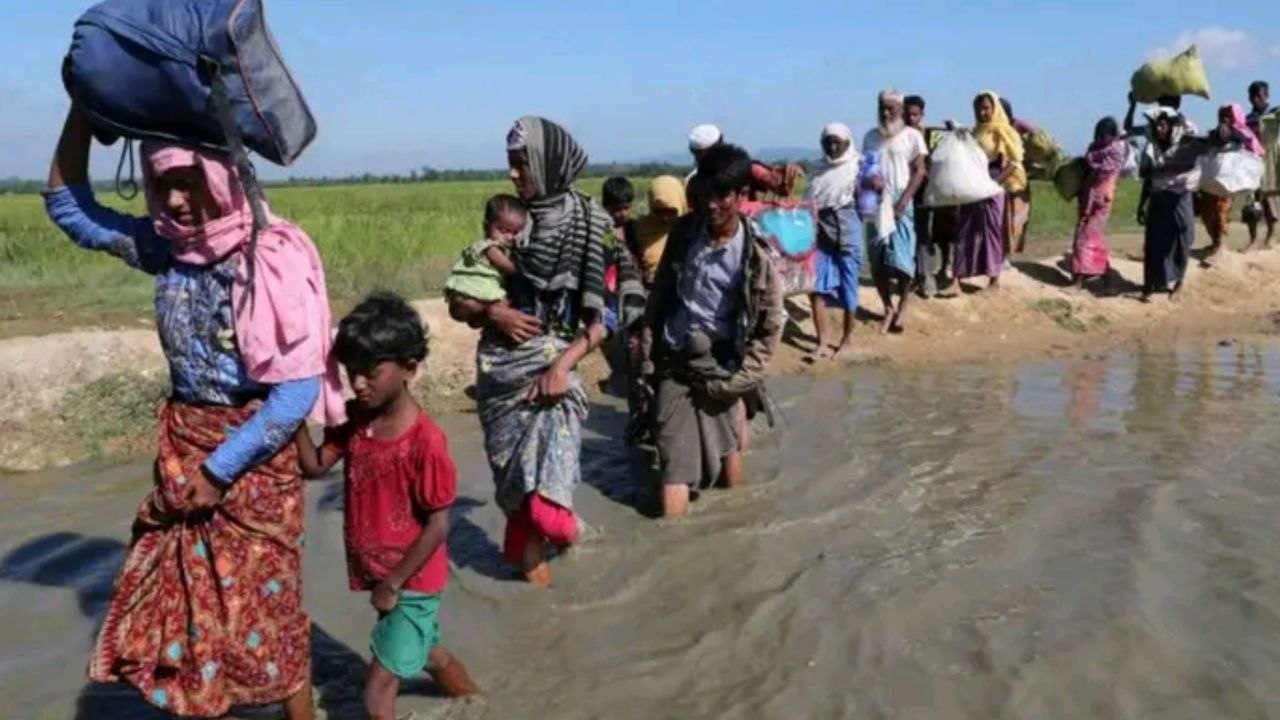
The ongoing political and security crises in Myanmar have created new challenges for Bangladesh amid the unresolved Rohingya refugee crisis. The power struggle between the different factions in Rakhine State, where the Arakan Army became the dominant armed organisation in large parts of the region, is relevant for Bangladesh, as Rakhine will play a crucial role in the eventual repatriation of the Rohingya refugees.
Power dynamics in Rakhine State have changed
The political landscape of Myanmar has become highly complex recently as the military fights against the Arakan Army in Rakhine State. Arakan Army now controls the territory and exerts authority in the state and has created a new set of challenges in the context of the Rohingya crisis for the international community. It is especially important for Bangladesh, as any sustainable repatriation program should consider not only the situation at the central level of government in Myanmar but also what happens on the ground in Rakhine State.
Reasons for the challenge of repatriation
Bangladesh has been home to many Rohingya refugees for years, but it is still not certain about the feasibility of a safe and sustainable repatriation process. The article from The Daily Star suggests that sending the refugees back across the border will not solve the very issues that led to the displacement of the people. Citizenship, freedom of movement, the right to participate in politics, the right to security, and property rights have all
been mentioned. Dhaka has stated that a repatriation agreement would need to come with guarantees instead of just a time frame for repatriation.
Role of the Rohingyas in Myanmar’s future
An additional factor is the political participation of the Rohingya themselves. According to The Daily Star, decisions regarding Rakhine State and Myanmar’s political future in general cannot be taken without their participation. It is significant in relation to Bangladesh since, in case of the Rohingyas’ return without legal and political guarantees, the refugees may become vulnerable and exposed to further displacement. Therefore, the aim of Dhaka is not limited to the reduction of the number of refugees in Bangladesh but involves ensuring conditions for their safe return and preservation of the most basic rights.
Discover More Stories Worth Your Time
Explore Why Dengue Cases Rising?
Discover what is driving Bangladesh’s latest dengue surge and the health concerns emerging nationwide.
See Why Rising Seas Threaten Dhaka?
Discover why the UN warns millions across Mumbai, Kolkata, and Dhaka face immediate coastal risks.
Find Why Trump Praised Tarique?
Explore what the US president’s letter says about the Boeing aircraft deal.
Learn How Adani Supply Returns?
Discover how Bangladesh’s payment settlement helped restore full electricity supply from the Godda plant.
Check How Sylhet Border Watch Improves?
Explore how the new facility strengthens Bangladesh’s border surveillance and drone capabilities.
Dhaka and Myanmar’s political transformation
Changing the power system in Myanmar may involve Bangladesh facing more diverse actors when seeking a solution to the Rohingya issue. The emergence of the Arakan Army implies a new diplomatic situation, in which Dhaka will have to cooperate with the group, while it will not receive international political recognition yet. The Rohingya crisis has regional consequences and may influence not only Bangladesh and Myanmar but also ASEAN as an example of a regional organization.
Rakhine’s changing power balance adds pressure on Dhaka
The rising influence of Arakan Army in Rakhine state has further complicated the matter of repatriation of Rohingyas back into their native land. The fact that this insurgent group wields control over large swathes of land in Rakhine state means that the dynamics on the ground will be equally crucial as the policies formulated by the Myanmar government in this regard.
Why is the issue important for Bangladesh?
For Bangladesh, the political transformation in Myanmar is closely linked to border security, the refugee problem, and the potential repatriation of Rohingya people at a future date. The refugee problem is a decade-old one, and due to funding pressures, Bangladesh is shouldering an immense humanitarian responsibility. Thus, the new political environment in Myanmar has further made it difficult to find a long-term solution. To make any long-term arrangement work, it would be essential to take into account not only the political and security situation in Rakhine but also the status of Rohingya people.
Summary:
Myanmar’s shifting political and security dynamics, especially in Rakhine State, complicate the Rohingya refugee problem for Bangladesh.