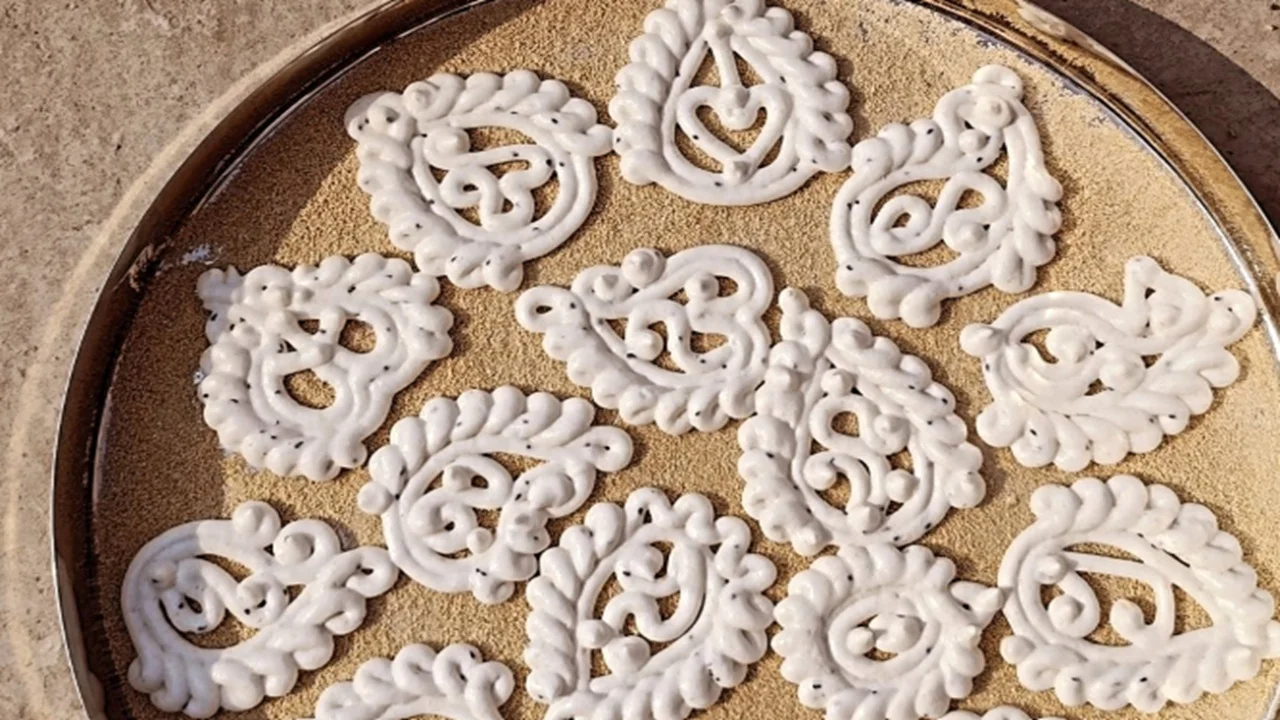
When the Bengali winter settles in, with its soft sun and cool mornings, something lovely happens on rooftops and courtyards. Cloths and plates appear, covered in tiny patterned lentil dumplings, drying slowly in the light. These are noksha bori, and anyone who has seen a tray of them will understand why they are called jewellery on a plate.
The word noksha means a pattern or design, and that is the whole charm. Each bori is a little work of art, piped by hand into flowers, leaves, spirals and tiny geometric shapes. For generations, making them has been a winter ritual in Bengali homes, often a family affair with grandmothers, mothers and children sitting together with a bowl of batter. The good news is that you do not need any special skill to try it. You need patience, a steady hand and a bright winter day.
What You Will Need
- One cup of urad dal (black gram, split and skinned)
- A small piece of ginger, finely grated
- A pinch of asafoetida (hing)
- Salt to taste
- Optional flavourings: a teaspoon of poppy seeds, nigella seeds or white sesame
- A piping bag or a strong plastic cone with a very small hole at the tip
- A clean cotton cloth, muslin or a flat plastic sheet or plate for piping
Step One: Soak the Dal
Wash the dal well and soak it in plenty of water for six to eight hours, or overnight. The dal should be soft enough to crush easily between your fingers. Drain it completely afterwards, because too much water makes the batter runny and the patterns will spread.
Step Two: Grind to a Thick Paste
Grind the dal in a blender or grinder, adding water a spoonful at a time. You want a thick, smooth paste, so go slowly. This is the stage where most beginners add too much water. A thicker paste holds its shape beautifully when piped.
Step Three: Whip It Light
Transfer the paste to a wide bowl and beat it vigorously with your hand or a whisk for five to ten minutes. This is the secret to soft, airy bori. To test it, drop a small bit of batter into a bowl of water. If it floats, it is ready. If it sinks, keep beating.
Once it floats, fold in the ginger, asafoetida, salt and any seeds you like.
Step Four: Pipe Your Patterns
Fill your piping bag or cone with the batter and snip a small opening. Spread your clean cloth or plastic sheet on a flat surface, and lightly oil it if you are using plastic so the bori lift off easily later. Now pipe, and have fun. Start with simple swirls and tiny flowers, then try leaves and linked designs once your hand settles. Keep the pieces small, since thin bori dry faster and more evenly.
Step Five: Dry in the Sun
Carry the Naksha Bori tray to a sunny, airy spot, such as a terrace or balcony. Keep it out of the wind so dust does not settle, and cover it with a light net if you have crows or birds around. Depending on how strong the sun is, the bori need two to four days to dry fully. Turn them over once the tops are firm so the undersides dry too.
You will know they are ready when they lift off easily and snap crisply. If they bend, they need more sun.
Storing Your Bori
Let them cool completely, then store them in an airtight jar. On humid days, spread them in the sun for an hour or two before storing again. Kept dry, they last for months.
How to Use Noksha Bori
Fry them in hot oil for a few seconds until golden and add them to shukto, dal, or a vegetable chorchori for a lovely crunch. Or serve the fried bori on their own with tea, where they make a delightful snack.
A Few Friendly Tips
- Do not rush the beating. The airiness comes from it.
- Keep the batter thick, and add salt only at the end.
- Practise your patterns on a plate first before piping onto cloth.
- Make them early in the season, when the sun is gentle but reliable.
What is noksha bori?
Noksha bori are decorative sun-dried dumplings from Bengal, made from ground lentils and piped into patterns.
Which dal is used for bori?
Urad dal is the traditional choice, because it whips up light and dries crisp.
How do I know if the batter is ready?
Drop a small spoonful into water. If it floats, the batter is properly aerated.
How long do bori take to dry?
Usually two to four days, depending on how strong and steady the sun is.
Can I make them without a piping bag?
Yes. A strong plastic bag with a tiny corner snipped works just as well.