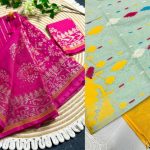
The story starts with muslin. Centuries ago, the fine cotton cloth of the Dhaka region was admired across Asia and Europe for its lightness and softness. Travellers wrote about it with wonder, and it was treasured by royal courts. Jamdani grew out of that tradition, taking the same delicate base and adding woven patterns that seemed to float on the surface.
The knowledge of how to make such cloth was passed from parent to child, often within the same families in the same villages. That chain of skill is a large part of why these textiles feel so precious today.
What Makes Jamdani So Special
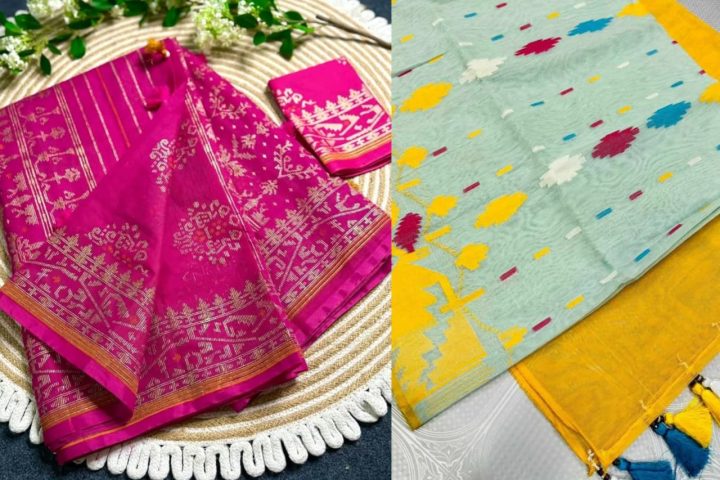
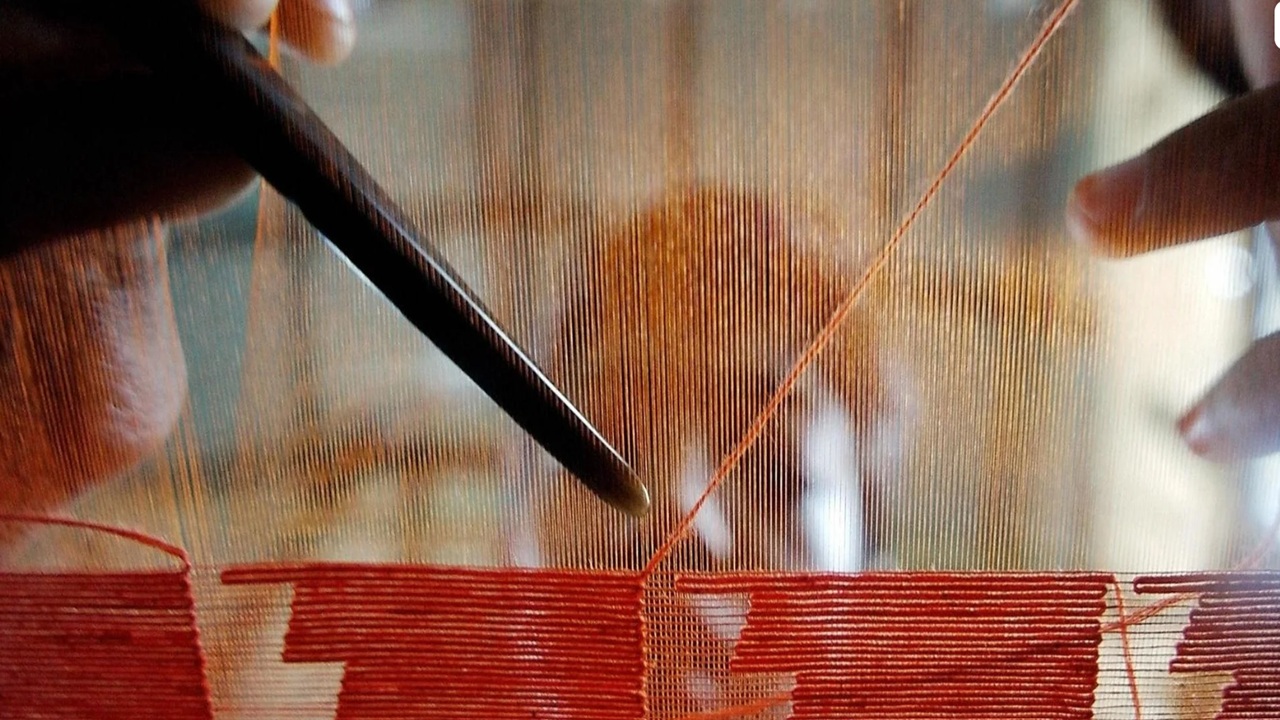
A Jamdani saree is not printed or embroidered. The designs are woven into the fabric as it is made. Weavers work on a handloom, often in pairs, adding extra threads by hand to form each motif. Flowers, leaves, geometric shapes and flowing vines appear row by row, with each pattern counted and placed with great care.
This is slow work. A single saree can take weeks or even months, depending on how detailed the design is. No two pieces are ever exactly alike, because the human hand leaves small, beautiful differences. That is exactly what separates it from anything made by a machine.
The cloth itself is light, breathable and soft, which makes it well suited to Bangladesh’s warm and humid climate. It drapes gracefully and feels comfortable for long hours, whether at a wedding or a family gathering.
The Wider World of Handloom
Jamdani may be the most famous, but Bangladesh’s handloom tradition is much bigger. Tangail sarees, known for their soft cotton feel, bold borders and lively colours, are a staple in many wardrobes. Rajshahi silk is loved for its shine and elegant fall. Monipuri weaves, made by the Manipuri community in Sylhet and nearby areas, carry bright, distinctive patterns. Indigenous communities in the hill regions weave their own beautiful textiles, each with its own colours, symbols and stories.
Together, these fabrics show how deeply textiles are tied to identity, region and community across the country.
Why These Fabrics Still Feel Timeless
Fashion changes quickly, but handloom has a way of staying relevant. There are a few reasons for that.
First, it carries meaning. A Jamdani is often bought for a wedding, a milestone birthday or Pohela Boishakh, and it is then kept and passed down. Many families treasure sarees that were worn by their mothers and grandmothers.
Second, it is an honest craft. In a world full of mass-produced clothing, people are growing more interested in how things are made and who made them. Handloom offers a clear answer.
Third, it suits modern life. Designers are now using handloom fabric for kurtas, scarves, jackets, stoles and even home furnishings. Younger buyers who might never have worn a saree are finding new ways to enjoy these textiles.
The Challenges Weavers Face
The picture is not entirely bright. Weaving communities face real pressure.
Imitation is a major problem. Power-loom copies and cheap printed versions sell at far lower prices, which makes it hard for buyers to appreciate the value of the real thing. A genuine handwoven piece takes huge effort, and its price reflects that.
Costs are another worry. Rising prices for yarn and other materials squeeze weavers’ earnings. The work is demanding on the eyes and back, and many weavers earn too little for the skill involved.
There is also the question of the next generation. When young people see little income in weaving, many look for other jobs in cities or abroad. If that continues, the skills that took centuries to build could fade within a few decades.
Protecting the Craft
The good news is that Bangladesh has already taken important steps. UNESCO’s recognition of Jamdani in 2013 raised the craft’s profile worldwide, and the country has also secured geographical indication status for Jamdani, which helps protect its identity as a Bangladeshi product.
There has also been growing interest in reviving the legendary muslin, with researchers, weavers and cultural groups working to recreate fine cloth inspired by the past.
But protection needs more than titles. It needs fair prices for weavers, better access to quality yarn and credit, training for young people and strong action against fake products.
What Buyers Can Do
Everyone has a small part to play. Buy from trusted sellers and weaving cooperatives, and ask about where and how a piece was made. Be willing to pay a fair price for real handwork, and choose quality over quantity. Look for clear labels and, where possible, buy directly from weavers or fair-trade shops. When we value the craft, we help the craftspeople continue.
A Tradition Worth Wearing
Jamdani and handloom are more than fabric. They are memory, skill and pride woven together. They connect today’s Bangladesh to its past, and they offer a model of beautiful, thoughtful, human-made design for the future.
As long as there are weavers at their looms and people who love to wear their work, these textiles will stay timeless.