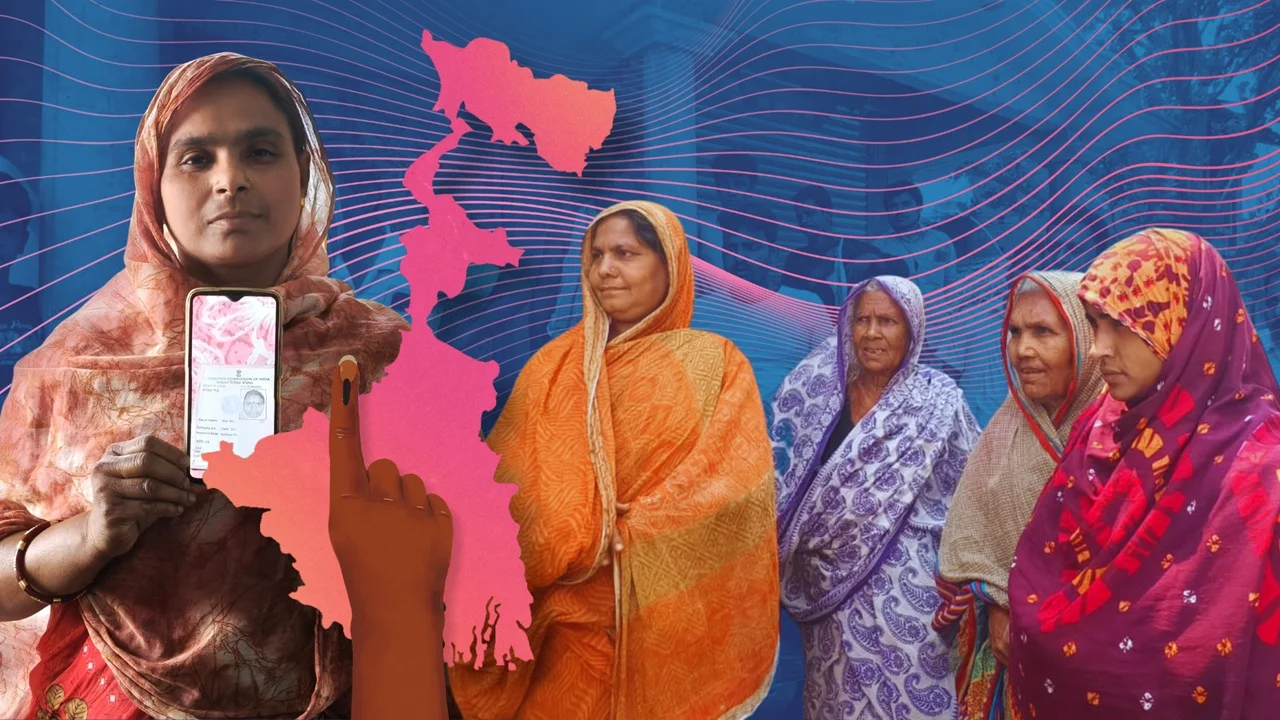
Ask a Bengali-speaking Muslim family in Assam, West Bengal or a city like Delhi or Mumbai what citizenship means, and many will not talk about law. They will talk about paperwork: old land records, school certificates, a grandfather’s name on a 1960s voter list. Keeping these documents safe has become a quiet household duty, passed down like a family heirloom.
That habit tells its own story. For this community, proving you belong is not a one-time event. It can come back with every new policy, every new drive and every new political season.
The Roots Lie in Partition and 1971
The tension has deep historical roots. When British India was divided in 1947, the Bengal region was split, and people moved across a border that was porous and poorly defined for decades. The 1971 war that created Bangladesh sent millions more across, many of them as refugees fleeing violence.
In Assam, concern over migration from East Bengal grew into a powerful movement in the late 1970s and early 1980s. It ended with the Assam Accord of 1985, which set midnight of March 24, 1971, as the cutoff for deciding who counts as a citizen. Anyone who entered after that date was to be identified and removed from the rolls. The agreement was meant to bring peace, but it also set the stage for decades of verification, tribunals and disputes.
The NRC and Its Human Cost
The National Register of Citizens was the largest such exercise India has attempted. When the final list came out in August 2019, around 1.9 million of the roughly 3.3 crore applicants were left out. Many of them were Bengali Hindus as well as Muslims, which surprised those who had expected the process to affect one group more than the other.
Even so, the process was hard on the poor and the less educated. A misspelt name, a missing document or a clerical mismatch could be enough to land someone before a Foreigners Tribunal. Families spent years and their savings on legal fees to prove what they believed was obvious. Those declared foreigners faced detention, and the fear of that outcome shaped everyday life in many villages.
The Citizenship Amendment Act Adds a New Layer
In December 2019, Parliament passed the Citizenship Amendment Act, which offers a quicker path to citizenship for Hindus, Sikhs, Buddhists, Jains, Parsis and Christians who came from Pakistan, Afghanistan and Bangladesh before the end of 2014. Muslims were not included.
The government argues that the law protects persecuted minorities in neighbouring Muslim-majority countries and takes nothing away from existing Indian citizens. Critics see it differently. They argue that when a religion-based path to citizenship sits beside a document-based process of exclusion, the combined effect falls most heavily on Muslims. In their view, a person who cannot prove citizenship may be treated as an intruder, while others in the same position may be offered a route to legal status.
When Language Becomes Evidence
More recently, reports have emerged of Bengali-speaking migrant workers being stopped, questioned and detained in several Indian states, with some sent across the border on suspicion of being Bangladeshi. Many of these workers were from West Bengal and had Indian identity papers. Their families and rights groups say their only fault was speaking the wrong language in the wrong place.
This is one of the most troubling parts of the story. Bengali is an Indian language, spoken by well over 100 million Indians. Yet in some settings, speaking it has been treated as a clue to someone’s nationality. Courts have taken up several of these cases, and the matter remains a live and contested one.
Voter Rolls and the Fear of Deletion
Large verification exercises for electoral rolls have added to the anxiety. Election authorities say the aim is to clean up lists by removing duplicate, deceased and ineligible entries, and that is a reasonable goal on its own. But for communities already worried about their status, the demand to submit documents again feels like another test. Even a small number of wrongful deletions can mean losing the right to vote, which is the most basic proof of belonging in a democracy.
The Other Side of the Argument
A fair picture has to include the concerns raised by those who support stricter checks. Illegal migration across a long border is a genuine issue, and in parts of Assam and the northeast it has shaped fears about land, jobs and culture. In October 2024, the Supreme Court upheld Section 6A of the Citizenship Act, the provision that gave legal effect to the Assam Accord, which many saw as a recognition that the state has a legitimate interest in regulating who a citizen is.
The real debate is not whether a country can verify citizenship. It is how it does so, and whether the burden lands fairly on everyone
Q1. Why has the Rohingya return to Myanmar remained such a difficult challenge?
From security concerns to conditions in Myanmar, explore the major hurdles standing in the way of Rohingya repatriation.
Q2. What happens when food shortages and climate risks collide in Rohingya camps?
Explore how hunger, climate pressures and ration cuts are adding to the hardships faced by Rohingya refugees in Bangladesh.
Q3. How is the UAE supporting Rohingya refugees in Bangladesh?
From humanitarian assistance to refugee support, discover the UAE’s role in helping Rohingya communities facing a prolonged crisis.
Q4. Why are Rohingya refugees turning to bank accounts and formal financial channels in Bangladesh?
Take a closer look at Rohingya banking access, financial transactions and the concerns surrounding hundi networks.
Q5. What could Tarique Rahman’s UNGA visit mean for Bangladesh’s international messaging?
Explore the key focus and diplomatic significance of Tarique Rahman’s UNGA visit as Bangladesh engages with the wider international community.
Living Between Two Labels
Many Bengali Muslims describe a double bind. To some, they are too Muslim to be fully Indian. To others, they are too Bengali to be fully trusted. Community voices in Assam, such as the Miya community, have spoken openly about being treated as outsiders in a land their families have farmed for generations.
What They Ask For
Most do not ask for special treatment. They ask for clear rules, fair hearings, protection from harassment and the same presumption of belonging that others enjoy. India’s Constitution promises equal citizenship regardless of religion, and for this community, that promise is not abstract. It is the difference between feeling at home and feeling watched.
The long shadow of citizenship politics will not lift quickly. But how India handles this question, with fairness, transparency and respect for its own diversity, will say a great deal about the kind of democracy it wants to be.