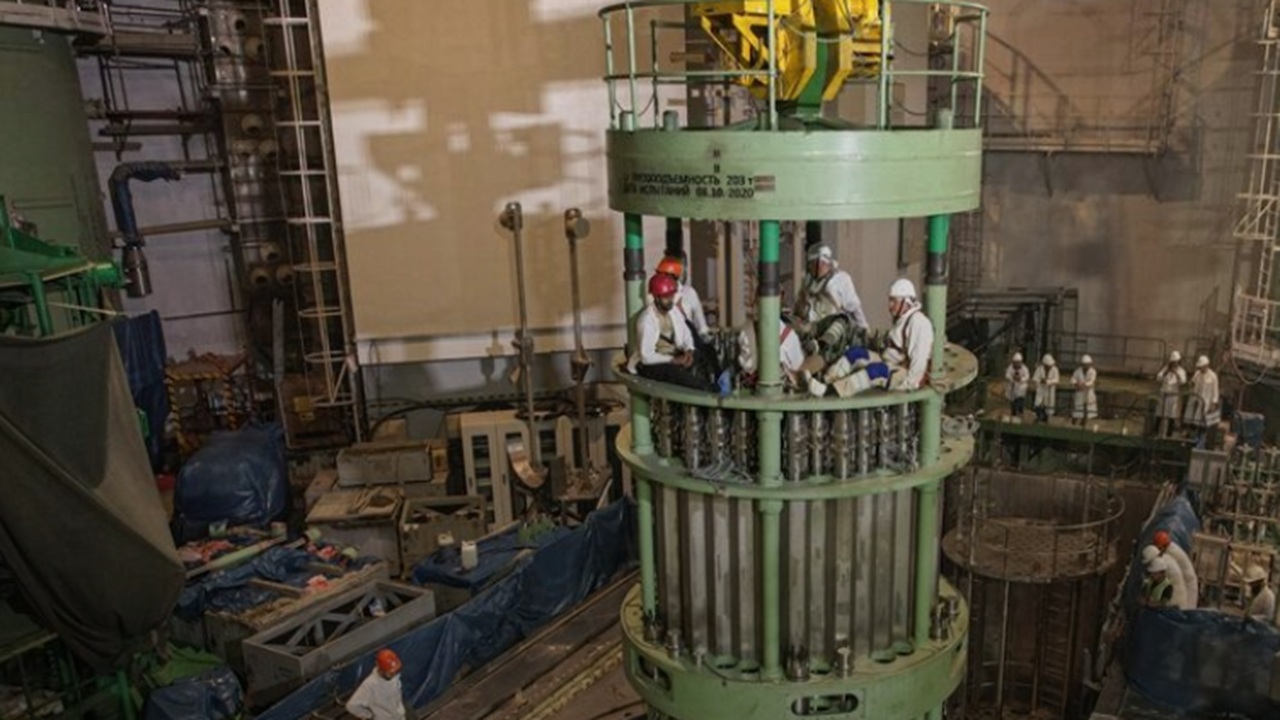
For years, Rooppur has been spoken about as a project that would change Bangladesh’s energy picture. This week, it took a very real step forward. BAERA gave Unit-1 permission to begin its first controlled nuclear reaction, the stage where the reactor starts a stable, self-sustaining chain reaction for the first time.
BAERA Chairman Mahmudul Hasan said the approval was issued only after the valve tests were completed successfully. He also said every stage of the plant is cleared only after safety has been checked by local and international experts. According to him, work on this stage was due to begin the day after the approval, and the reaction itself was expected within two to three days.
What Is First Criticality?
The term sounds technical, but the idea is simple. When the fuel inside a reactor reaches criticality, the fission process becomes steady and controlled. It is not the same as producing electricity. Think of it as starting the engine and letting it idle before the car is driven on the road. Once this stage is done, the project moves into the power start-up phase, where output is raised step by step.
Why the Approval Was Delayed
The reactor was originally expected to move ahead in September, but a problem appeared during commissioning. Two safety valves, part of the system that manages pressure in the reactor’s primary cooling circuit, did not perform as required. These pressure relief valves are among the most important safety components in the plant, so there was no question of moving on until they worked properly.
A technical team from Russia travelled to Rooppur in Ishwardi, Pabna, and worked on the problem for about a month. The valves were then put through high-pressure tests, including runs at 18 and 16 megapascals. The results were sent to BAERA, which reviewed them and approved the next stage. In total, the faults held up the commissioning process by more than two months.
For a plant of this kind, a delay caused by a safety check is not necessarily bad news. It shows the regulator is willing to hold the project until the equipment proves itself.
The Road From Here to the Grid
Even with this approval, the work is not finished. BAERA has said two more licences will be required before Unit-1 can be synchronised with the national grid. After first criticality, engineers will complete the physical start-up tests and then raise power gradually.
Officials are now hopeful that trial electricity could reach the grid by the end of December. Reports say the unit could initially supply about 300MW, well below its full capacity, as testing continues. Full commercial operation will come later.
The Fuel Story
Fuel has been moving steadily too. Loading of nuclear fuel into Unit-1, the physical start-up activity, was officially inaugurated on April 28. Earlier this month, a convoy carrying uranium reached the plant under tight security. Of the assemblies in that delivery, some were meant for Unit-2, which is still under construction, and two were for refuelling Unit-1.
The fuel supply plan includes more cargo flights before December, bringing additional assemblies for both units. On October 3, the first consignment of nuclear fuel for Unit-2 arrived safely.
What Rooppur Means for Bangladesh
The Rooppur Nuclear Power Plant is being built in Pabna with financial and technical help from Russia. Atomstroyexport, a subsidiary of Russia’s state nuclear corporation Rosatom, is the contractor. The Bangladesh Atomic Energy Commission is implementing the project under the Ministry of Science and Technology.
The plant has two Russian-designed VVER-1200 reactors, each rated at 1,200MW. Once both are running, Rooppur is expected to add 2,400MW to the national supply. For a country that has faced repeated power shortages and depends heavily on imported fuel for electricity, a large and steady source of power is a major prize.
There is also the wider meaning. Bangladesh would join the group of nations that generate nuclear electricity, a milestone that has been discussed for decades.
Safety Remains the Central Question
Public interest in the plant has come with some worry as well as hope, and that is natural for any country starting nuclear power for the first time. The valve issue, and the way the regulator handled it, show how carefully each step must be taken. Operating a nuclear plant takes trained people, strict rules and a strong safety culture. Keeping BAERA independent and transparent will matter as much as the reactor itself in the years ahead.
In the coming days, the main event to watch is the actual start of the chain reaction. After that, attention will shift to the remaining two licences, the power start-up tests and the first synchronisation with the grid. Any new technical hurdle could move the December target, so the timeline should be treated as a hope rather than a promise.
Still, after delays and uncertainty, Rooppur is closer to switching on than ever before. For Bangladesh, the wait for its first nuclear power may finally be nearing its end.