
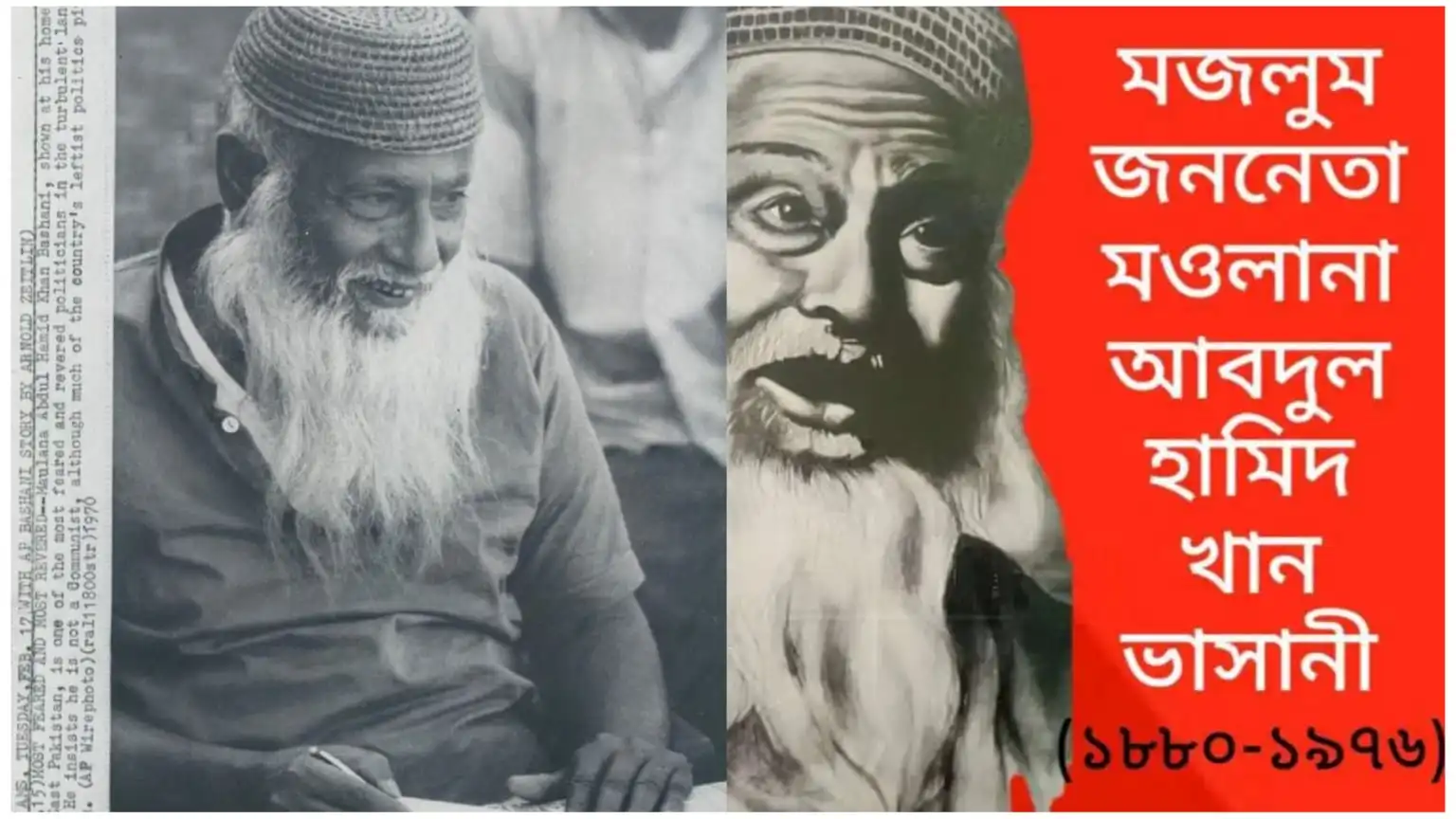
Bangladesh is observing the 50th death anniversary of Maulana Abdul Hamid Khan Bhashani today, 17 November. Known as “Majlum Jananeta,” or leader of the oppressed, and as the “Red Maulana,” he is remembered for his lifelong stand with farmers and workers.
Programmes at Santosh
The main events are being held at his mausoleum in Santosh, Tangail. The day began with floral tributes, recitation of Fateha and a special prayer. His family, Maulana Bhashani Science and Technology University, the Bhashani Foundation, political parties and various organisations have arranged discussions and prayers throughout the day. Large crowds gathered at the mausoleum from early morning. The traditional seven-day Bhashani Fair has also begun beside the university, drawing followers and visitors.
Tributes From Political Leaders
Bangladesh Nationalist Party (BNP) formed an 89-member national committee to observe the anniversary, with programmes in Dhaka and Tangail. At a discussion organised by the Bhashani Janashakti Party at the National Press Club on Monday, BNP Acting Secretary General Ruhul Kabir Rizvi urged people to follow Bhashani’s ideals for the emancipation of the downtrodden. In Tangail, state minister Sultan Salahuddin Tuku said at a BNP-organised discussion that Bhashani had sown early seeds of the independence struggle from Tangail.
Who Was Bhashani?
Born in 1880 in Dhangara village of Sirajganj, Bhashani lost his parents in childhood and grew up amid hardship. He became a prominent figure in progressive politics across the subcontinent and played a significant role in the Language Movement of 1952. He founded the National Awami Party in 1957. He died on 17 November 1976 while undergoing treatment at the then PG Hospital in Dhaka and was buried at Santosh.
The Farakka Long March
In May 1976, months before his death, Bhashani led a long march from Rajshahi towards the Farakka Barrage, demanding Bangladesh’s fair share of Ganges water. The issue remains in the news as the 1996 Ganges Water Treaty nears its December expiry.
A Legacy That Lives On
Fifty years on, his name still stands for the rights of the poor and the struggle against injustice. Bangla Pulse joins the nation in remembering him.