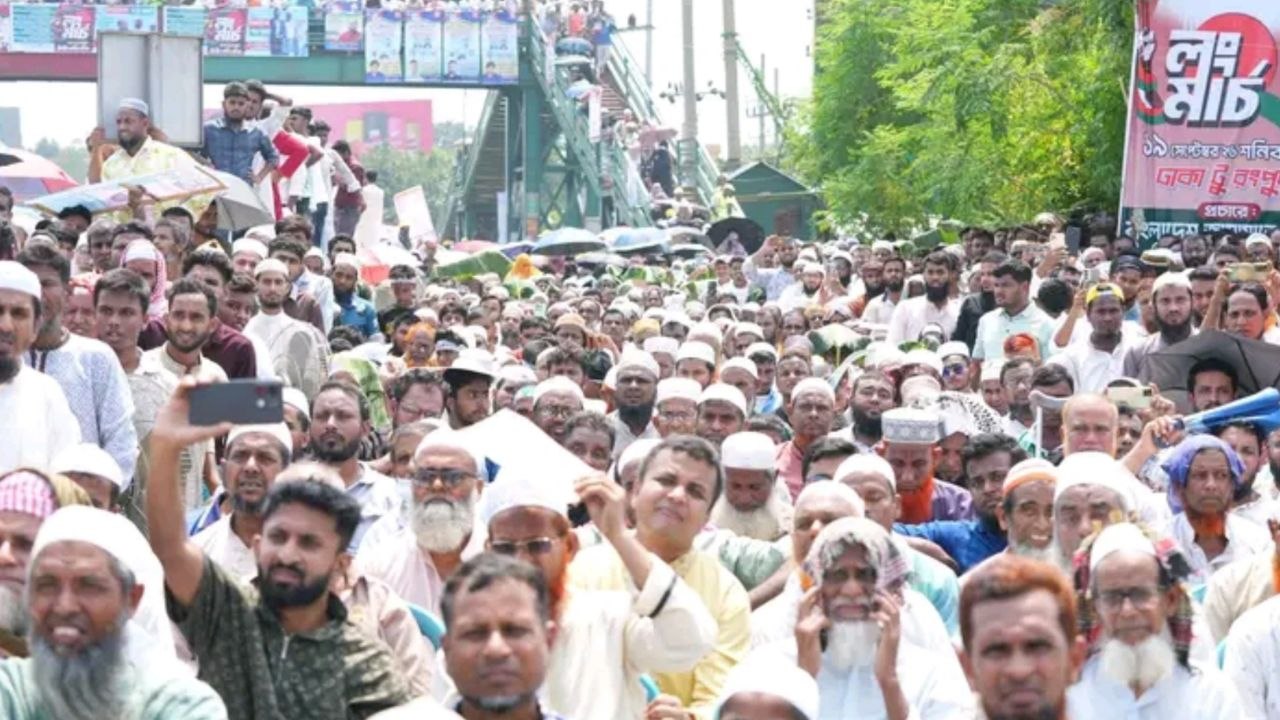
An opposition alliance is walking and driving the length of Bangladesh to make its point. This time, the destination is Rangpur. The Jamaat-e-Islami-led 11-party alliance began its long march from Manik Mia Avenue in Dhaka at 7 am on September 19. An inaugural rally ran until 8 am, after which the convoy set off for Rangpur, stopping for roadside rallies at Bhograpara in Gazipur, Nagar Jalfai in Tangail, Sirajganj Chowrasta, Charmatha in Bogura, and Palashbari in Gaibandha. The march concludes with a rally at Rangpur Zilla School.
What They’re Actually Asking For
The alliance’s demands have grown as the march campaign has continued. What started as six points is now eight, according to Jamaat’s Secretary General Mia Golam Porwar. They include implementation of the February 12 referendum verdict, trial of those responsible for the 2024 July mass killings, an end to shortages of electricity, oil, gas, and fertiliser, controlling the rising prices of essential goods, action against corruption, extortion, and land grabbing, improved law and order, and an end to narrow partisan control of state institutions. A newer addition, the Teesta Master Plan, was folded in specifically to address northern Bangladesh’s long-standing water and river management concerns.
A Warning Behind The Numbers
Opposition Leader and Jamaat Ameer Shafiqur Rahman used the inaugural rally to send a pointed message to the government. He warned that the eight-point demand could grow further, or collapse down to a single, non-negotiable demand, if the government fails to respond. Alliance coordinator Hamidur Rahman Azad struck a similar tone at an earlier press briefing, alleging that corruption, land grabbing, and extortion under the current administration had now surpassed levels seen during what he called the previous “fascist” regime.
Part Of A Bigger, Planned Campaign
Rangpur is not a one-off. The 11-party alliance has been running a coordinated series of long marches to Bangladesh’s divisional cities, starting with a Dhaka-Chattogram march on September 5. The remaining schedule includes a Dhaka-Khulna long march on October 10, a Dhaka-Sylhet long march by rail on October 24, and a concluding rally in Dhaka on November 14. Alliance leaders say the strategy is deliberate: carry national political demands directly to different regions of the country, rather than concentrating pressure only in the capital.
Discover More Stories Worth Your Time
See Why Rising Seas Threaten Dhaka?
Discover why the UN warns millions across Mumbai, Kolkata, and Dhaka face immediate coastal risks.
Find Why Trump Praised Tarique?
Explore what the US president’s letter says about the Boeing aircraft deal.
Learn How Adani Supply Returns?
Discover how Bangladesh’s payment settlement helped restore full electricity supply from the Godda plant.
Explore Why Dengue Cases Rising?
Discover what is driving Bangladesh’s latest dengue surge and the health concerns emerging nationwide.
Echoes Of 2024
Leaders have repeatedly invoked the August 2024 Long March to Dhaka, which they credit with helping bring down the previous government. Speaking at the Chattogram leg earlier this month, National Citizen Party figure Nahid Islam framed the current marches in similar terms, accusing the present government of betraying the referendum verdict, which he said carried support from 70 per cent of the population, and warned the movement was aimed at stopping the country from drifting back toward authoritarian rule.
What Comes Next
For now, the alliance says its approach remains peaceful, and it is pressing its case both on the street and inside parliament, where its lawmakers have submitted formal notices demanding implementation of the referendum verdict. Whether the government responds with concrete action or the alliance follows through on its warning to narrow eight demands into one will likely shape how the remaining marches to Khulna and Sylhet unfold over the coming weeks.