Ask most people in Bangladesh which sport they follow, and the answer will almost certainly be cricket or football. Yet neither is the country’s official national sport. That title belongs to Kabaddi, known locally as Ha-Du-Du, a game rooted in Bengal’s rural fairs and festivals that has spent decades slipping further from public attention even as its official status has never changed.
A Sport Chosen to Mark an Identity
Kabaddi’s designation as Bangladesh’s national sport was, by most accounts, a deliberate choice made in the years following independence, a decision meant to move away from cricket and football’s colonial-era roots in favour of something distinctly regional. The game itself is simple in concept but demanding in execution.
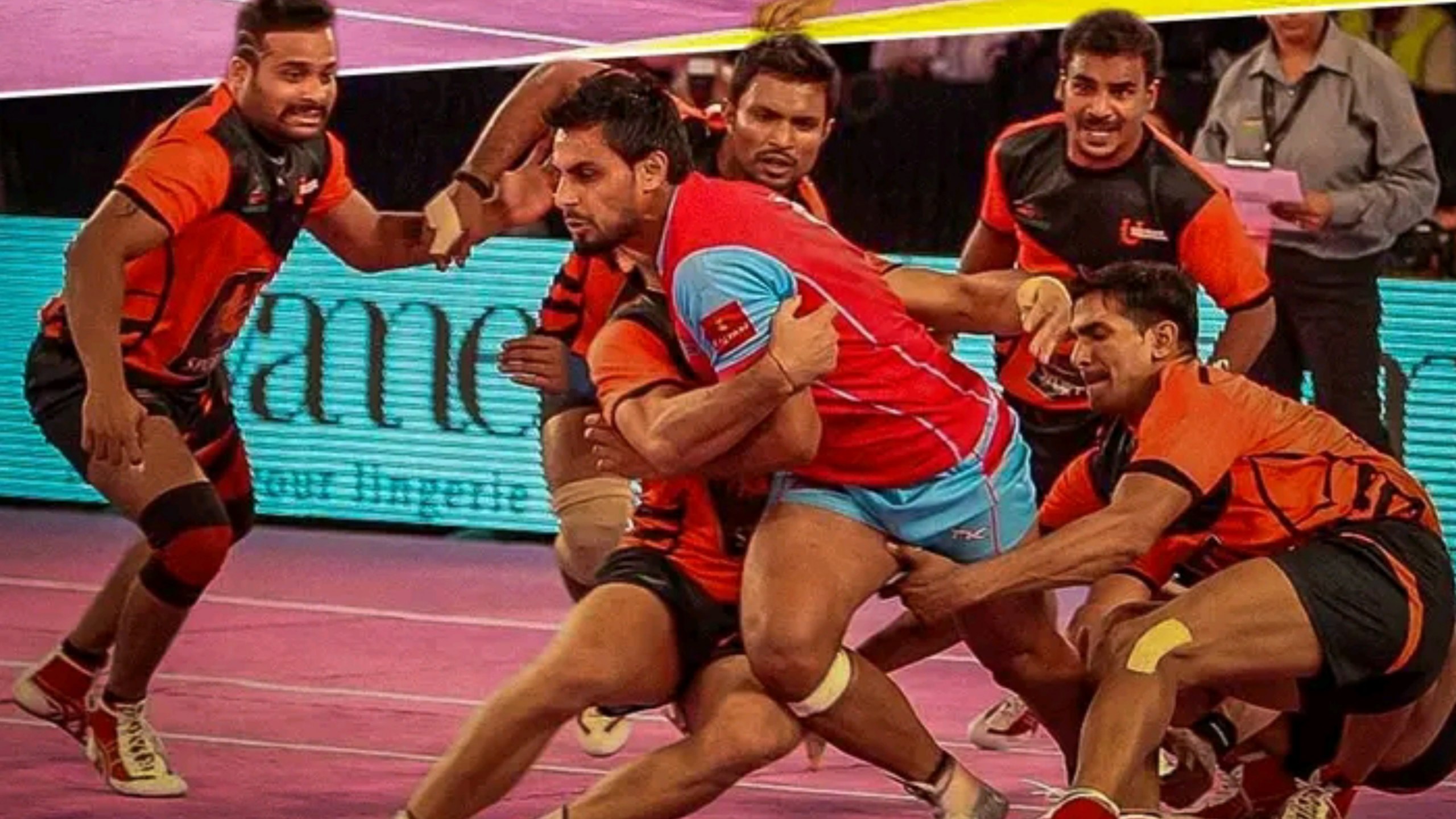
Two teams of seven players face off on a court roughly 13 by 10 metres, and a raider crosses into the opposing half chanting “kabaddi” continuously, trying to tag defenders and return to their own side before running out of breath. Tagged players are out, but can be revived if their raider successfully tags an opponent in a later turn. It rewards strength, timing, and nerve in roughly equal measure, and for generations it was a fixture of village life across Bengal.
Where the Decline Set In
Despite its official standing, Kabaddi’s presence in Bangladesh’s sporting life has thinned considerably. Domestic leagues that once gave players a regular competitive structure to develop largely disappeared, and officials at the Bangladesh Kabaddi Federation have pointed to this gap as one of the sport’s central problems.
Without regular leagues, the pipeline for nurturing new talent for the national team broke down, leaving fewer young players with a realistic path from local play to national selection. Limited training infrastructure and comparatively little media coverage compounded the problem, leaving Kabaddi to compete for attention against two sports with vastly larger followings, sponsorship money, and television deals.
The Push to Bring It Back
That appears to be changing, at least in intent. A newly formed ad hoc committee at the Bangladesh Kabaddi Federation, led by Inspector General of Police and federation president Md. Ali Hossain Fakir, has made resuming domestic leagues a formal policy decision, aiming to restore the competitive structure that produced the sport’s earlier generations of talent. The idea mirrors a suggestion that has circulated in Bangladeshi sports circles for years: that a properly run professional kabaddi tournament could do for the sport locally what the Pro Kabaddi League did for kabaddi’s popularity in India, giving young athletes a realistic financial incentive to pursue the sport seriously rather than treating it as a village pastime.
Bangladesh Still Competes Internationally
Even through the lean years domestically, Bangladesh’s national team has kept a foothold on the international stage. The country is set to compete in the Commonwealth Kabaddi Championship in Ahmedabad this October, an event Bangladesh enters with a strong record from tournaments hosted at home in Dhaka.
The team also competed in beach kabaddi at the 2026 Asian Beach Games in Sanya, and Kabaddi remains on the programme at the 2026 Asian Games in Japan this September, continuing an unbroken run of appearances at the Games since 1990.
Discover More Stories Worth Your Time
Explore How To Buy Match Tickets?
Discover the easiest steps to secure cricket match tickets in Bangladesh.
Check Where Monsoon Travel Works?
Explore the best places to visit and areas to avoid during Bangladesh’s rainy season.
See Why India Visit Uncertain?
Discover how the Hasina extradition and Hadi murder case could affect Tarique Rahman’s India trip.
Find What Story Comes Next?
Explore what Tanim Noor may bring after Utsab and Bonolota Express.
Learn Why Saudi Invitation Matters?
Discover what the Saudi Crown Prince’s invitation could mean for Tarique Rahman’s upcoming visit.
A Sport Still Searching for Its Moment
Kabaddi’s federation officials have talked about restoring what they call the sport’s lost heritage, and there are structural ideas on the table beyond leagues alone, from greater social media promotion to folding kabaddi tournaments into cultural festivals where the game has historically thrived.
Women’s participation has also been growing gradually, both domestically and in the broader international kabaddi scene. Whether any of this is enough to meaningfully shift Kabaddi’s place in Bangladesh’s sporting culture remains to be seen. What is clear is that after years of being a national sport in name more than in practice, there is now at least a concrete plan, and a federation committee willing to be held to it, to close that gap.
Summary: Kabaddi, known locally as Ha-Du-Du, has been Bangladesh’s official national sport since the 1970s. Years of neglect pushed it to the margins, but a new federation committee is now working to revive domestic leagues and rebuild the sport from the ground up.