Thirty-seven years ago, Hasmat Ali travelled to Jamalpur town as a college student with one plan: buy a new shirt. He never made the purchase. A roadside nursery caught his eye instead, and after doing the math, he realised he could not afford both the shirt and the sapling he had fallen for. He chose the sapling, a cycas palm costing Tk 250, and walked home without the shirt. That plant still stands tall today, and the choice he made that afternoon eventually grew into one of Bangladesh’s more remarkable private conservation projects.
From One Sapling to a Garden of 700 Species
Ali kept collecting seeds and saplings wherever he travelled after that first purchase, planting a few at a time near his home or along the edges of family farmland. He continued even after joining the teaching profession in 2004, and in 2016 he made a bigger decision, turning four acres of his father’s land into a dedicated garden. The idea did not sit well with everyone. Ali, now an assistant professor of Bengali at Farhad Ali Memorial Degree College in Sirajganj’s Kazipur upazila, has said his family resisted the plan, particularly his mother, and that villagers openly questioned what he was doing, with some telling his wife, also a college teacher, that her husband seemed to have lost his mind. He held his ground regardless.
The garden, located in Sarishabari’s Doulatpur, now spans 12 bighas and holds around 5,000 plants across nearly 700 species, many of them rare or endangered varieties collected from different parts of the country before they disappeared entirely. In 2022, novelist Selina Hossain named the garden Dwijen Sharma Udvid Udyan, after the late naturalist and botanist Professor Dwijen Sharma, and inaugurated it herself.
Building a Home for Butterflies and Fireflies
As flowering plants filled the garden, Ali began noticing swarms of butterflies gathering whenever the blossoms opened, a sight that led him to build a dedicated butterfly park inside the property in 2020, guided by butterfly researcher Dr Monowar Hossain of Jahangirnagar University. The setup includes host plants needed to support the insects’ full life cycle, not just flowers for them to feed on.
A separate childhood memory pushed him toward another project. Ali has spoken about how fireflies, once common enough that children would chase them at dusk, have become increasingly rare. After consulting the entomology department at Bangladesh Agricultural University, he learned fireflies need a humid, undisturbed environment free of artificial light, and built a net house designed around those conditions. Some fireflies introduced from outside have survived and possibly reproduced there, though he says a fully self-sustaining population has not yet been achieved.
Discover More Stories Worth Your Time
Explore Why Colombia Declared Emergency?
Discover what the powerful earthquake means for Colombia and the latest emergency response.
Check Why Jaya’s Sarees Trend?
Discover why Jaya Ahsan’s elegant saree looks continue captivating fans online.
See Where Hasina’s Crisis Leads?
Explore the accountability debate surrounding Hasina, India, and Bangladesh’s political future.
Find Which Airport Hotels Fit?
Discover convenient hotels near Dhaka Airport for short layovers and overnight stays.
Recognition and What Comes Next
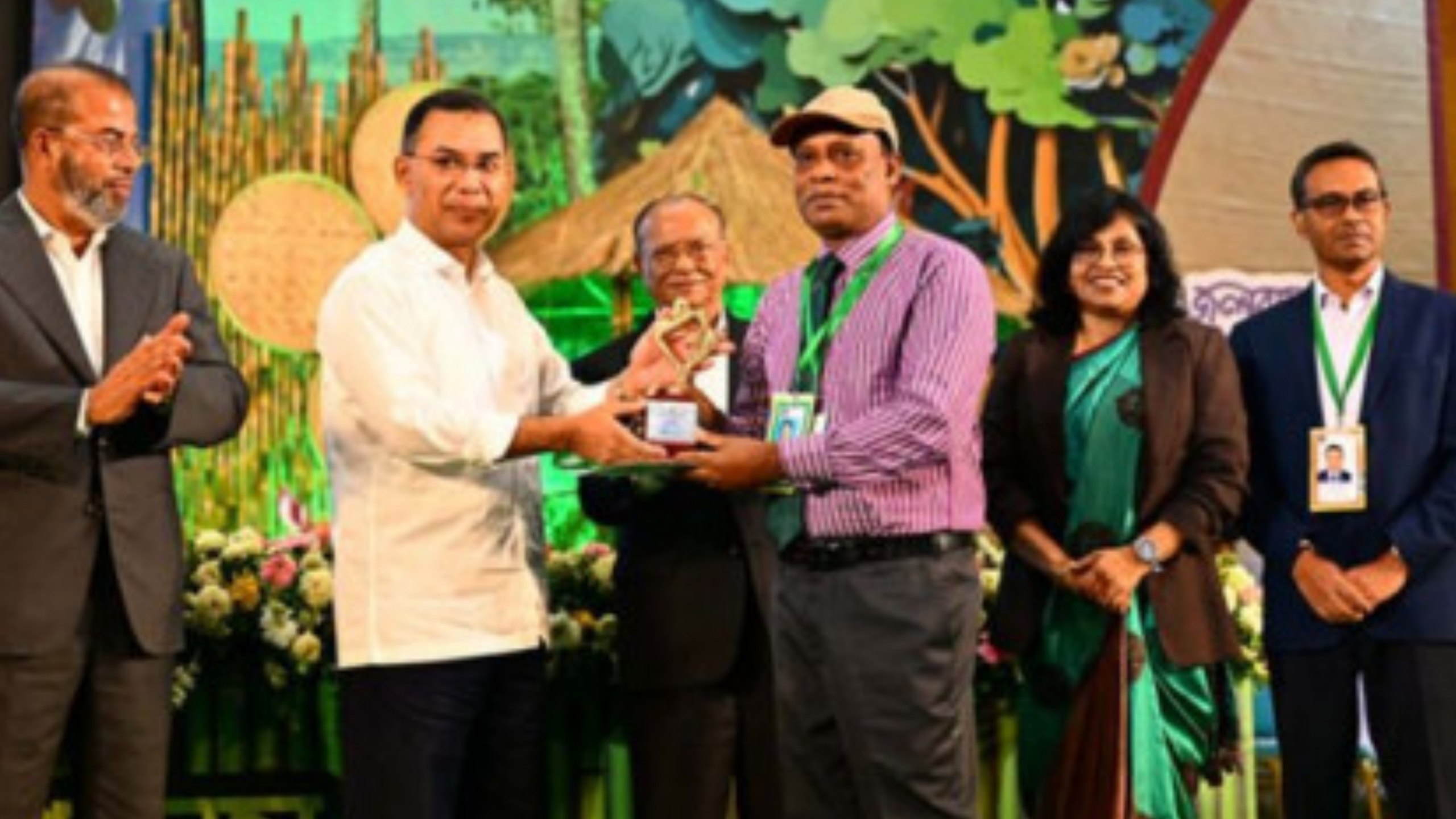
Ali’s work has now been recognised with the National Environment Award 2025, following the Prime Minister’s National Award 2023 in the tree research, conservation and innovation category, and a Butterfly Award 2023 for his contribution to butterfly conservation, among other honours in climate and biodiversity work.
He does not intend to stop at one garden. Ali has said he hopes to see at least one garden modelled on the Dwijen Sharma Udvid Udyan established in every district of Bangladesh, and has begun working toward setting up a foundation to support that goal. He also plans to develop mother plants from the rare and endangered species already growing in his garden, so that future conservationists can take seeds or saplings from them long after he is gone. As he put it, he will not always be there, but the garden will be, ready for whoever comes next to carry the work forward.
Summary: Jamalpur college teacher Hasmat Ali chose a Tk 250 cycad sapling over a new shirt as a student, sparking a lifelong obsession with rare plants. His 12-bigha Dwijen Sharma Udvid Udyan now holds 700 species and earned him the National Environment Award 2025.