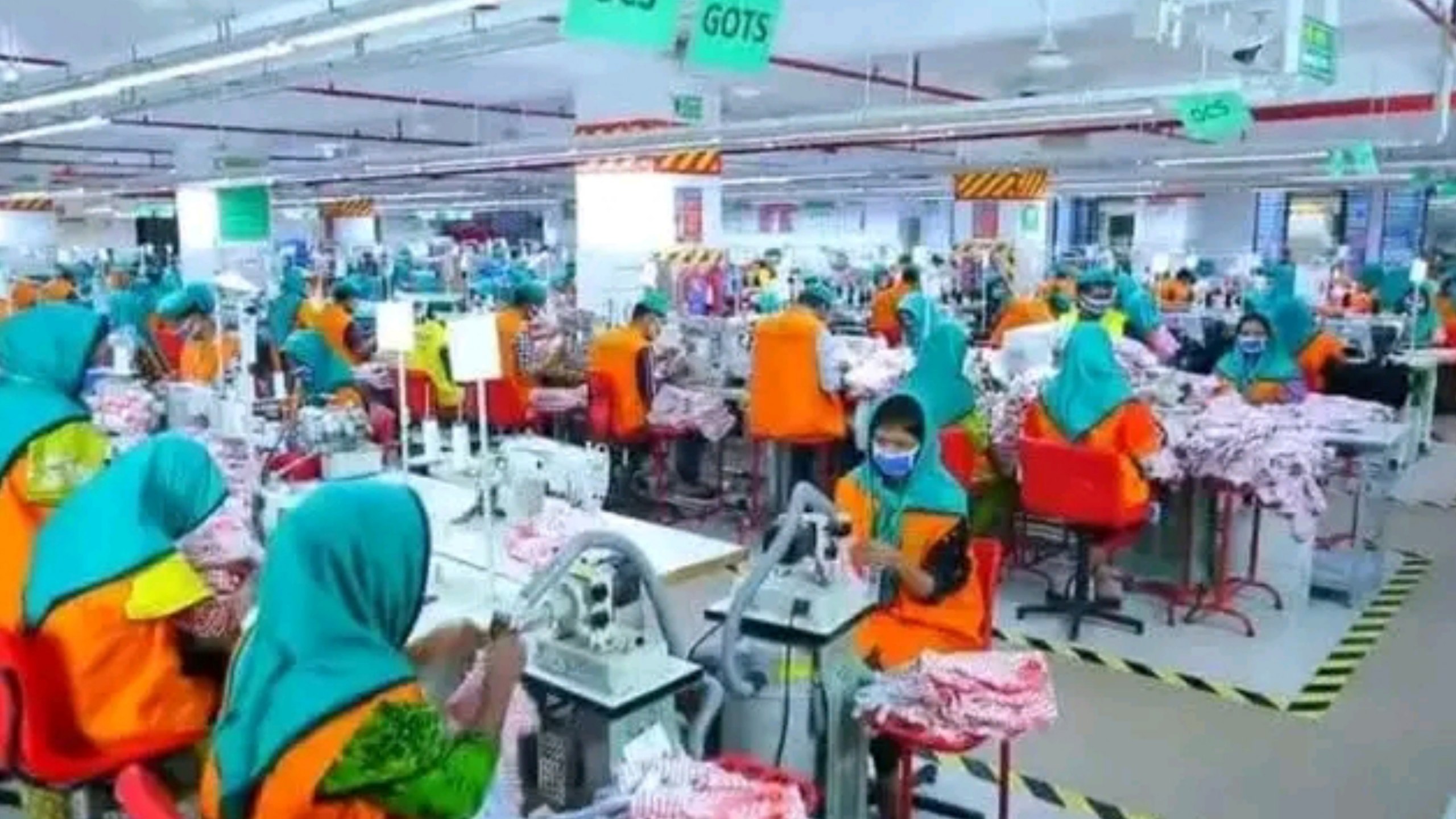
Bangladesh’s readymade garment (RMG) industry, the backbone of its economy, is going through a rough patch in its most important market. Garment exports to the European Union fell 16.43 percent year-on-year to 8.64 billion euros in the January-June period of 2026, according to Eurostat, the EU’s statistical office.
The drop was even steeper earlier in the year, with exports falling 19.4 percent in the January-April window and a sharp 25.25 percent in January alone. The slide has been persistent enough that it is now being treated as a structural warning sign rather than a short-term dip.
Losing Ground to Competitors
What makes the slump more concerning is that Bangladesh is falling faster than most of its rivals. During the January-April period, Bangladesh’s share of total EU apparel imports dropped from 24.4 percent to 21.9 percent, the largest market-share loss among the bloc’s leading suppliers.
By comparison, Pakistan’s exports fell 17.9 percent and Cambodia’s fell 12.1 percent over the same window, both smaller declines than Bangladesh’s. China and Vietnam, meanwhile, managed to grow their market share despite the overall downturn in EU demand, showing that buyers are shifting orders rather than simply cutting back everywhere equally.
Why Orders Are Failing
Industry leaders offer a range of reasons for the decline. BGMEA President Mahmud Hasan Khan partly blamed the problem on a volatile global economic situation and pressure from US reciprocal tariffs.
High inflation, rising interest rates and weaker consumer confidence have made shoppers on the European side more cautious, leading to retailers ordering less and in smaller quantities. The EU’s overall imports of apparel from the world fell 9.7% in the first half of 2026, suggesting that the decline in demand was broad-based and not just for Bangladeshi products.
Falling Prices Are Making Things Worse
It’s not only declining export orders hurting export revenue. The Bangladeshi garment sector has seen falling volume and price. Export volume was down 8.22 percent in the first half of 2026, with average prices down 8.94 percent.
European retailers have been pressuring suppliers to cut prices so that they can remain competitive and Bangladesh’s unit prices fell 9.41 percent in January alone. Other countries like Vietnam, which have chosen to focus on more valuable products to raise prices, have gone on a different path and still managed to grow their exports a little, something Bangladesh has struggled to replicate.
A little recovery, but not enough
There have been few signs of improvement. But in terms of value, Bangladesh’s export to the EU grew by 0.87 percent year on year in June 2026, despite falling prices. The volume of export rose by 6.53 percent. But that one month of growth hasn’t been enough to make up for steep losses earlier in the year.
Discover More Stories Worth Your Time
Explore How To Buy Match Tickets?
Discover the easiest steps to secure cricket match tickets in Bangladesh.
Check Where Monsoon Travel Works?
Explore the best places to visit and areas to avoid during Bangladesh’s rainy season.
See Why India Visit Uncertain?
Discover how the Hasina extradition and Hadi murder case could affect Tarique Rahman’s India trip.
Find What Story Comes Next?
Explore what Tanim Noor may bring after Utsab and Bonolota Express.
Learn Why Saudi Invitation Matters?
Discover what the Saudi Crown Prince’s invitation could mean for Tarique Rahman’s upcoming visit.
The Bigger Questions That Will Shape the Future of the Industry
The timing of this slump is important. Bangladesh is set to graduate from Least Developed Country (LDC) status, losing some of the trade preferences it currently enjoys in markets such as the EU. Now, with an extended export slowdown, questions are being asked about the readiness of the industry for that transition, and whether current production costs and supply chain bottlenecks will make it harder to compete when those preferences disappear.
With EU demand still soft and competitors like Vietnam and China gaining ground, the coming months will be a real test for Bangladesh’s garment sector. Whether the industry can stabilise exports will likely depend on how quickly it can adjust to buyers’ price sensitivity, diversify into higher-value products, and prepare for a trading landscape that will look very different once LDC benefits phase out.
Summary: Bangladesh’s readymade garment exports to the European Union have fallen sharply through the first half of 2026, with the country losing market share faster than most of its competitors. Here’s what’s behind the slide.