
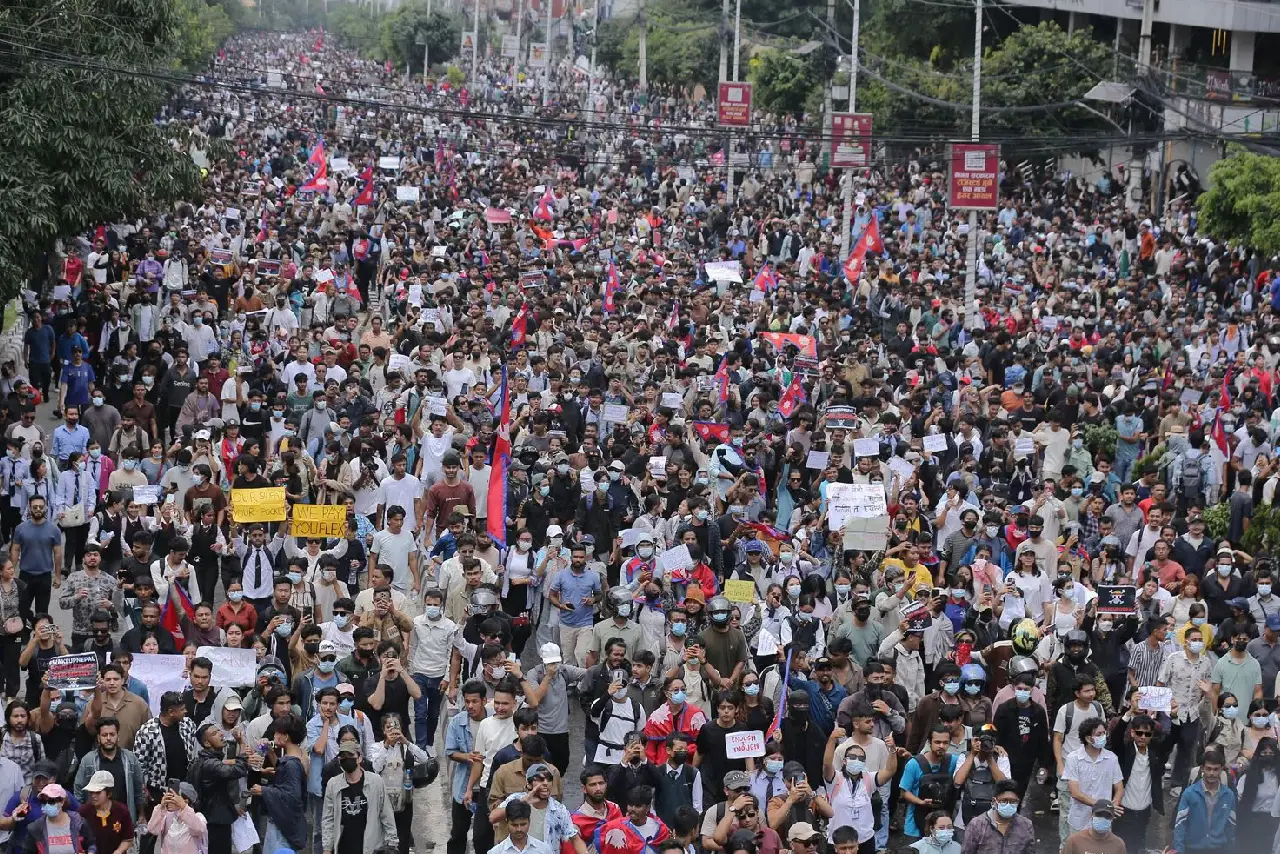
Now, a generation that grew up online is the most vocal political force in South Asia. Gen Z led movements have ousted a sitting prime minister, installed the region’s youngest head of government and put Narendra Modi’s administration on the defensive, beginning with Bangladesh in 2024 and Nepal in 2025, and now spilling into India in 2026. Protests may take different forms in different countries, but they have a common root: young people who feel shut out of jobs, opportunity and honest government, and are using social media to organise faster than any political party can react.
How It Began: July Uprising in Bangladesh
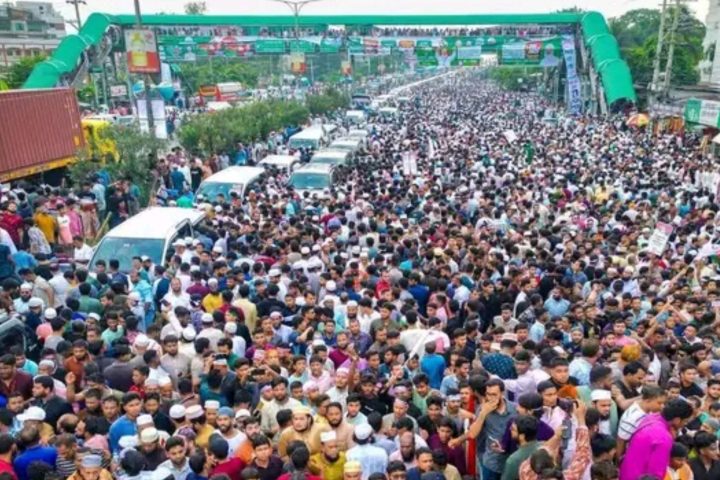
Bangladesh’s July uprising began in mid-2024, when university students took to the streets to protest a quota system that reserved a large share of government jobs for descendants of 1971 independence-war veterans, viewed by many as a conduit for political patronage. What started as a call for quota reform turned into a nationwide uprising against Sheikh Hasina’s fifteen years in power. In August 2024, Hasina resigned and fled to India. Since then, the country has been under an interim administration.
Hasina’s exit did not mark the end of the movement’s more radical edge. In December 2025, Osman Hadi, a spokesman for the youth platform Inqilab Moncho and vocal critic of Indian influence in Bangladeshi politics, was shot in Dhaka while campaigning ahead of the February 2026 election. His death triggered new protests and assaults on newspapers perceived as pro-government. Finally, in February 2026, Bangladesh held its first general election since the uprising. Young candidates like independent contender Tasnim Zara tested whether the movement’s energy could survive the transition into formal politics.
Why Nepal’s Protests Turned Violent
Nepal’s protests erupted in September 2025 when the government temporarily shut down major social media platforms, a move widely seen as an effort to silence young critics. The ban was the spark. The fuel had been gathering for years. Protesters pointed to a “long series of corruption scandals” involving politicians and business elites, including a long-running probe into a loss-making Nepal Airlines jet purchase and viral social media posts showing the children of political leaders flaunting luxury lifestyles while youth unemployment stayed high.
That was followed by five days of protests, arson and clashes with security forces. Parliament and the presidential palace were torched, the Nepali Army itself reported at least 76 deaths and Prime Minister K.P. Sharma Oli resigned. The former chief justice Sushila Karki was appointed as the interim prime minister after a discussion on the messaging platform Discord, showing the extent to which the movement was organised online. In March 2026 Nepal voted and Balendra Shah, a 35-year-old former mayor of Kathmandu, became the country’s youngest-ever prime minister, the direct result of the youth vote that mobilized after the uprising.
The CJP Movement in India
India’s version of the movement almost happened by accident. In May 2026, Chief Justice Surya Kant used the terms “Cockroaches” and “parasites of society” to describe the unemployed youth and the critics of the judiciary. Within days, a parody group called the Cockroach Janta Party, a pointed parody of the ruling Bharatiya Janata Party’s name, had attracted hundreds of thousands of sign-ups. It was started by Abhijeet Dipke, a former political communications strategist who had earlier worked with the Aam Aadmi Party.
What began as memes and mock campaign posters turned into a real protest movement after a series of exam scandals, including leaked and cancelled papers for the national medical entrance test that some two million students take every year for some 130,000 seats. CJP set up camp at Jantar Mantar in Delhi from late June 2026 demanding the resignation of Education Minister Dharmendra Pradhan. Sonam Wangchuk, an activist and education reformer based in Ladakh whose life inspired a lead character in a popular Bollywood film, joined a three week hunger strike in solidarity that ended when police took him to hospital after removing him from the site, a move his wife called forced detention. His hospitalisation angered supporters and Dipke called for a march on Parliament as its monsoon session began on July 20, 2026, with tens of thousands turning out despite a police crackdown.
Wangchuk’s activism has been controversial even in India. He had previously staged hunger strikes for statehood and special constitutional protections for Ladakh. In 2025, India’s Home Ministry accused him of inciting deadly protests in Ladakh by citing Nepal’s uprising as a model, a charge his supporters deny.
South Asia’s Economies: Fueling the Unrest
Behind the specific triggers, whether a social media ban, a leaked exam paper or a judge’s remark, is a common economic story. South Asia has one of the world’s youngest populations, and that “youth bulge” has collided with economies that are not creating enough good jobs to absorb it. Economists who have been studying the protests in India say that even with decade-long average annual GDP growth of more than 7 per cent and real gains in tackling extreme poverty, the country’s roughly 300 million young people aren’t seeing that growth get translated into stable, well-paying work. Increasing costs of education and everyday living have widened the gap between what young people are told to expect and what the job market actually offers.
In Nepal and Bangladesh, the economic grievance was compounded by visible inequality: a small, politically connected elite that appeared to be prospering, while ordinary graduates struggled to find work; and corruption scandals that suggested the system was rigged, rather than simply slow. Social media turned that private frustration into shared, visible outrage virtually overnight, because a single viral post, video or quote can now reach millions of young people within hours and bypass traditional political gatekeepers altogether.
What impact will Gen Z have on geopolitics?
Analysts still disagree on the ability of these movements to translate street protest into lasting governance. The 2026 elections in Nepal and Bangladesh were supposed to be the test, and both have shown it is easier to install youth-friendly leaders than to fix the underlying joblessness and inequality that started the protests in the first place. The Cockroach Janta Party in India has not demanded the fall of Modi’s government, but its rapid rise and ability to bring a respected figure like Sonam Wangchuk into direct conflict with the state is an indication that the same generational frustration seen in Kathmandu and Dhaka has now firmly entered Indian politics as well. Next, the region will be watching to see if it will impact India’s 2029 election as it did Nepal and Bangladesh’s 2026 elections.
Summary: In under two years, Gen Z-led protests have shaken three of South Asia’s biggest democracies. Nepal’s government fell in September 2025, Bangladesh is still rebuilding after Sheikh Hasina’s ouster, and India’s “Cockroach Janta Party” movement has now pulled Sonam Wangchuk into a hunger strike standoff with the Modi government. Corruption, joblessness and a generation raised on social media tie the three movements together.