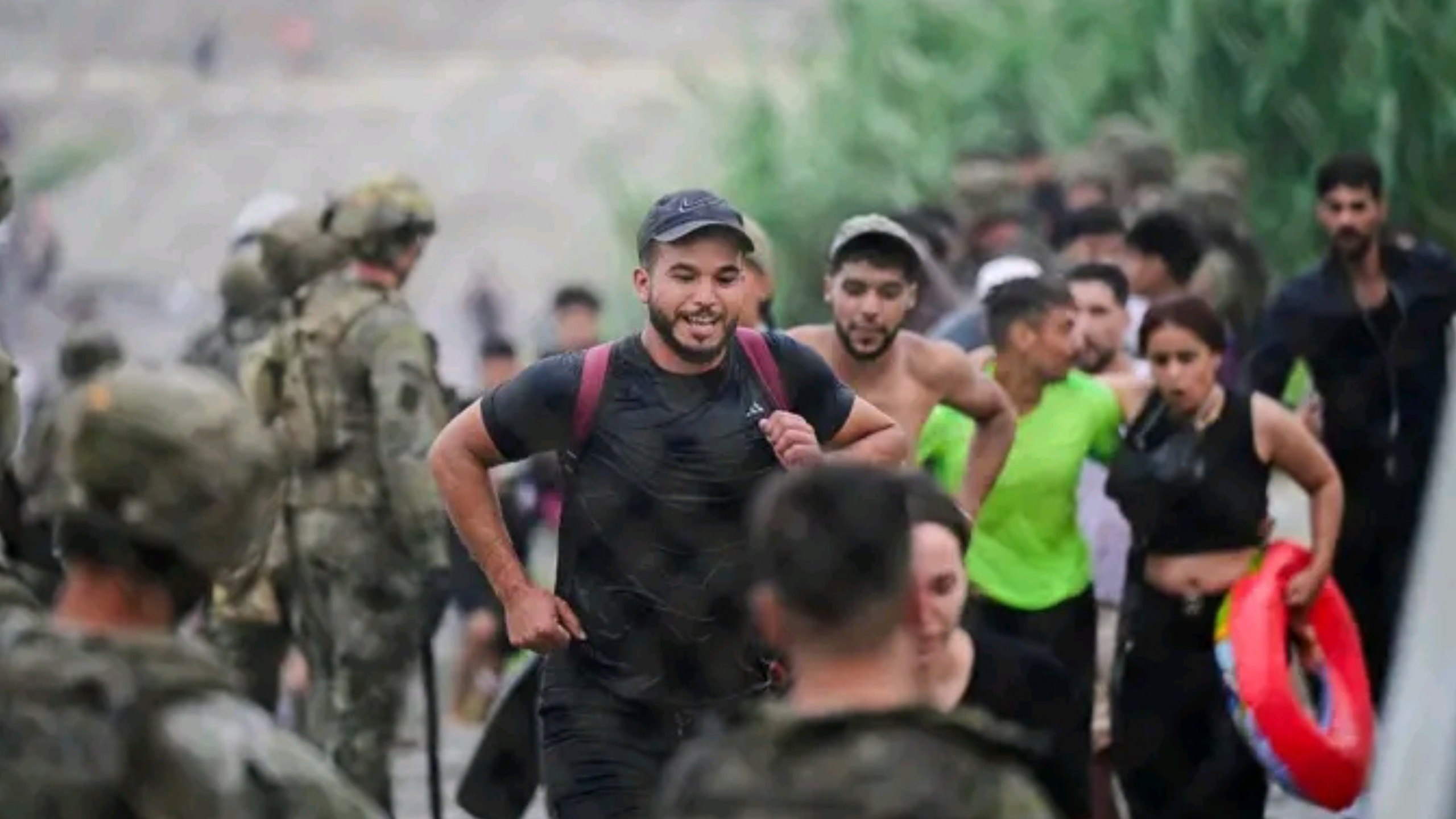
Spain has deployed its armed forces to the North African enclave of Ceuta after an extraordinary surge of migrants crossed over from Morocco, with the country’s Interior Ministry estimating that nearly 49,000 people entered the tiny Spanish territory in the space of 24 hours. At least 18 people have died attempting the crossing, making it one of the deadliest and largest single waves of arrivals the enclave has ever recorded.
Military Sent In to Restore Order
The Spanish government announced it would send the Armed Forces to support the Civil Guard in Ceuta after local authorities warned that the city could no longer cope with the scale of the influx. Prime Minister Pedro Sanchez and Interior Minister Fernando Grande-Marlaska were expected to travel to Ceuta on Friday as Madrid moved to contain the fallout. Despite pressure from Ceuta’s regional government to declare a national emergency, the Interior Ministry said existing legislation does not classify migration flows as a national security risk, though it stressed that government agencies were coordinating to respond quickly.
Scale of the Crossing
According to Spain’s Interior Ministry, roughly 49,000 migrants crossed into Ceuta over the past 24 hours by sea and land, rushing across from Morocco in a steady stream that continued through the night and into Friday morning. Spanish state television reported that between 2,000 and 3,000 people crossed on Thursday alone, with arrivals continuing afterwards. The surge dwarfs the roughly 3,000 migrants who had entered Ceuta by land or sea earlier this year through mid-July, and it far exceeds the more than 8,000 arrivals over two days that triggered a diplomatic rift between Spain and Morocco back in 2021.
At Least 18 Dead
Spanish authorities initially confirmed nine deaths on Thursday, a figure that was later revised upward to at least 18 as more information emerged on Friday. Officials have not detailed the exact circumstances of each death, though bodies were seen floating in the water near the border, and local reports indicate many drowned while others were killed in a stampede near the breakwater fence at Tarajal beach. Dozens more migrants have died this year in earlier attempts to reach the enclave.
Chaos on the Ground
Video from Ceuta showed large crowds, mostly young Moroccan men but also families with women and children, moving around the breakwaters at Tarajal beach and onto local roads, with some celebrating and shouting “Viva España!” as they reached Spanish soil. Rachid Sbihi, who heads a local association representing Civil Guard officers, described the situation as a serious humanitarian crisis, saying thousands of migrants, including unaccompanied children, were left sleeping in parks and on sidewalks with no shelter available. It remains unclear what specifically triggered the sudden and dramatic spike in crossings this week.
Discover More Stories Worth Your Time
Explore What Follows Shahabuddin’s Exit?
Discover how Bangladesh’s leadership could change after the president’s departure.
Check Why Assault Case Filed?
Explore the allegations involving actress Snigdha Chowdhury and the Ashiyan chairman.
See How Microplastics Spread?
Discover why Bangladesh’s rivers, salt pans, and fish markets are raising concern.
Find Why Wetlands Face Threat?
Explore how invasive turtles are disrupting biodiversity in Dhaka’s waterways.
Learn Why Army Took Custody?
Discover the latest developments in the Brig Gen Miftah Uddin tribunal case.
Background on Ceuta
Ceuta, along with the nearby city of Melilla, forms the European Union’s only land border with Africa and has been under Spanish control since 1580. Morocco does not recognise Spanish sovereignty over the territory and refers to it as occupied land, a dispute that has periodically spilt over into diplomatic tension, most notably during the 2021 crisis when Morocco was accused of loosening border controls in response to a political disagreement with Madrid.
With the military now on the ground and thousands still reportedly arriving, attention is likely to turn to how Madrid manages the humanitarian response in the coming days, including shelter, processing, and eventual returns, as well as how the crisis affects Spain’s already strained diplomatic relationship with Rabat. Spain’s Interior Ministry has said it will publish its next full migration report on August 3, which should offer a clearer official tally of the scale of this week’s crossings.
Summary: Spain has deployed its armed forces to the North African enclave of Ceuta after Interior Ministry estimates put the number of migrants crossing from Morocco at nearly 49,000 within 24 hours. At least 18 people have died in the crossing attempts.