Two years ago this week, a movement that had spent more than a month pressing for civil service quota reform arrived at a turning point. On August 3, 2024, at a rally that drew tens of thousands to Dhaka’s Central Shaheed Minar, coordinators of the Students Against Discrimination platform set aside their earlier list of demands and replaced it with one: Prime Minister Sheikh Hasina and her cabinet must resign.
From Quota Reform to a Single Demand
The protests had begun in June 2024 as opposition to a reinstated government job quota system, a grievance narrow enough that Bangladesh’s Supreme Court had already moved to scale the quota back by early August. But weeks of confrontation with police and violence during what became known as the July massacre had transformed the movement’s character. What organisers called their nine-point charter of demands was declared obsolete. In its place came what protesters chanted as “Dofa Ek, Dabi Ek: Sheikh Hasinar Podotyag” — one point, one demand: Sheikh Hasina’s resignation.
Rejecting an Offer of Dialogue
The timing was pointed. Earlier that same morning, Hasina had met with members of the Professionals’ Coordination Council at her official Ganabhaban residence and offered to open her doors to the protesters, saying she wanted no conflict and pledging trials for those killed during the unrest. Movement coordinator Nahid Islam, addressing the crowd by megaphone around 5:30 p.m., dismissed the overture as insufficient. He told the gathering the demand was not negotiation but the removal of the government entirely, framing it as necessary “to ensure safety of human life and establish justice in society.”
Islam, who would go on to serve as an adviser in the interim government and later lead the National Citizen Party, made clear the demand extended beyond Hasina herself. The entire cabinet needed to go, he said, and Hasina needed to face trial for the killings and disappearances tied to the crackdown. The goal, he told the crowd, was a political system in which authoritarian rule could never return.
A Rally That Became a Movement
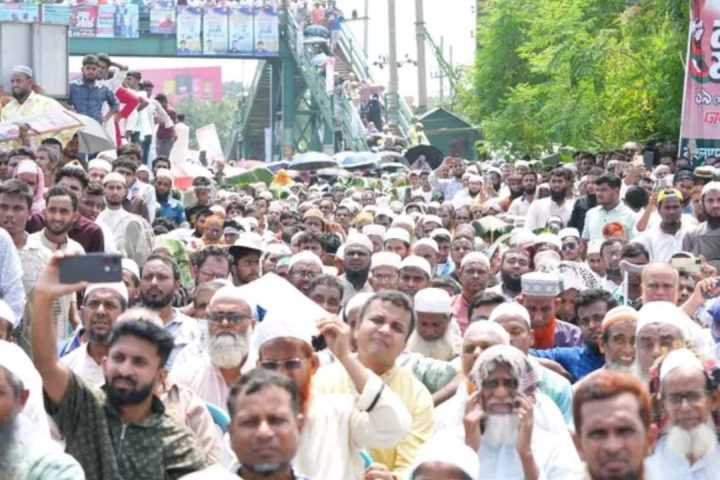
The scale of the gathering signalled how far the protest had spread beyond its student origins. Demonstrators converged on the Shaheed Minar from early morning despite rain, many carrying national flags and placards bearing the faces of those killed or missing during the crackdown. Nearby areas — Doyel Chattar, Jagannath Hall, Dhaka Medical College Hospital, and the Shibbari intersection — filled with overflow crowds. Students Against Discrimination followed the rally with a 15-point directive for enforcing a nationwide non-cooperation movement, effectively calling for a general strike beginning the next day.
Forty-Eight Hours to Resignation
The one-point demand did not remain a rhetorical gesture for long. Non-cooperation actions spread nationwide on August 4, accompanied by fresh violence that left dozens dead in clashes between protesters, ruling party supporters, and police in towns including Munshiganj and Magura. Bangladesh’s army chief, General Waker-Uz-Zaman, addressed his forces that day, telling them to stand with the country’s people while urging international investigation of the violence. By August 5, protesters had announced a “long march to Dhaka,” and hours later Hasina resigned and left the country for India, ending a 15-year tenure as one of the longest-serving female heads of government in modern history.
Why August 3 Still Matters
Looking back, August 3 is remembered less as the day of Hasina’s fall than as the day the movement decided what it actually wanted. Collapsing a sprawling set of grievances — quota reform, accountability for killings, opposition to what organisers called fascism — into a single, unambiguous demand gave the protests a clarity that made compromise impossible and made the endgame, just two days later, almost inevitable.
Summary: On August 3, 2024, at a mass rally in Dhaka, student coordinators rejected Sheikh Hasina’s offer of dialogue and announced a single, non-negotiable demand: her resignation and that of her entire cabinet. The moment converted weeks of quota-reform protests into a nationwide non-cooperation movement that forced Hasina from office within 48 hours.