
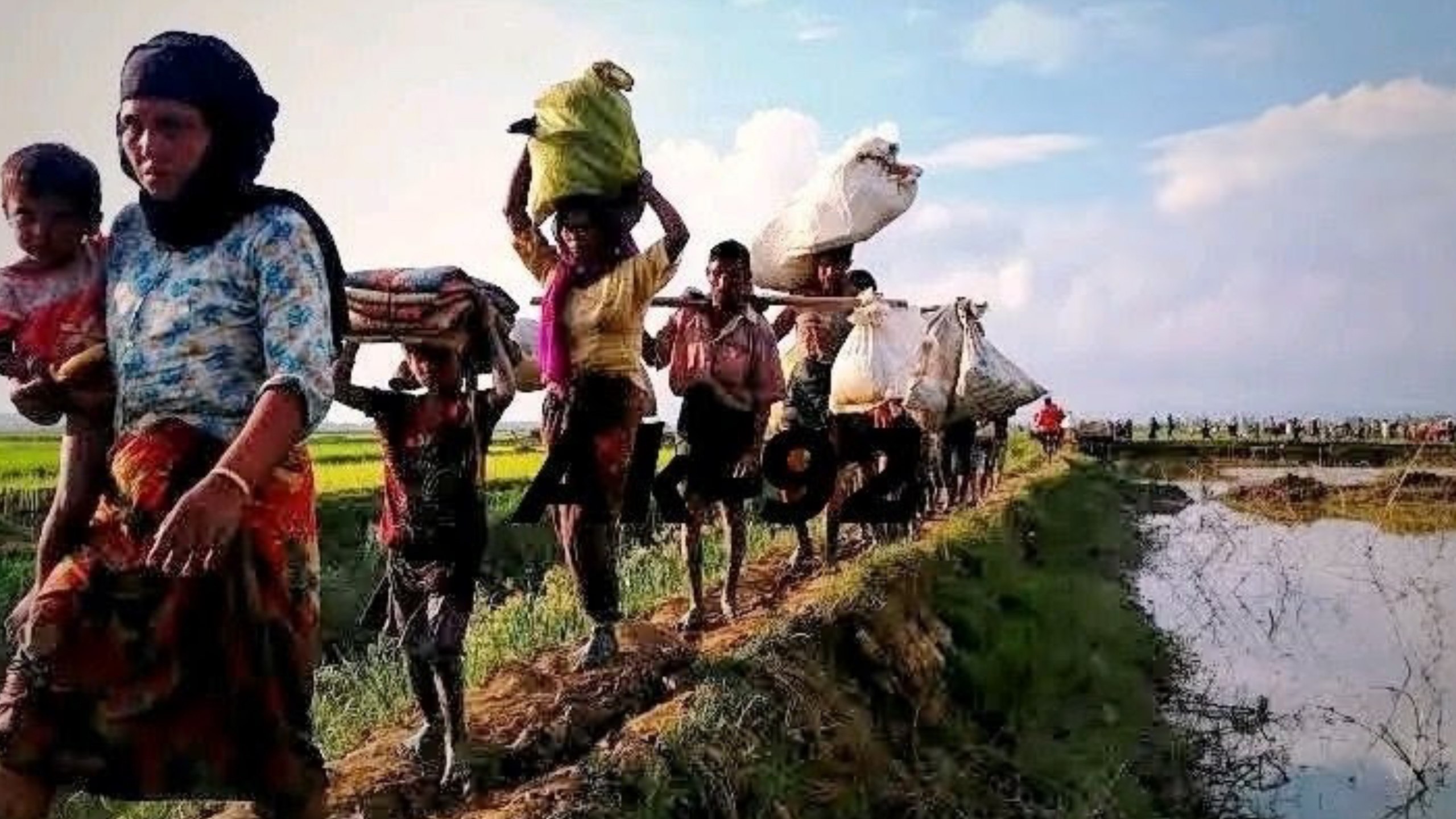
Nine years after the mass displacement of the people from Myanmar, the Rohingya crisis remains unresolved. What started as a humanitarian disaster has become a long-term regional problem, with more than a million Rohingya refugees still in Bangladesh and conditions in Myanmar still too perilous for safe and voluntary returns.
Rohingya Crisis has become increasingly untenable for Bangladesh
The refugee camps in Cox’s Bazar continue to face overcrowding, a drop in humanitarian funding, food insecurity and limited access to education and livelihoods. Meanwhile, the continued instability in Myanmar’s Rakhine State has made the prospect of repatriation even less certain.
Rohingya crisis is also increasingly acquiring a security dimension. “Long-term displacement, poverty and poor prospects for the younger generation have created vulnerabilities that can be exploited by criminal and armed networks. Reports of trafficking, smuggling, violence and recruitment inside the camps have raised fears that an unresolved humanitarian crisis could spill over into a broader regional security issue.
But the core demand of Rohingya communities remains the same: the right to return home safely, voluntarily and with dignity.
For Bangladesh, the challenge is to balance humanitarian responsibility with national security and to maintain pressure on the international community and Myanmar for a durable solution. But for the Rohingya, repatriation is not as simple as crossing the border into Myanmar. Any return worth talking about would have to be safe, with rights to citizenship, freedom of movement, education and livelihoods and credible guarantees against persecution.
Crisis Inside the Crisis
The Rohingya crisis has entered its ninth year with no sustainable political settlement. The nature of the challenge has changed over the years. Hundreds of thousands have made long-term homes in camps that were supposed to be temporary.
This prolonged displacement has implications beyond humanitarian assistance. Children and youth are growing up with little access to formal education and economic opportunities, while families are left asking if they will ever be able to rebuild their lives in Myanmar.
This is also putting pressure on local communities, infrastructure, public services and the environment in and around Cox’s Bazar, Bangladesh.
Why safe repatriation remains the key demand
Rohingya leaders and rights groups have long said that return must be safe, voluntary and dignified. Refugees cannot be returned across the border to address the root causes of the crisis.
The problem is trust. “Many Rohingya refugees are afraid to return without firm assurances of security and legal status. Political and military instability in Myanmar has also eroded confidence in any repatriation arrangement.
A sustainable return process would therefore have to tackle the conditions that caused the mass displacement in the first place – discrimination, restrictions on citizenship and movement, and fears of renewed violence.
Growing security concerns at the camps
The crisis is primarily humanitarian, but security considerations are proving harder to ignore.
The large population concentrated in densely populated camps with limited employment and education opportunities has created an environment vulnerable to organised crime, trafficking and influence from armed groups. Violence between rival groups and criminal networks has also raised concerns about the safety of aid workers and refugees.
This is not to say that the Rohingya refugees themselves are a security risk. Rather, long-term displacement and lack of legal and economic opportunities can create conditions that criminal and armed actors can exploit.
That distinction is crucial if security policies are to avoid further marginalising an already vulnerable population.
The Burden Increases for Bangladesh
Bangladesh has repeatedly called on the international community to support humanitarian assistance and a sustainable solution to the crisis. But the financial and social burden of the displacement is increasing, and it is becoming more and more difficult to cope with.
Reduced international funding could affect food distribution, health care, education and protection programs. Cuts to essential services threaten to make the already dire situation in the camps even worse.
Bangladesh has a clear objective – repatriation has to happen eventually, but not at the cost of refugee safety.
Regional Security Aspect
The Rohingya crisis is affecting not just Bangladesh and Myanmar. Instability in Rakhine State has consequences for the wider Bay of Bengal and Southeast Asian region, and cross-border trafficking, organised crime and militant activity may present further security challenges.
So the crisis has turned into a test of regional diplomacy. Bangladesh needs more international engagement with Myanmar, and regional powers have an interest in ensuring that the long-standing instability does not spill over beyond the immediate conflict zone.
Nine years later, the question remains
Eight years later, humanitarian aid can help reduce suffering, but it cannot offer a lasting solution. Most importantly, we must create conditions in Myanmar that will allow the Rohingya to return safely, voluntarily and with full rights and dignity. Until that day, Bangladesh will continue to bear an unfair humanitarian burden and security risks from prolonged displacement will increase with each passing day.
The Rohingya crisis is therefore no longer just a matter of refugee support. It is a test of regional diplomacy, of human rights, of national security and international responsibility. Nine years after the mass exodus, there is a need for a safe return, but the window for a sustainable solution is closing fast.
Summary:
Nine years after the mass displacement of Rohingya people from Myanmar, Bangladesh continues to host more than a million refugees amid an uncertain repatriation process. Overcrowding, humanitarian funding shortages, food insecurity and limited opportunities have intensified pressure on the camps.