
Who are Bangladeshis, and where did our ancestors come from? The answer lies as much in geography as in history. Bengal is a fertile delta at the crossroads of South and Southeast Asia, and its diversity comes from thousands of years of migration, trade, conquest and cultural fusion.
Researchers describe Bangladesh and Northeast India as a vital land bridge between the two regions, a corridor along the Bay of Bengal where people, languages and ideas travelled in both directions.
No single group built this land alone. Instead, successive waves of people arrived, settled and mixed with those already there. Understanding these waves helps explain why Bangladeshis look, speak, eat and celebrate the way they do.
Wave One: The Earliest Settlers
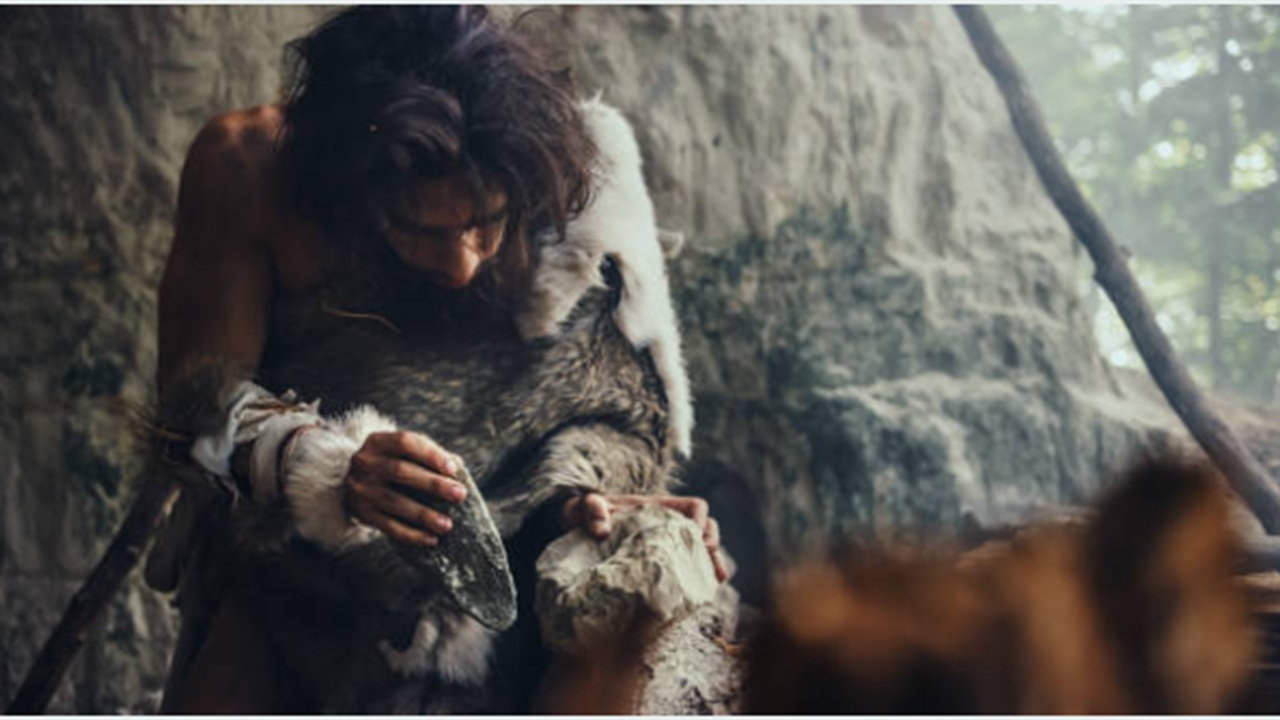
Before the first millennium BCE, Bengal was already inhabited by Austroasiatic, Dravidian and Tibeto-Burman peoples, who reached the region through several prehistoric waves of migration. Some writers link the earliest movements of populations with East Asian ancestry to the Neolithic period, though dates for such early events are debated.
Genetic studies suggest that Bengalis carry traces of Southeast Asian ancestry, likely from these early Austroasiatic migrations. These first settlers formed the base layer of the population. They farmed the delta, fished its rivers and shaped the earliest village life. Their influence did not disappear. It survives in place names, in everyday words and in the genes of people today.
1. Which venomous snakes are a real threat in Bangladesh, and how can people identify them?
From cobras and kraits to vipers, discover the venomous snakes found across Bangladesh and why they remain a serious concern.
2. Did you know a new island has emerged in the Sundarbans?
Explore the story behind the new island in the Sundarbans and what its appearance could mean for this fragile ecosystem.
3. Why are Bangladesh’s wild birds increasingly at risk from poaching?
Take a closer look at the illegal bird trade and poaching threatening the country’s wildlife.
4. What makes Sundarbans honey collectors enter one of the world’s most dangerous forests?
Their search for honey can bring them face-to-face with Royal Bengal Tigers. Discover why these collectors continue to risk their lives.
5. Is there more to the Sundarbans than science can explain?
From mysterious stories to local beliefs, explore the fascinating debate between science and superstition in the Sundarbans.
Wave Two: The Indo-Aryan Arrival
A second wave of migration and settlement took place between 1,000 and 500 BCE, when Indo-European speakers arrived in the Bengal delta. Their genetic signature reflects North Indian and Gangetic ancestry layered over the earlier Austroasiatic and Dravidian base.
This wave left its deepest mark on language. The Bangla language belongs to the Indo-European family and descends from the eastern branch of the Indo-Aryan languages, through Magadhi Prakrit and Magadhan Apabhramsha. Yet it was never a pure inheritance. Bangla also carries vocabulary from Austroasiatic and Dravidian languages, a sign that the newcomers blended with the people already living there rather than replacing them.
Wave Three: Tibeto-Burman Groups
The third wave came during the Buddhist period, when Tibeto-Burman groups settled in the northern parts of present-day West Bengal and Bangladesh. Their descendants include communities of the Chittagong Hill Tracts, such as the Chakma, Marma and Tripura.
A 2013 study in PLoS ONE examined these three groups for the first time using high-resolution genetic markers. It found strong similarities among them and strong ties to Tibeto-Burman groups in Northeast India. The researchers also found that men and women both took part in the Tibeto-Burman expansion, which sets it apart from the Austroasiatic pattern seen among the Munda of India. They concluded that the population history of South Asian Tibeto-Burman speakers is more complex than previously thought.
Layers, Not Replacements
It would be wrong to picture the three waves as separate chapters. They overlapped and blended through marriage, trade and shared life over many centuries. Some writers estimate that East Asian, Tibeto-Burman and Southeast Asian ancestry in East Bengal took shape largely around 1,500 years ago, in the range of 15 to 25 percent of the gene pool. Scholars still debate such figures and the exact timing of each wave, so they are best read as estimates rather than settled facts.
The mixing never stopped after the three waves. Later centuries added Persian, Arabic, Portuguese and English influences, all of which appear as loanwords in modern Bangla. The language itself is a record of the meeting of many peoples.
Why This History Matters Today
The idea of a single, uniform origin does not match the evidence. The Bangladeshi identity is layered, formed over thousands of years by people who came from the east, the west and the hills. This history is visible in everyday life: in the food on the table, in festivals that mix older and newer traditions, in dialects that change from district to district and in the faces of the people.
It also carries a message about respect. Indigenous communities such as the Chakma, Marma and Tripura keep older threads of this shared story alive. Recognising their place in the history of the land strengthens a more inclusive sense of what it means to be Bangladeshi.
The Bottom Line
Three ancient waves, from Austroasiatic and Dravidian settlers to Indo-Aryan speakers and Tibeto-Burman groups, shaped the Bangladeshi soul. We are not the descendants of one people. We are the result of many, brought together by a delta that has welcomed travellers for thousands of years.