
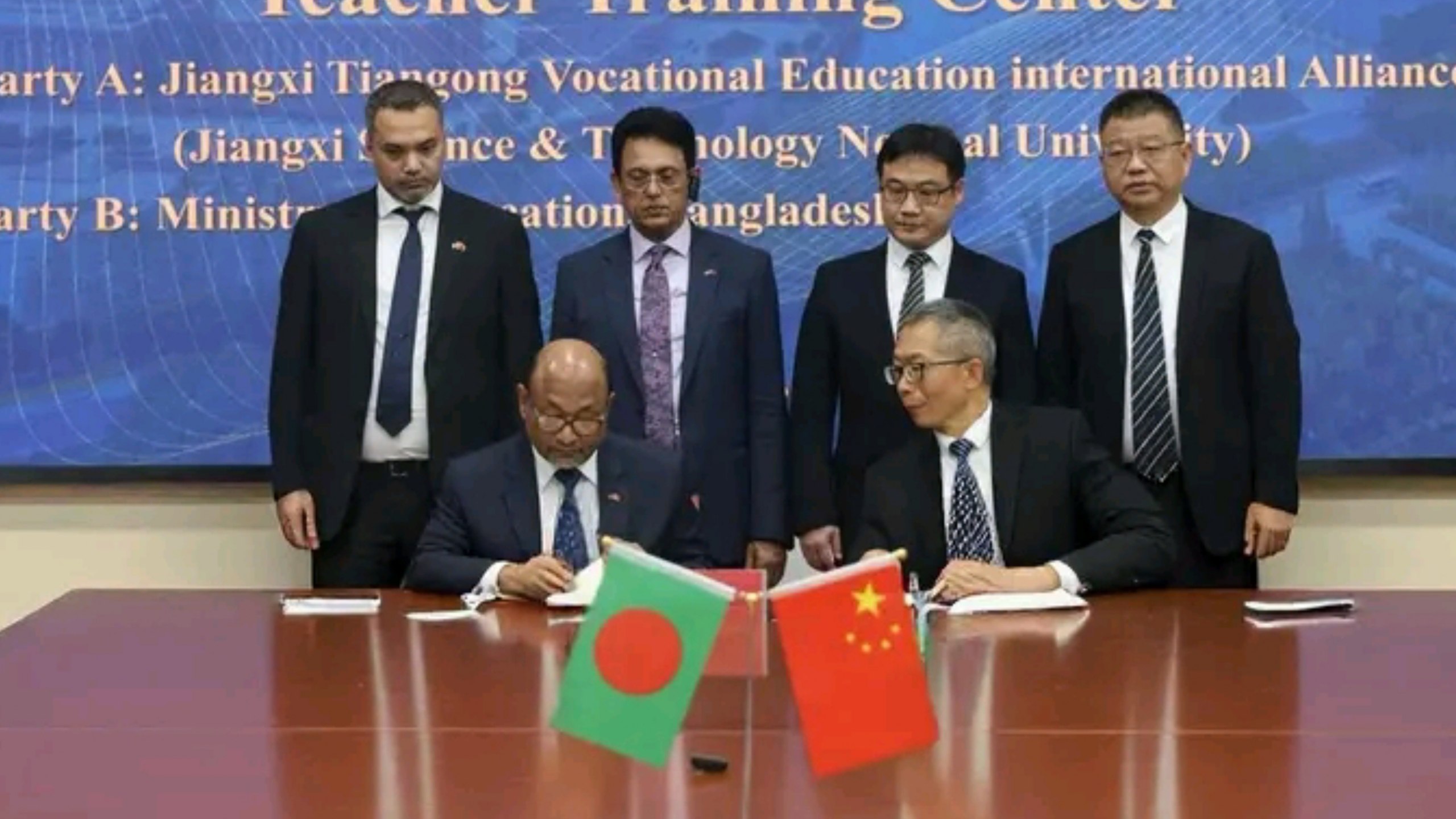
Bangladesh and China signed a memorandum of understanding on August 28 to establish the China-Bangladesh Vocational Education, Training and Research Centre, a platform aimed at deepening cooperation in technical and vocational education, teacher training, and industry-linked skills development. The agreement was signed at the China-Bangladesh Education Exchange Conference, held at Jiangxi Science and Technology Normal University and organised by the Jiangxi provincial government.
Secretary of the Technical and Madrasah Education Division Md Daud Miah signed on behalf of Bangladesh, while Professor Zheng Pengwu of Jiangxi Science and Technology Normal University signed for the Chinese side.
Who Was in the Room
The Bangladesh delegation was led by Education Minister Dr ANM Ehsanul Hoque Milon, alongside Prime Minister’s Education Adviser and PMO Chief Spokesperson Mahdi Amin. Milon told the conference that technical and vocational education must stay closely aligned with the real needs of industry and the job market, and said Bangladesh wants to learn from China’s experience building a modern, industry-connected vocational education system and adapt relevant practices to local needs.
Mahdi Amin framed the signing as the start of a new chapter in bilateral cooperation on technical education, describing the shared goal as turning education into skills, skills into employment, and employment into economic opportunity.
What the New Centre Will Actually Do
Under the cooperation framework, the two countries plan to work together on vocational training programs, bilingual teaching materials, shared educational resources, and vocational education research. The agreement also covers industry-education integration, industrial training placements inside Bangladesh, study visits to China, and specialised programs for vocational education administrators. Milon specifically called for stronger collaboration on curriculum development, teacher training, institutional partnerships, and modern technology integration.
Part of a Broader Pattern of Chinese Vocational Diplomacy
This centre adds to a wider push by China to export its vocational education model abroad, most visibly through the Luban Workshop initiative, a Belt and Road-linked program that has established 94 international vocational programs across 14 major fields worldwide, according to recent figures from the initiative’s research centre. Similar Chinese-backed vocational partnerships in countries like Indonesia have focused on training students and educators in fields tied to Chinese-made technology, from electric vehicles to commercial drones, while also strengthening China’s broader diplomatic and economic influence in partner countries.
Discover More Stories Worth Your Time
Explore Why Wages Stay Frozen?
Discover how stagnant minimum wages are affecting Bangladesh’s garment workers and families.
Check How Conflict Hurts Jobs?
Explore why Middle East tensions could threaten Bangladesh’s jobs and poverty gains.
Find Which Netflix Picks Worth Watching?
Discover binge-worthy Netflix choices for a relaxing weekend at home.
See Which Foods Ease Seasonal Changes?
Explore five comforting foods that can help you feel your best.
Learn How To Spot H1N1?
Discover H1N1 symptoms, prevention tips, and essential facts for Bangladesh.
Why It Matters for Bangladesh’s Workforce
Bangladesh has a young, large working-age population and has repeatedly flagged a shortage of qualified TVET teachers as a bottleneck to expanding technical education, particularly outside Dhaka. Other ongoing efforts, including a separate 150 million dollar Asian Development Bank-backed teacher training program, are already working to address that gap. The new China-Bangladesh centre adds another channel aimed at strengthening instructor quality and aligning training more closely with the demands of a fast-changing job market.
FAQ
What did Bangladesh and China agree to?
They signed an MoU to establish the China-Bangladesh Vocational Education, Training and Research Centre, covering teacher training, curriculum development, and industry-linked skills programs.
Who signed the agreement?
Md Daud Miah, Secretary of Bangladesh’s Technical and Madrasah Education Division, signed for Bangladesh, and Professor Zheng Pengwu of Jiangxi Science and Technology Normal University signed for China.
What will the new centre focus on?
Vocational training programs, bilingual teaching materials, teacher and administrator training, industrial training placements, and study visits between the two countries.
Summary: Bangladesh and China have signed an MoU to establish a joint vocational education, training and research centre, marking a new phase of cooperation on technical education and instructor training.