

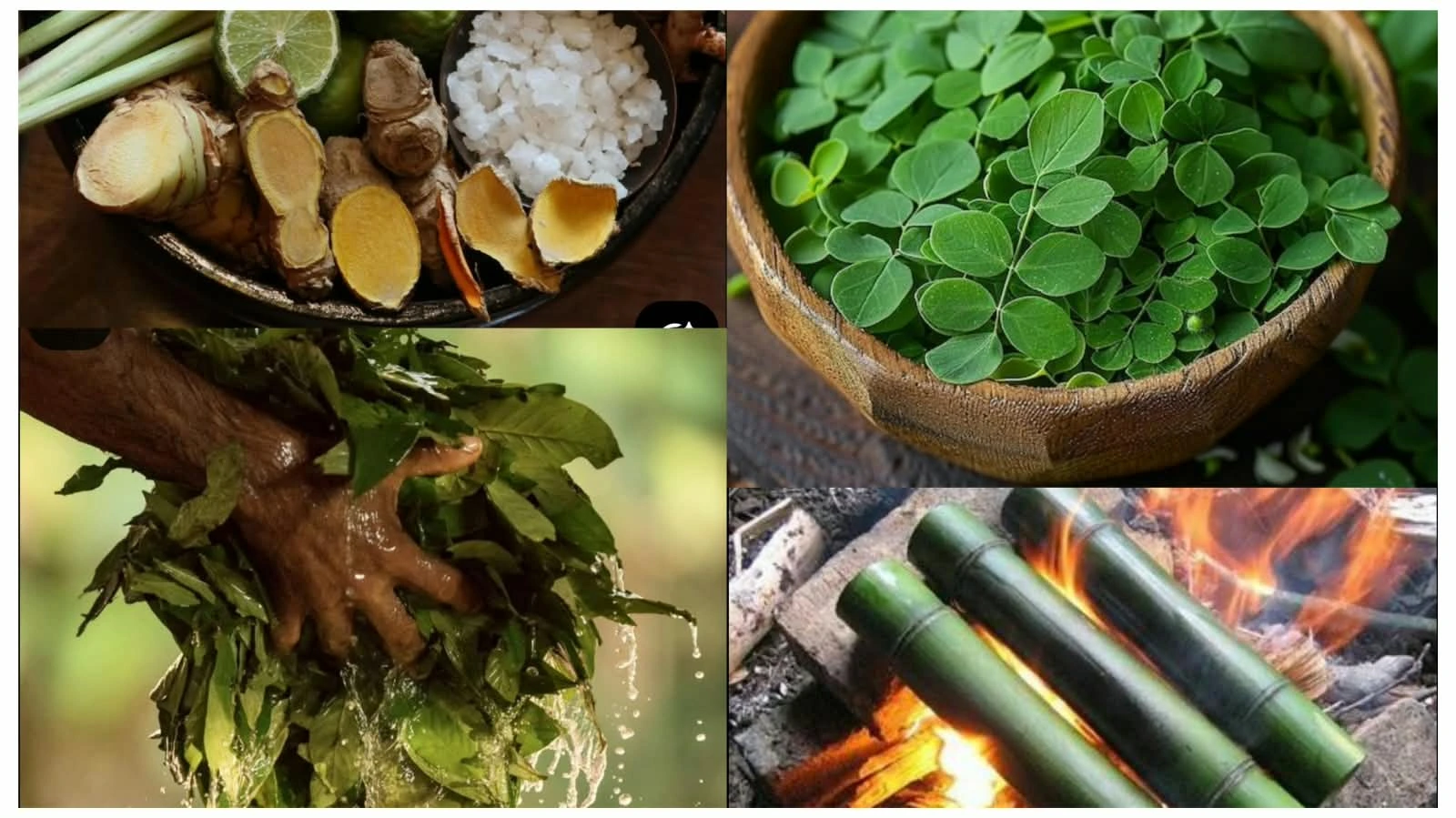
Ask most people about Bangladeshi food, and they will say rice and fish. Look a little deeper, and you will find a quieter tradition built on seasons, forests, fields and Indigenous knowledge. Two parts of it stand out: rice cooked in bamboo and the wild greens people gather and eat daily.
Bamboo as Cookware and Flavour
In Sylhet and the Chittagong Hill Tracts, sticky or fragrant rice is packed into young bamboo tubes and slowly smoked or roasted. In Sylhet, the dish is known as chunga pitha or choongapura. The rice picks up a light woody aroma from the bamboo and is often served with duck, thickened milk or other sides.
Bamboo plays a bigger role in Indigenous kitchens. Communities such as the Chakma and Marma roast fish, chicken and eggs inside green bamboo. Bamboo shoots are curried, boiled, cooked with dried fish or pork, and preserved by drying, pickling or fermenting.
Two Meanings of Bamboo Rice
| Type | How It Is Made | Cultural Role |
|---|---|---|
| Rice cooked in bamboo | Sticky rice goes into a hollow young bamboo section and is roasted or smoked | A festive regional dish, linked with Sylhet’s chunga pitha |
| Bamboo shoot rice meals | Rice served with bamboo shoots, smoked meats and wild herbs | Part of Hill Tracts food traditions, where bamboo is both ingredient and cooking vessel |
The method is clever as well as tasty. Bamboo replaces metal pots, holds in moisture and adds a gentle smokiness without extra fat, which makes it a good example of low waste cooking rooted in place.
Wild Greens: The Quiet Staple
Rural Bangladesh has long depended on plants nobody planted. Leafy greens, water plants, herbs, creepers, roots and tubers are gathered from fields, homesteads, ponds and common land. A study across 10 villages recorded 102 locally known leafy green species, with the most available during the monsoon.
Most are cooked as shak, quickly sautéed with garlic, chilli and sometimes mustard oil. Mustard greens are linked with spring, while amaranth and other leaves turn up through the year.
More Than Famine Food
Many people assume wild greens are only eaten in hard times. The research says otherwise. In the surveyed villages, uncultivated foods made up an average of 65% of food weight for very poor landless households and 34% for better off landed households. They add vitamins, minerals and protein to meals of rice and fish.
Gathering also protects the plants. Pickers usually pluck leaves instead of pulling up the whole plant, so it can grow back, and the knowledge is passed down by word of mouth.
A Heritage Worth Protecting
Together, bamboo cooking and wild greens show a food culture that is seasonal, river shaped and varied, drawing on Bengali plains traditions and on Chakma, Marma, Tripura and other Indigenous communities. Urban restaurants are now putting bamboo shoots, wild herbs and smoked fish on menus, which raises their profile. But these foods only survive if people keep access to forests and common land, and if the people who gather and cook them keep their knowledge alive.