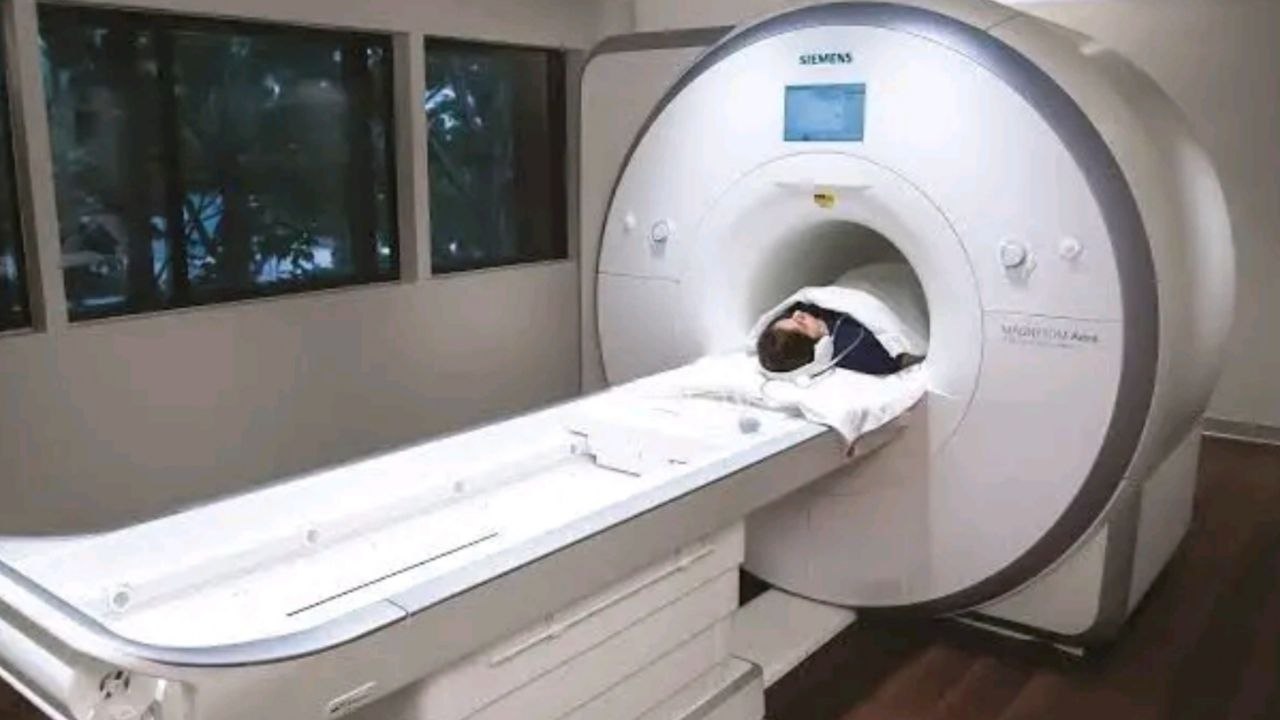
For nine years, patients at Sher-e-Bangla Medical College Hospital (SBMCH) in Barishal have not been able to get an MRI scan at their own hospital. The machine, installed in 2007, kept working despite developing technical problems until it finally stopped functioning altogether in 2019. Since then, anyone needing the scan has had no choice but to turn to private diagnostic centres, often at more than double the cost.
A Single Machine, A Growing Burden
At SBMCH, an MRI test used to cost patients just Tk 3,000, a fee that has not changed since the machine broke down. At private facilities in Barishal, the same scan now starts at Tk 7,000 and climbs higher if more than one type of scan is needed.
At least three private diagnostic centres in the city, Popular, Labaid and Medinova, together handle more than 100 patients a day for MRI scans, a volume that reflects just how much demand the public hospital’s broken machine has pushed into the private sector. For low-income patients, that price gap is not a minor inconvenience. It can mean delaying a scan altogether, or borrowing money simply to get diagnosed.
Discover More Stories Worth Your Time
See Why Rising Seas Threaten Dhaka?
Discover why the UN warns millions across Mumbai, Kolkata, and Dhaka face immediate coastal risks.
Find Why Trump Praised Tarique?
Explore what the US president’s letter says about the Boeing aircraft deal.
Learn How Adani Supply Returns?
Discover how Bangladesh’s payment settlement helped restore full electricity supply from the Godda plant.
Explore Why Dengue Cases Rising?
Discover what is driving Bangladesh’s latest dengue surge and the health concerns emerging nationwide.
Not An Isolated Case
SBMCH is far from alone. A wider pattern shows MRI machines lying unused for years across Bangladesh’s public hospitals, including Dhaka Medical College Hospital, Chattogram Medical College Hospital, Chattogram General Hospital, and Bogra Medical College Hospital, among others.
In several cases, the breakdowns trace back to a familiar cause: hospital authorities unwilling or unable to pay for maintenance contracts once a machine’s warranty period expires, leaving costly equipment idle rather than repaired. A 2025 assessment of SBMCH itself found that other essential diagnostic tools, including CT scanners, ultrasonography, X-ray and echocardiogram machines, were also out of order, pushing patients toward private facilities for even basic tests.
A Fix Finally In Sight, But Years Late
SBMCH authorities say preparations are now underway to install a new MRI machine by January 2027, which would bring the hospital’s scanning capacity back online after roughly eight years without it. For a facility serving one of Bangladesh’s major divisions, the timeline underscores just how long a basic diagnostic gap can persist once bureaucratic hurdles set in.
Why It Matters
The nine-year gap at SBMCH is more than a story about one machine that isn’t working. It highlights a bigger problem in Bangladesh’s public health system, where broken equipment, confusion over who is supposed to fix it, and slow procurement procedures often put direct financial strain on patients, many of whom can least afford it.
Similar stories are likely to continue repeating across the country’s public hospitals until maintenance and replacement processes speed up more than they have in Barishal.