
The Bengal Basin, shaped over thousands of years by sediment from the Ganges, Brahmaputra, and Meghna rivers, is now facing a threat that could undo what those rivers took millennia to build.
Roughly 41 percent of Bangladesh’s population lives at elevations below 10 meters, and close to a third of the population lives in coastal districts stretching from Khulna and Satkhira to Barguna, Patuakhali, and the Sundarbans mangrove belt. That geography, once the region’s greatest agricultural asset, has become its greatest vulnerability.
Seas Rising Faster Than the Global Average
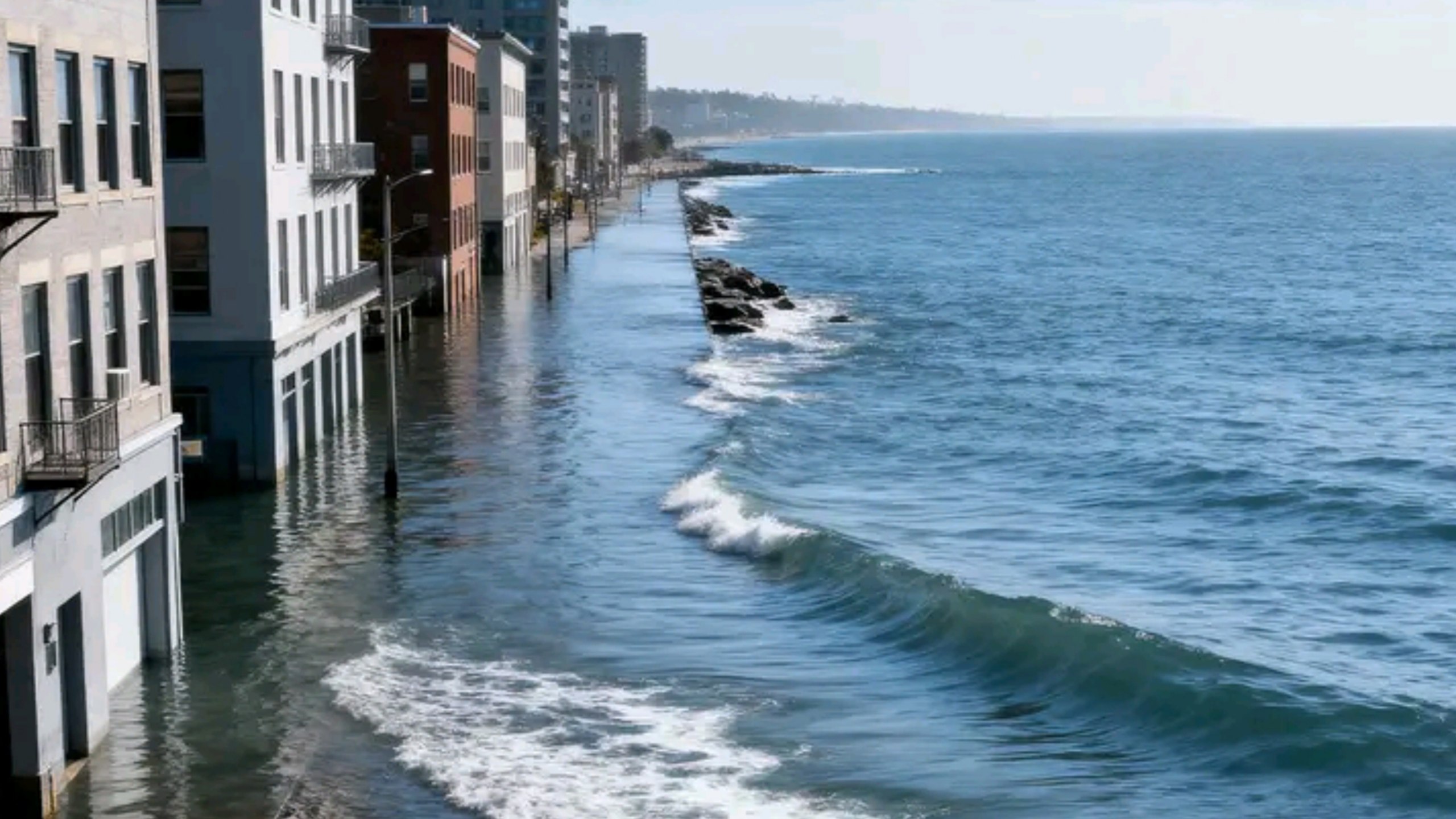
Coastal Bangladesh is currently experiencing sea level rise of roughly 3.8 to 5.8 millimeters a year, nearly double the global average, according to national meteorological officials. The problem does not stop at ocean rise alone.
Land subsidence, worsened by groundwater extraction, wetland loss, and urban expansion, particularly around Dhaka and the southwestern coast, is compounding the danger. When researchers factor in this sinking land alongside rising water, projections shift sharply: some studies now put the region’s effective water-level rise at 85 to 140 centimeters by the end of the century, roughly double what standard global models suggest.
How Many People Are Actually at Risk
The scale of projected displacement varies by study and by how far into the future it looks, but nearly every estimate points in the same troubling direction. The United Nations has projected that by 2050, sea level rise alone could displace up to 18 million Bangladeshis, with one in seven citizens affected by climate change overall.
Separate modeling using nighttime satellite data suggests between half a million and 2.8 million people could be affected by inundation by 2150 under different emissions scenarios, while older but widely cited estimates put 5.5 million Ganges delta residents at risk of relocation with just a 45 centimetre rise in sea level.
The wide range reflects genuine scientific uncertainty, but even the more conservative figures describe a crisis unfolding within a single generation.
Salt Water, Vanishing Land, and Stronger Storms
Sea level rise rarely announces itself as a single dramatic flood. In the Bengal Basin, it shows up first as saltwater intrusion poisoning farmland, coastal erosion swallowing riverbanks, and cyclones pushing storm surges further inland than before.
The Sundarbans, the world’s largest mangrove forest and a natural buffer against cyclones, has already lost ground to erosion faster than new land is being formed through sedimentation, a process further disrupted by upstream dam construction. Communities in these areas often relocate multiple times in a single generation as rivers reshape the land beneath them.
A Crisis Bangladesh Did Not Create
Bangladesh contributes less than 0.3 per cent of global greenhouse gas emissions, yet it consistently ranks among the countries most exposed to climate change’s consequences. Researchers at Bangladesh’s International Centre for Climate Change and Development have been blunt about what that imbalance means in practice, warning that even the country’s best adaptation efforts cannot offset the need for serious global emissions cuts. Without them, they argue, millions will remain at risk of flooding, displacement, and disaster regardless of what Bangladesh does on its own.
What Happens to the Cities
Displacement from the coast does not simply disappear into the countryside. Modelling of migration patterns suggests displaced populations initially surge into Dhaka, intensifying pressure on a capital already struggling with housing, jobs, and services, before secondary waves of migration push outward again as the city itself faces inundation risk.
Researchers describe a cascading effect, where newcomers are sometimes rejected by existing residents or displace them in turn, triggering further movement rather than settling the crisis in one place.
Is There Still Time to Change the Trajectory
The most sobering conclusion from recent modelling is not that Bangladesh’s coast is doomed by a fixed date, but that the outcome remains genuinely undecided. Under a high-emission scenario, global sea levels could rise between 63 and 101 centimetres by 2100, with the Bay of Bengal potentially seeing even more.
Under more moderate emissions pathways, the numbers look considerably less catastrophic. Researchers have been direct in framing this as a live choice rather than a settled fate, with today’s global and national decisions determining how much of the Bengal Basin remains above water by the end of the century.
FAQ
How fast is sea level rising in Bangladesh compared to the rest of the world?
Coastal Bangladesh is experiencing sea level rise of about 3.8 to 5.8 millimetres a year, nearly double the global average, and the effective rise is even higher once land subsidence is factored in.
How many people could be displaced by sea level rise in Bangladesh?
Estimates vary widely by timeframe and scenario, ranging from roughly 500,000 to 18 million people depending on the study and how far into the future it projects.
Discover More Stories Worth Your Time
See Which Foods Ease Seasonal Changes?
Explore five comforting foods that can help you feel your best.
Learn How To Spot H1N1?
Discover H1N1 symptoms, prevention tips, and essential facts for Bangladesh.
Explore Why Wages Stay Frozen?
Discover how stagnant minimum wages are affecting Bangladesh’s garment workers and families.
Check How Conflict Hurts Jobs?
Explore why Middle East tensions could threaten Bangladesh’s jobs and poverty gains.
Find Which Netflix Picks Worth Watching?
Discover binge-worthy Netflix choices for a relaxing weekend at home.
Why is Bangladesh so vulnerable if it contributes so little to global emissions?
Bangladesh’s low-lying delta geography, combined with land subsidence and its heavy population density in coastal areas, makes it disproportionately exposed to a crisis driven mostly by emissions from other countries.
Summary: Rising seas and sinking land are converging on the Ganges-Brahmaputra delta faster than global averages, putting tens of millions of people across Bangladesh and eastern India at risk of displacement this century.