
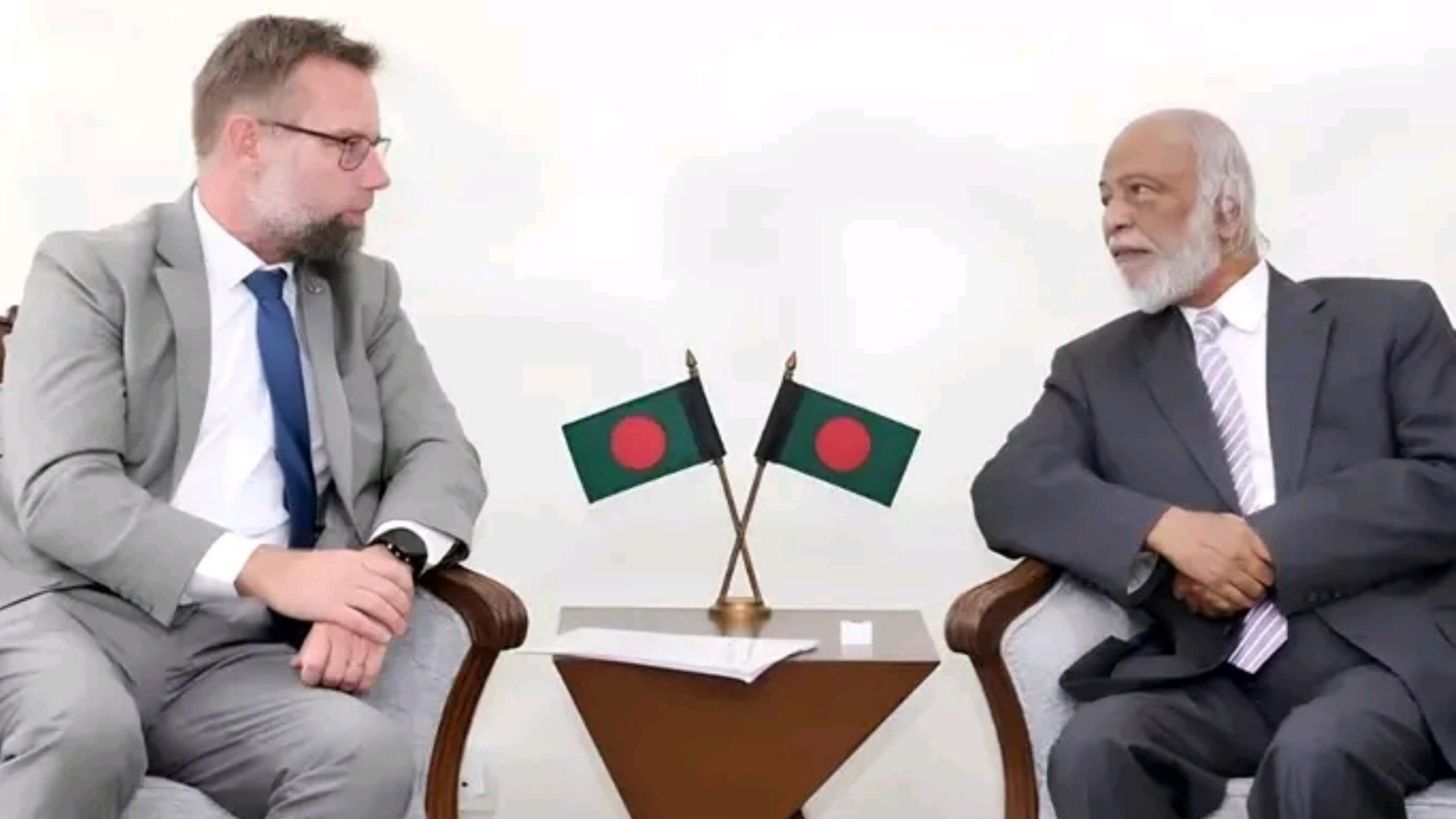
A High-Level Meeting Sets the Tone: Local Government, Rural Development and Cooperatives Minister Dr Abdul Moyeen Khan met Danish Ambassador to Bangladesh Christian Brix Moller at the Secretariat in Dhaka on August 25, where the two sides discussed deepening cooperation on water supply and waste management.
Moyeen Khan said Denmark could become an important partner for Bangladesh in these sectors, along with wider development assistance, while State Minister for Local Government Mir Shahe Alam also attended the meeting. The discussion covered strengthening bilateral relations more broadly and exploring new avenues for Danish investment in Bangladesh’s development projects.
Financing a Major Water Treatment Upgrade
At the centre of the discussion was the Sayedabad Water Treatment Plant Project’s third phase, a project central to easing Dhaka’s chronic water shortages. Denmark has committed around 4,500 crore taka in financing for this phase, split between 1,500 crore taka in grants and 3,000 crore taka in low-interest loans.
Briefing reporters afterwards, Mir Shahe Alam described the Danish cooperation on this phase as a major success for the government, adding that once completed, the project would go a long way toward meeting Dhaka’s rising demand for safe drinking water. The Sayedabad project as a whole is expected to eventually benefit between seven and nine million residents.
Looking Beyond Clean Water to Waste Management
The talks did not stop at drinking water. Moyeen Khan pointed specifically to waste management as another area where Danish expertise and capital could help, noting that Denmark has investment opportunities in producing energy from waste.
Denmark has long been recognised internationally for its waste-to-energy infrastructure, and officials appear keen to explore whether similar approaches could be adapted for Dhaka, a city that generates enormous volumes of municipal waste with limited capacity to process it sustainably.
Why Dhaka’s Water Crisis Keeps Growing
Dhaka’s water problems have intensified as the city’s population has expanded rapidly, putting mounting pressure on ageing pipelines, limited treatment capacity, and stretched groundwater resources.
Dhaka WASA, the city’s water and sewerage authority, has for years struggled to keep pace with demand from new residential areas and industrial users alike. Adding new, modern treatment capacity through projects like Sayedabad’s third phase is seen as one of the more direct ways to close that gap, rather than relying solely on incremental upgrades to existing plants.
A Continuation of Earlier Commitments
This latest meeting builds on commitments Denmark had already reaffirmed earlier in the year. In July, Denmark’s ambassador met a senior Bangladeshi official specifically to restate the country’s commitment to the Sayedabad project, underlining that Danish support for Dhaka’s water infrastructure was not a one-off gesture but part of an ongoing, multi-year partnership. Officials from Dhaka WASA and the Local Government Division were also present at the August meeting, a sign that implementation planning is moving alongside the higher-level diplomatic conversations.
Discover More Stories Worth Your Time
See Why Rising Seas Threaten Dhaka?
Discover why the UN warns millions across Mumbai, Kolkata, and Dhaka face immediate coastal risks.
Find Why Trump Praised Tarique?
Explore what the US president’s letter says about the Boeing aircraft deal.
Learn How Adani Supply Returns?
Discover how Bangladesh’s payment settlement helped restore full electricity supply from the Godda plant.
Explore Why Dengue Cases Rising?
Discover what is driving Bangladesh’s latest dengue surge and the health concerns emerging nationwide.
Check How Sylhet Border Watch Improves?
Explore how the new facility strengthens Bangladesh’s border surveillance and drone capabilities.
What This Partnership Signals
Denmark’s growing role in Dhaka’s water and waste sectors reflects a broader pattern of Nordic countries positioning themselves as technical and financial partners in South Asian urban infrastructure, often bringing environmentally focused approaches that align with global sustainability goals.
For Bangladesh, securing predictable, long-term financing from a partner like Denmark offers a way to fund large infrastructure projects without leaning as heavily on higher-interest borrowing. As the Sayedabad project’s third phase moves forward, officials on both sides appear to be signalling that this is just one piece of a wider cooperation they intend to keep building.
What Comes Next
With financing terms for the Sayedabad project’s third phase already outlined, attention now turns to implementation timelines and how quickly the promised capacity improvements will reach Dhaka’s residents.
Whether the conversation around waste-to-energy investment develops into a concrete project remains to be seen, but the direction of travel is clear. Bangladesh is actively courting Danish expertise and capital for both its water and waste challenges, and Tuesday’s meeting suggests both governments intend to keep that cooperation expanding in the months ahead.