
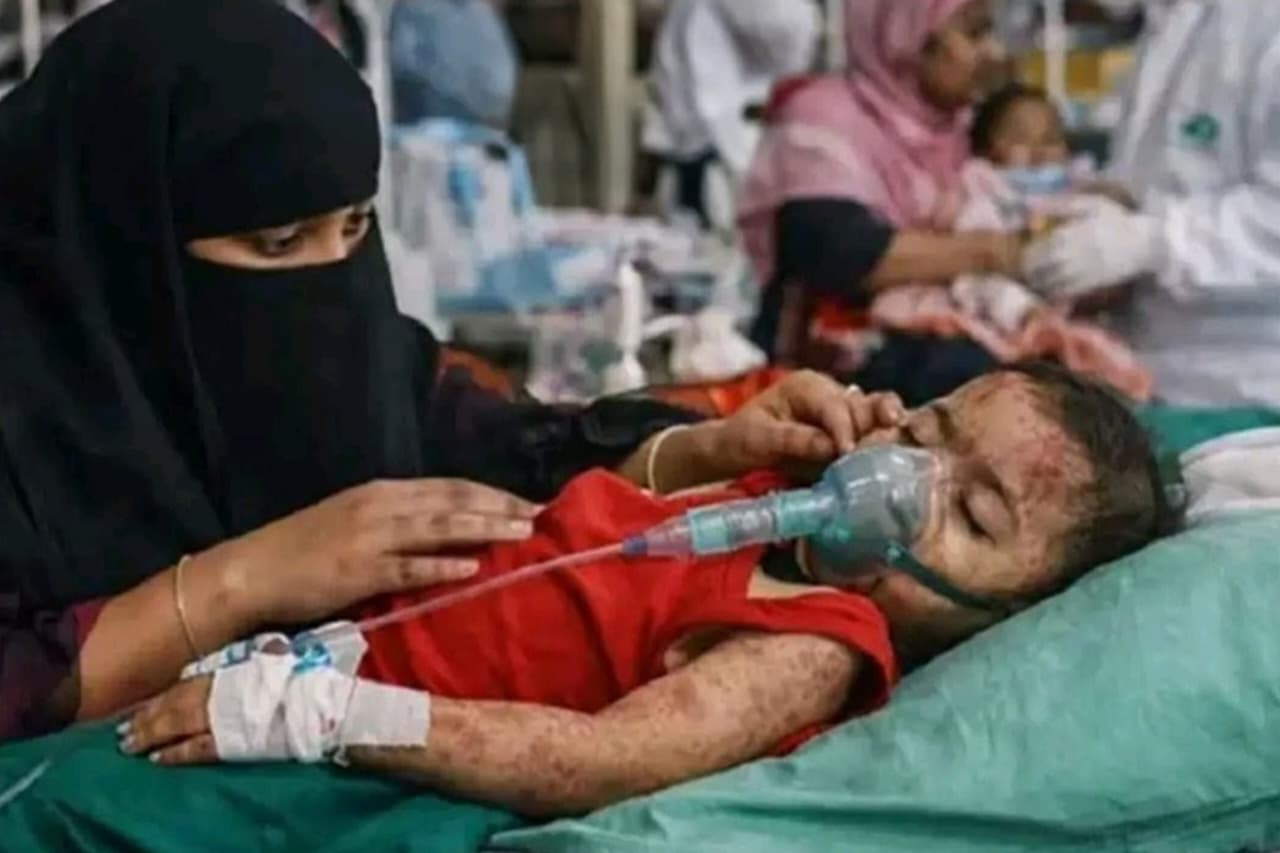
As one of the largest public health emergencies on record to hit Bangladesh, the measles outbreak of 2026 is already by far the most severe in 10+ years. Just in the last month, over 20k suspected cases and 206 deaths have been reported, indicating a need for urgent intervention.
In connection with the increasing rate of the measles national public health crisis, a delegation from the Pacific Institute of Medical Sciences (PIMS) – Udaipur arrived in Dhaka on the date of April 18, 2026, to provide critical support and collaboration with the Dhaka Reporters Unity (DRU).
PIMS Udaipur Bangladesh Support: A Multi-Pronged Healthcare Strategy
The PIMS Udaipur Bangladesh Support Initiative aims to improve the country’s response to an outbreak through a variety of different supports. The delegation, which included Dr Quresh Bambora and Dr Kamal Kishore Bishnoi, presented four main types of support:
1. Technical support in the form of sending Indian physicians to assist local health care workers in managing the most severe cases.
2. Providing specialised training programs to Bangladeshi physicians so that they can learn how to utilise international protocols for the management of infectious diseases.
3. Developing affordable packages for complex medical conditions such as cancer and liver disease.
4. Creating digital awareness campaigns that include online consultation services and information dissemination aimed at reducing the incidence of disease caused by the spread of infectious viruses through person-to-person contact.
This specific initiative reflects a larger movement towards creating collaborative health care relationships between India and Bangladesh that would utilise cross-border medical resources in times of emergency.
Measles Outbreak in Bangladesh: Why Kids Are Most Affected
The alarming outbreak of measles among children in Bangladesh reflects that approximately 81% of infections have occurred in the under-5 population. Infants (those less than 9 months of age) are vulnerable to this extremely contagious disease due to being ineligible for immunisation through routine vaccinations. The rampant spread of measles in Bangladesh is also being fueled by malnutrition and overcrowded living conditions. Urban slums and overcrowded urban areas are providing uninterrupted transmissions of the disease. This outbreak demonstrates an enormous existing gap in immunisation and raises the risk of further infections in pediatric populations, thus highlighting the need for prompt intervention efforts.
Discover More Stories Worth Your Time
Find What Caused Sea Tragedy?
Explore details behind the Andaman Sea disaster feared to have claimed hundreds of lives.
Learn Why Measles Cases Rising?
Discover how the outbreak has crossed 100 deaths and triggered nationwide emergency vaccinations.
Explore Why Fishing Ban Matters?
Discover how the 58-day restriction aims to protect marine life in the Bay of Bengal.
Check Can Chia Burn Fat?
Explore how this simple superfood may support effective and sustainable weight loss.
See How 19-Year Case Ended?
Discover how the long-running Gamcha Party case concluded with multiple convictions in Chattogram.
The MR Vaccination Campaign in Bangladesh: Emergency Response Under Way
Bangladesh authorities commenced an MR vaccination campaign on April 5, 2026, to control the outbreak of measles in the country. The goal of this emergency response is to vaccinate over 1.2 million children, with 30 high-risk zones across the country, including Dhaka, Cox’s Bazar and urban slums, receiving the vaccinations. Although the MR Vaccination Campaign is an important first step, experts caution that containment of the outbreak will require long-term commitment to maintain and strengthen ongoing immunisation programs and increase access to healthcare facilities.
Bangladesh Viral Outbreak Response: Healthcare System Under Pressure
The ongoing response to the virulent Bangladesh outbreak has revealed that there is significant tension in Bangladesh’s healthcare infrastructure. The following are challenges that hospitals face: overcrowding and limited capacity for pediatric care, a short supply of trained specialists in infectious diseases and, with respect to population distributions, inadequately equipped locations in rural and underserved communities. This emphasises the potential value of international cooperation and the scalability of healthcare solutions.
Expert Statement
“If the Bangladesh government desires, we are ready to provide direct assistance in tackling this outbreak by sending our team of experienced doctors.” — Dr Quresh Bambora
A Critical Moment for Regional Healthcare Collaboration
The recent measles outbreak in Bangladesh is more than a domestic emergency; it’s also an eating-away-at-the-borders issue for South Asia. There are a growing number of cases in countries throughout the region, and therefore, individuals who are susceptible will require immediate action through prevention, through vaccines, and through cooperation among countries across the globe to prevent further outbreaks.
The proactive offer of PIMS is indicative of what types of partnerships exist to combat a wide variety of public health emergencies in South Asia.