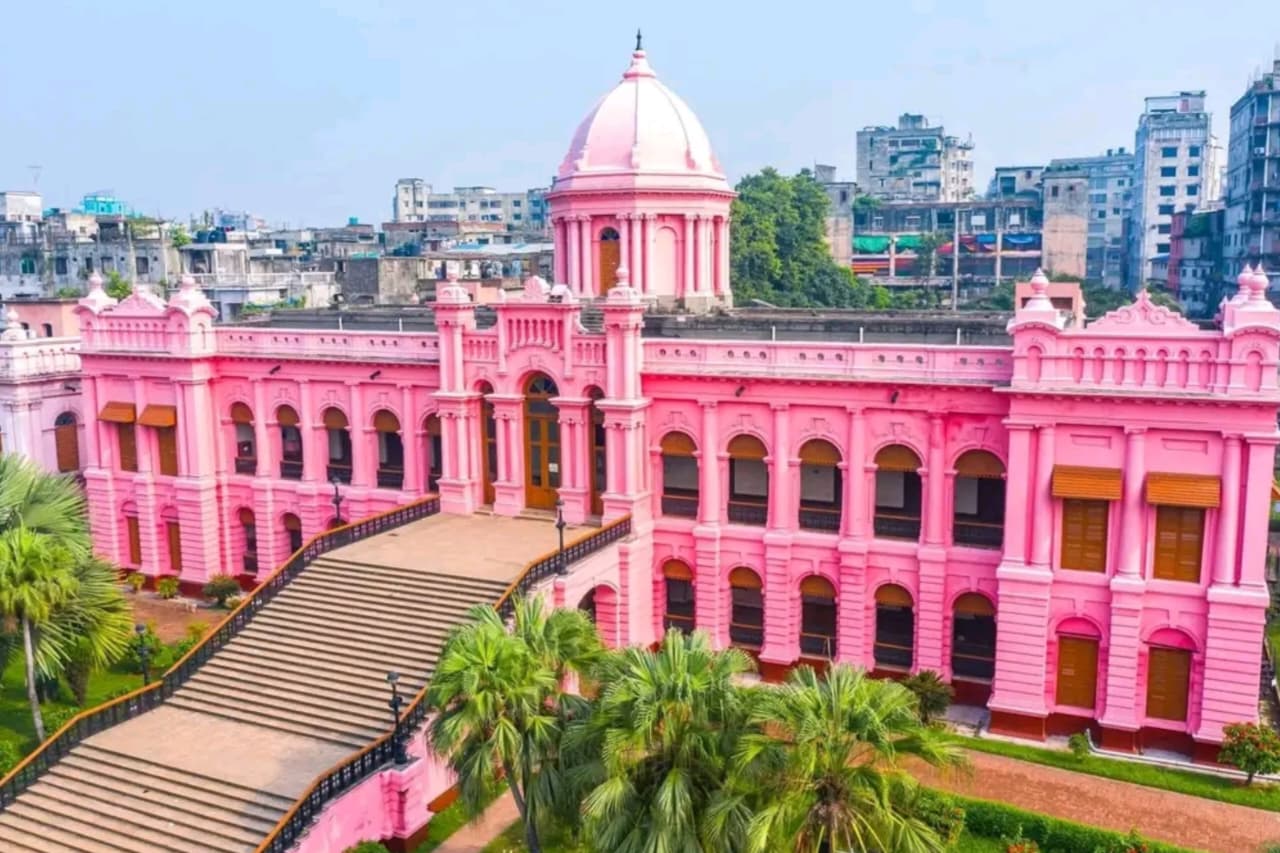
Anyone walking throughOld Dhaka for the first time usually notices Ahsan Manzil. Between the crowded lanes, noise, boats, and tangled electric wires suddenly appears a giant pink palace facing the river. Even today, Ahsan Manzil still feels unreal because of it’s Beauty against the chaos around it.
The Story Behind Ahsan Manzil
Long before the famous pink structure existed, the area had already passed through several hands. Historians believe the site originally belonged to a Mughal-era landlord before later being used by French traders operating near the Buriganga River.Things changed after the property was acquired by the Khwaja family, one of the wealthiest and most influential families in Dhaka during the 19th century.
Construction work began around the late 1850s and continued for years before the palace was finally completed in 1872.The building was named after his son, Khwaja Ahsanullah , which is where the name “Ahsan Manzil” comes from.
Why the Palace Became So Important
During the British colonial period, Ahsan Manzil operated almost like a political headquarters for Dhaka’s Muslim elite. Important guests, British officials, aristocrats, and regional leaders regularly visited the palace.Massive banquets, formal meetings, and cultural gatherings were held inside its halls. At one point, the palace became deeply connected to major political developments in South Asia.
One of the most historically significant moments linked to the building came in 1906, when discussions connected to the formation of the All-India Muslim League took place there.
That alone secured the palace a permanent place in regional political history.
Who Was Nawab Abdul Ghani?
Nawab Khwaja Abdul Ghani was one of the most powerful figures in Dhaka during the late 1800s.
Apart from wealth and land ownership, he played a major role in shaping parts of the city itself. Roads, public infrastructure, educational efforts, and civic improvements were often linked to his patronage.
The British later officially awarded him the title “Nawab Bahadur,” recognising both his influence and his close relationship with colonial authorities.
But beyond politics, his court also shaped elite Bengali-Muslim culture during that period. Literature, Persian customs, music, and formal etiquette flourished around the Nawab household.
Discover More Stories Worth Your Time
Find How To Get EV Loan?
Explore the step-by-step process for applying to Bangladesh Bank’s Tk 80 lakh green loan.
See When PayPal May Launch?
Discover what Bangladesh’s new PayPal committee means for freelancers and online payments.
Learn How To Book Eid Trains?
Explore special train routes, timings, and how to pre-book tickets through the rail app.
Check Will Visa Rules Change?
Discover what West Bengal’s new government could mean for Indian medical visa applicants.
Explore Why Hajj Safety Matters?
Discover the latest health warning after Bangladeshi pilgrim deaths during Hajj 2026.
What Visitors Can Expect Today
Today, Ahsan Manzil functions as a museum under the Bangladesh National Museum.
Inside, visitors can walk through restored halls, royal living quarters, reception rooms, chandeliers, antique furniture, portraits, and old documents tied to Dhaka’s Nawab family.
The building itself is often the biggest attraction. The pink dome, long stairways, and riverside setting make it one of the most photographed places in Old Dhaka.
Most people spend around 1.5 to 2 hours exploring the museum comfortably.
How to Visit Ahsan Manzil
Visitors usually reach it through rickshaw rides, ride-sharing apps, or local transport from Gulistan, Motijheel, or New Market areas.
Weekday mornings are generally quieter. Late afternoons are also popular because the lighting around the pink exterior looks especially good near sunset.
A lot of visitors combine the trip with Old Dhaka food stops afterward , especially biryani, kebabs, and traditional street snacks nearby.
FAQ
- What are Ahsan Manzil’s opening hours?
Open daily roughly 10:00 AM–5:00 PM; closed on some public holidays.
- Is there an entry fee and how to buy tickets?
Yes, small ticket at the gate; online booking is available via some local portals for same‑day visits.
- Best time to visit Ahsan Manzil?
Weekday mornings or late afternoons are usually the best times because crowds are smaller and the riverside views look better.
Summary:
Ahsan Manzil remains one of the most iconic landmarks in Dhaka. This blog explores the palace’s history, its connection to Nawab Khwaja Abdul Ghani, its political importance during British India, and useful tips for visitors planning a trip today.