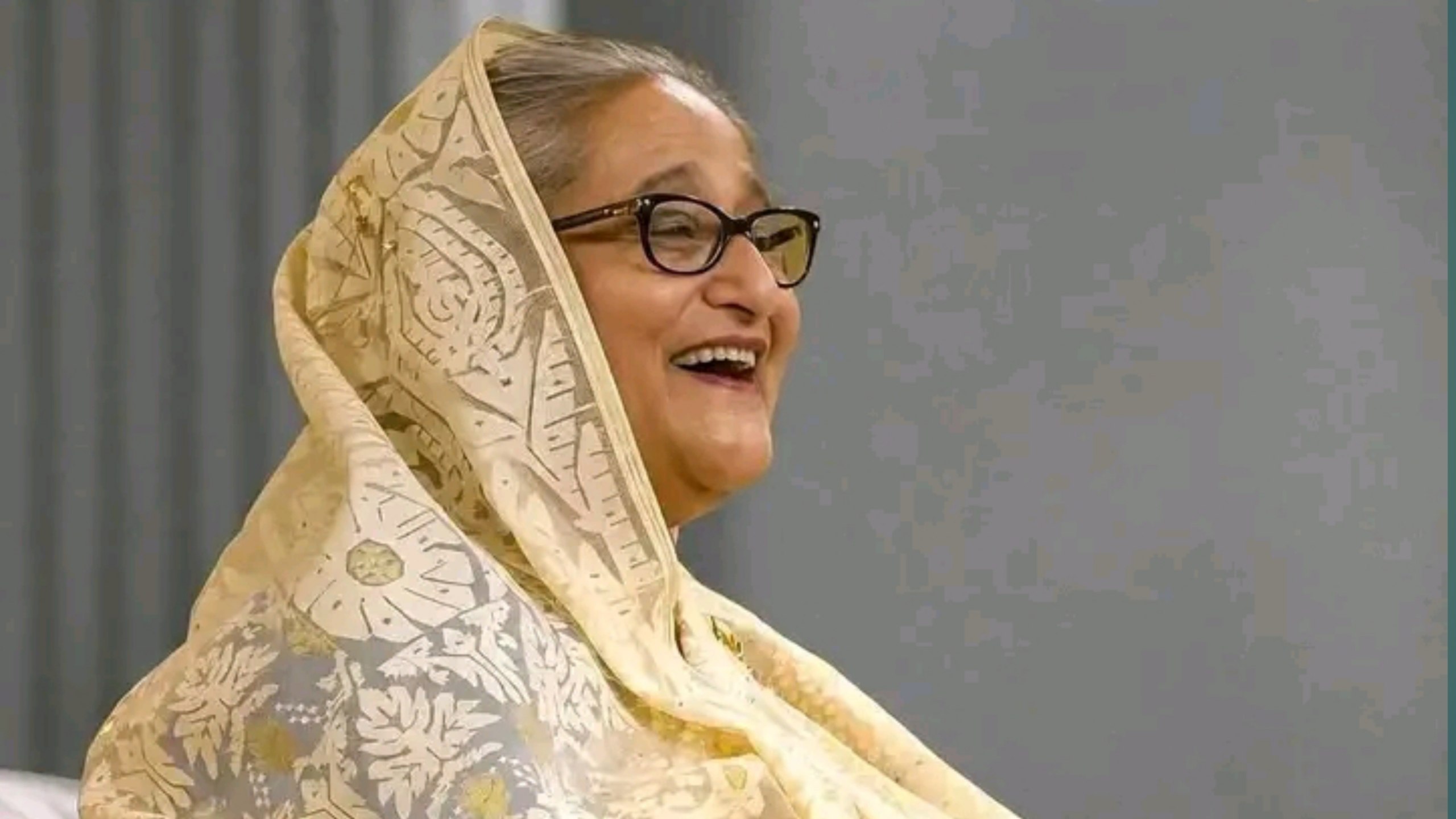
Former Bangladesh Prime Minister Sheikh Hasina has declared she intends to return to her country in December, despite a death sentence hanging over her head. The announcement, made in an audio address on Wednesday, marked her first public statement since she fled Bangladesh by helicopter two years ago amid a violent, student-led uprising against her government.
Speaking from the Foreign Correspondents’ Club of South Asia in New Delhi, the 78-year-old former leader, who served five terms as prime minister, struck a defiant tone. Her son, Sajeeb Wazed, joined the address remotely from Washington, D.C.
“Whatever fate awaits me, I will return to my people.”
She went further, acknowledging the risks she faces while framing her return as an obligation.
“I may be detained, I may be sent to prison, they may try to enforce verdicts issued in fabricated cases, but fear cannot decide my duty to the people.”
What Led to the Death Sentence
Hasina’s announcement comes months after a special tribunal in Bangladesh sentenced her to death in absentia in November 2025, convicting her of crimes against humanity over the state’s deadly crackdown on the 2024 protest movement that ultimately forced her from power. The United Nations estimates nearly 1,400 people were killed in the unrest.
A week later, in a separate case, a Bangladeshi court sentenced her to 21 years in prison on corruption charges tied to land allocations, with her children also receiving prison terms in absentia.
On Wednesday, Hasina rejected the official account of the uprising entirely, casting the movement that toppled her as an orchestrated plot rather than a genuine popular revolt.
“From the beginning, my government tried to resolve the issue peacefully, but it became a coordinated assault on the constitutional order, driven by hidden instruction, organized violence and propaganda.”
Analysts Push Back on Her Account
Political scientists and Bangladesh watchers have disputed that framing. Ali Riaz, a professor at Illinois State University, pointed to United Nations findings that state security forces were used against civilians during the crackdown, and noted that Hasina’s account glosses over decades of increasingly authoritarian rule that preceded the uprising.
Riaz also underlined the legal reality awaiting Hasina if she follows through on her plan. Because her conviction stands and no appeal was filed, he said, Bangladeshi authorities would be obligated to detain her immediately upon her return.
Discover More Stories Worth Your Time
Explore How SSC Exams Began?
Discover how nearly 19 lakh students are participating nationwide in the 2026 SSC exams.
Check Why UV Index Dangerous?
Explore why today’s UV level has reached extreme risk across Bangladesh.
See How Business Setup Easier?
Discover how the new investment agency merger simplifies starting a business.
Find Why Truck Fares Jumped?
Explore what’s driving the sudden Tk 10,000 increase in Chittagong logistics costs.
Learn Which Bangla Songs Trending?
Discover the fresh modern Bengal tracks gaining popularity this month.
India-Bangladesh Relations Under Strain
Hasina’s continued presence in India, and now her public defiance from Indian soil, has become a persistent irritant between New Delhi and Dhaka. Bangladesh’s Foreign Ministry said in a statement that it “deeply regrets” that the press event was allowed to take place in India despite Dhaka’s objections.
India’s Ministry of External Affairs, for its part, distanced itself from the event, saying it had no involvement in organizing the press conference. New Delhi has previously said it wants to restore ties with Dhaka, even as it has stopped short of committing to extradite Hasina despite Bangladesh’s repeated requests since the death sentence was handed down.
What Happens Next
With Bangladesh’s national elections scheduled for February 2026 and the interim government led by Nobel laureate Muhammad Yunus overseeing the transition, Hasina’s promised December return threatens to inject fresh volatility into an already tense political landscape. Whether she follows through, and how Bangladeshi authorities respond if she does, is likely to become one of the most closely watched developments in South Asian politics in the coming months.
For now, her Awami League party remains in disarray, its leadership scattered or facing prosecution, while Hasina herself continues to insist from exile that history will vindicate her tenure rather than convict it.
Summary: Sheikh Hasina, in exile in India since 2024, has vowed to return to Bangladesh in December despite being sentenced to death for crimes against humanity. Her first public address in exile has reignited tensions between Dhaka and New Delhi and set up a looming legal showdown over her fate.