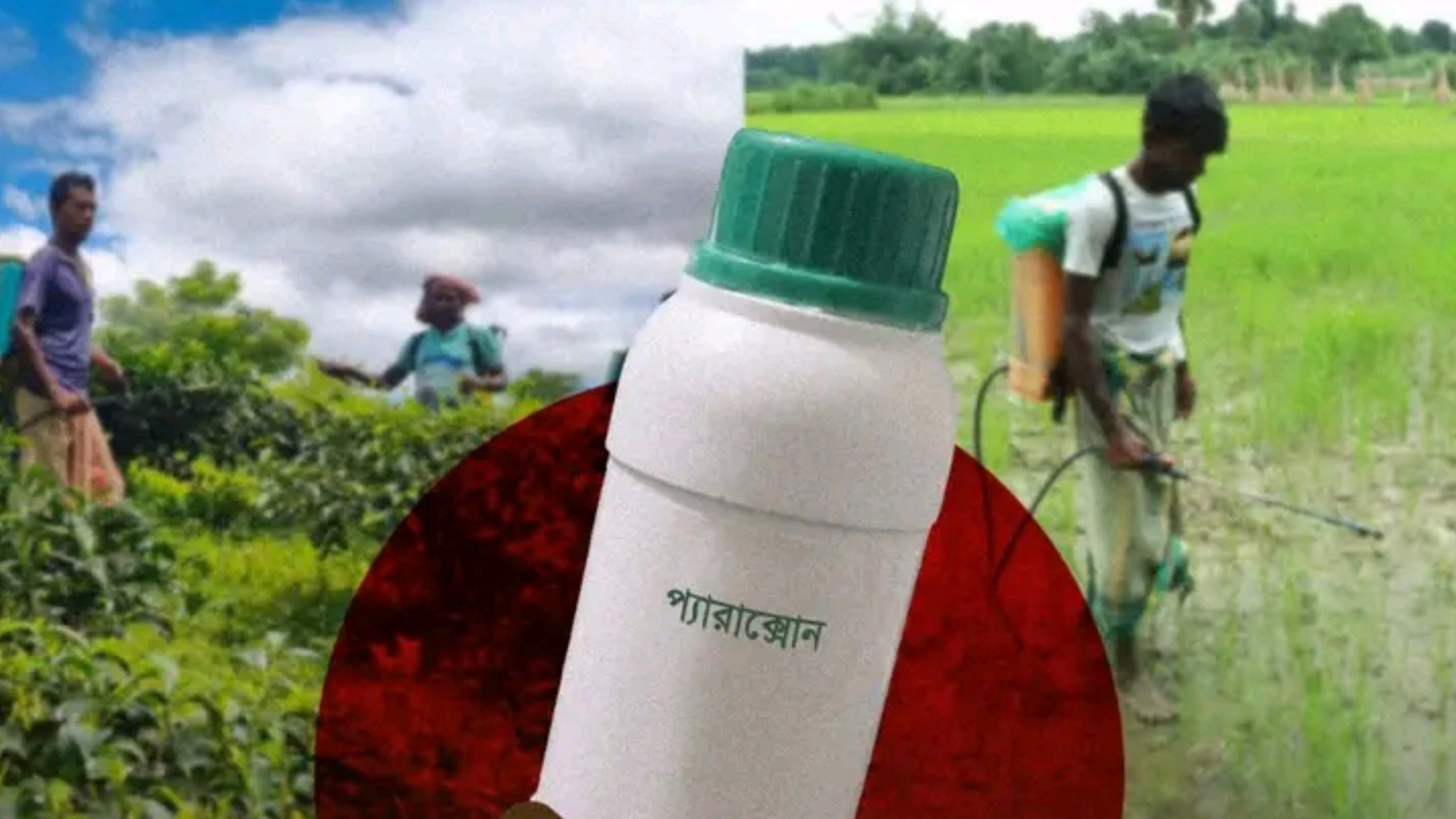
Paraquat is a chemical most Bangladeshis have never heard of, yet it has quietly become one of the country’s most dangerous public health threats. The herbicide, widely used to clear weeds before planting, has been banned or severely restricted in more than 70 countries around the world, including the entire European Union, over its extreme toxicity and the absence of any effective antidote. In Bangladesh, it remains legally available, and hospital data now shows the consequences of that gap in regulation are accelerating fast.
A Case Load That Has Exploded
A landmark study published in May 2026 in the American Journal of Tropical Medicine and Hygiene, led by Dr Fazle Rabbi Chowdhury and 29 co-investigators, drew on more than a decade of records from ten of Bangladesh’s largest tertiary hospitals, covering institutions that serve over 65 per cent of the country’s population.
The findings were stark. Paraquat poisoning cases climbed from a single reported case in 2013 to nearly 500 cases in a single year by 2024, a trajectory researchers describe as a toxicological crisis unfolding largely outside public view. The same research found a case fatality rate of roughly 40 to 43 per cent, meaning more than four in every ten people who are poisoned by the chemical die, a rate far higher than that associated with other pesticides sold in the country.
Why Paraquat Is So Difficult To Survive
What sets paraquat apart from most other agricultural chemicals is the near-total absence of effective treatment once poisoning occurs. Unlike many other toxic substances, there is no specific antidote, and the physiological damage the chemical causes, particularly to the lungs, often continues to progress even after a patient reaches hospital care.
Public health researchers who study pesticide regulation note that this combination of high accessibility and low survivability is precisely what has made paraquat such a persistent driver of fatal poisoning in countries where it remains legally available, a pattern documented for decades in nations such as Sri Lanka and China before those countries introduced bans.
Beyond Poisoning: A Broader Occupational Health Risk
The dangers of paraquat extend well beyond acute poisoning cases. A 2025 review estimated that nearly 27 percent of farmers in Bangladesh suffer some form of pesticide-related illness every year, with researchers linking prolonged exposure to cancer, neurological disorders, and endocrine disruption. A separate survey by the National Institute of Cancer Research and Hospital found that farmers make up 64 percent of the country’s cancer patients, a figure researchers attribute in large part to unsafe pesticide handling practices in the field.
For paraquat specifically, a widely cited 2024 analysis in the International Journal of Epidemiology found that people with sustained occupational exposure to the chemical faced more than double the risk of developing Parkinson’s disease. The evidence has become serious enough that Syngenta, one of paraquat’s major global manufacturers, announced in 2026 that it would cease production of the chemical entirely worldwide, even as litigation involving thousands of exposed farmers and farmworkers continues in the United States.
A Global Retreat From Paraquat
Bangladesh’s continued use of paraquat increasingly puts it at odds with a broader global trend. Nearly 60 to 70 countries have banned the chemical outright, according to figures cited by campaigners and pesticide policy researchers, and studies have consistently found that these bans carried no meaningful negative impact on agricultural productivity in the countries that adopted them.
The United Kingdom banned paraquat’s use domestically back in 2007, though it continued manufacturing and exporting the chemical to countries where its use remains legal, a practice set to end with the closure of UK-based production in 2026. Sustainability certification standards including Rainforest Alliance and Fairtrade have separately moved to eliminate paraquat from their supply chains altogether, reflecting a broader consensus among regulators, certifiers, and public health researchers that safer alternatives already exist.
Bangladesh’s Own History Of Successful Pesticide Bans
What makes Bangladesh’s continued tolerance of paraquat particularly notable is the country’s own track record on pesticide regulation. Starting roughly 25 years ago, the government began introducing restrictions on highly hazardous pesticides, and by the 2000s had partially or fully banned 21 such chemicals.
Research has linked those bans to a 65 percent decline in the overall pesticide poisoning fatality rate between 1996 and 2014, with no evidence that the restrictions harmed agricultural output. Public health researchers point to that history as clear evidence that regulating paraquat would follow the same pattern, reducing preventable deaths without meaningfully disrupting farming.
Discover More Stories Worth Your Time
Explore Why Colombia Declared Emergency?
Discover what the powerful earthquake means for Colombia and the latest emergency response.
Check Why Jaya’s Sarees Trend?
Discover why Jaya Ahsan’s elegant saree looks continue captivating fans online.
See Where Hasina’s Crisis Leads?
Explore the accountability debate surrounding Hasina, India, and Bangladesh’s political future.
Find Which Airport Hotels Fit?
Discover convenient hotels near Dhaka Airport for short layovers and overnight stays.
Growing Pressure For A Ban
Momentum for regulatory action has been building through 2026. In late July, farmers, researchers, fisherfolk, youth organisers, and environmental campaigners formed a human chain in Rajshahi’s Kornahar Beel area, organised by groups including the Bangladesh Resource Centre for Indigenous Knowledge, Barendra Youth Forum, and the Green Coalition, explicitly calling on the government to ban paraquat and other highly hazardous pesticides.
Speakers linked the chemical’s continued use not just to human health risks but to broader threats facing native fish populations, pollinators, soil health, and rural livelihoods. Researchers behind the May 2026 hospital study have echoed that call directly, describing an urgent need to remove paraquat from the market and replace it with less toxic alternatives already used successfully elsewhere.
What Comes Next
For now, paraquat remains legally available in Bangladesh even as the evidence of its cost mounts. Public health experts, researchers, and grassroots campaigners appear to be converging on the same conclusion: a chemical already rejected by dozens of countries, and one Bangladesh’s own regulatory history suggests can be phased out without harming farmers’ livelihoods, continues to be sold with minimal restriction.
Whether that changes will depend on how quickly policymakers act on evidence that, according to the researchers who compiled it, has already made the case for a ban unambiguous.