Stretching more than 4,096 kilometres across five Indian states, the Bangladesh-India border is one of the longest and most porous international frontiers in the world. It cuts through rivers, paddy fields, forests, and villages where families on either side sometimes share the same last name, dialect, and market square.
That intimacy is part of what makes the border so difficult to police. It is also what has turned it into a corridor for smuggling, trafficking, and illegal crossings that have persisted for decades despite repeated bilateral pledges to bring them to zero.
A Border Built For Crossing, Not Containing
Roughly 885 kilometres of the border remain unfenced, out of the more than 4,150 kilometres India shares with Bangladesh. In many stretches, the boundary runs through rivers or dense vegetation where a fence is either impractical or has become a source of diplomatic friction in its own right, with disputes flaring in places like Chapainawabganj, Naogaon, and Lalmonirhat over new barbed-wire construction.
For border communities, the line is less a hard boundary than a daily inconvenience, crossed for work, for markets, for family visits, and, for a smaller but persistent number of people, for organised criminal activity.
What Actually Moves Across The Line
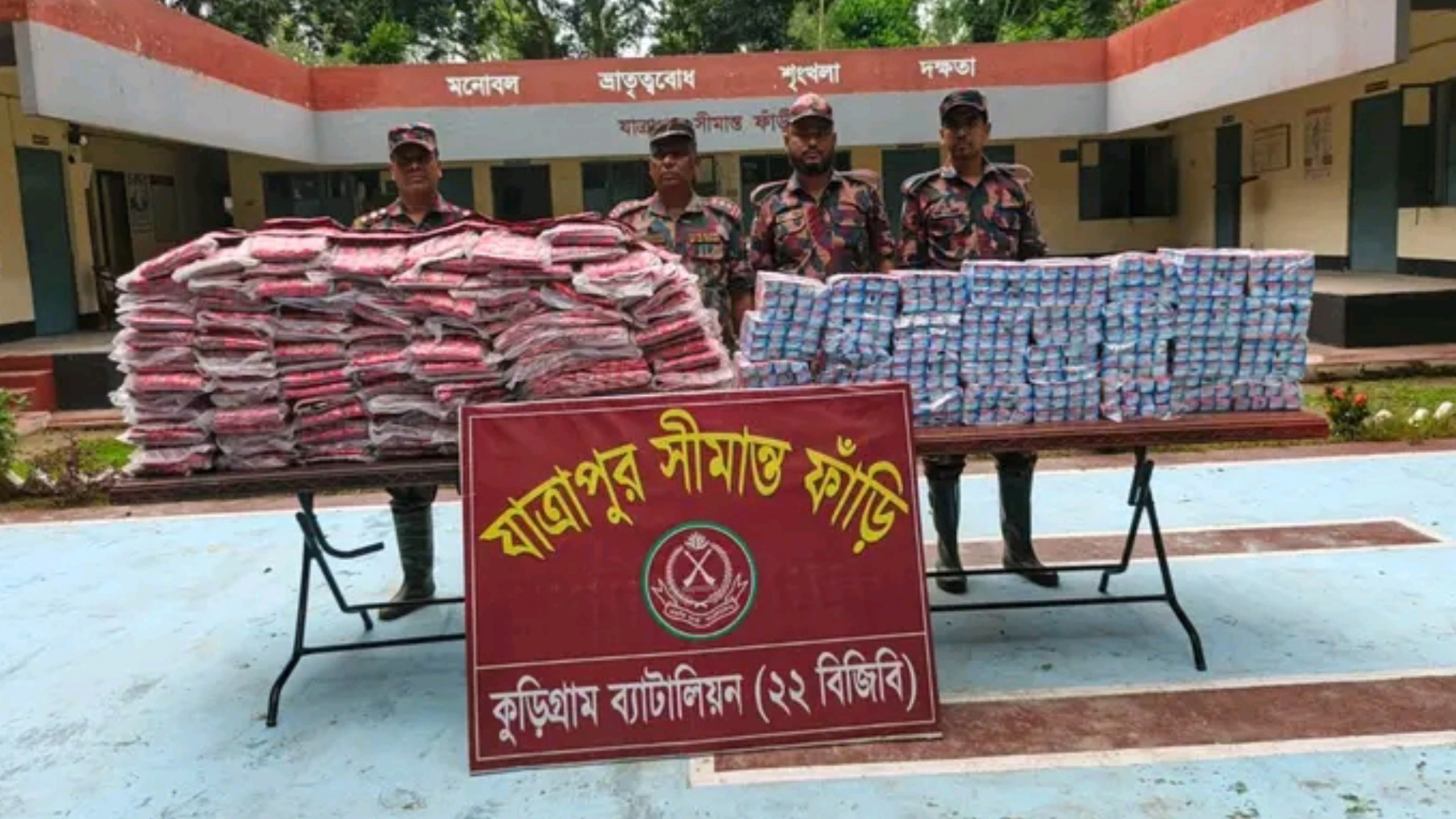
Cattle smuggling has long been one of the border’s defining trades, though it has evolved over the years as both governments have tightened enforcement. Alongside livestock, security forces regularly seize narcotics such as phensedyl cough syrup and yaba tablets, counterfeit currency, gold, arms, and other contraband.
A single anti-smuggling drive in Meghalaya in one recent year recovered goods worth tens of crores of rupees, including smuggled cattle, drugs, and currency, underscoring how routine this trade has become along certain stretches of the frontier.
Human trafficking runs alongside this smuggling economy but operates through its own networks. Impoverished women and girls from border districts such as Jessore and Satkhira are moved through crossing points like Benapole toward destinations in India, Pakistan, and the Middle East, often via unmanned and unfenced sections of the border that make illegal movement easier to arrange.
Districts including Kurigram, Lalmonirhat, Nilphamari, Panchagarh, Thakurgaon, Dinajpur, and Rajshahi have all been identified as active trafficking corridors. Investigators note that trafficking is frequently conflated with simple migrant smuggling by officials who lack the training to distinguish between the two, which complicates prosecutions and victim identification alike. Traffickers reportedly charge families the equivalent of ten to twenty thousand rupees per person to arrange illegal entry, working with local touts on both sides of the line.
The Pushback Crisis
Since 2025, a distinct and increasingly contentious pattern has emerged: India’s northeastern state of Assam has pushed hundreds of people back into Bangladesh out of roughly 30,000 individuals that foreigner tribunals have declared to be non-citizens. Bangladesh’s foreign ministry has said India has separately asked Dhaka to verify the nationality of more than 2,860 people India suspects of being Bangladeshis living there illegally.
Dhaka has responded by intensifying patrols and public awareness campaigns along the frontier, insisting that any repatriation follow formal bilateral procedures rather than unilateral action, while human rights organisations have said Indian authorities have in some cases arbitrarily expelled Bengali-speaking Muslim citizens across the frontier, sometimes at gunpoint. The issue has become entangled with domestic Indian politics, particularly in border states where undocumented migration has become a major electoral flashpoint.
The Human Cost: Border Killings
No aspect of the relationship generates more anger in Bangladesh than the recurring killing of its citizens by India’s Border Security Force. According to Ain o Salish Kendra, a Dhaka-based human rights organisation, 34 Bangladeshis were killed by the BSF in 2025, the highest toll in five years, made up of 24 shootings and 10 deaths following physical torture.
That followed 30 deaths in 2024, 31 in 2023, 23 in 2022, and 18 in 2021. Longer-run data compiled by the organisation Odhikar puts the toll at roughly 1,236 Bangladeshis killed and 1,145 injured in BSF shootings between 2000 and 2020, while more recent analysis by Netra News and the Bangladesh Protest Archive found that at least 27 Bangladeshi minors were killed between 2009 and 2025, six of them in 2024 alone.
Most of those killed were not smugglers or traffickers in any organised sense but cattle traders, farmers, and day labourers, the ordinary casualties of a borderland where survival sometimes depends on crossing a line drawn without much regard for the people living along it.
The most infamous case remains that of fifteen-year-old Felani Khatun, shot by a BSF soldier in January 2011 while crossing back into Bangladesh, her body left hanging on the border fence for hours. The only BSF trial connected to a border killing, that of the soldier accused in her death, ended in acquittal, and no BSF personnel has ever been successfully prosecuted for a border killing since.
Repeated Pledges, Limited Results
Bangladesh and India have held annual Director General-level Border Coordination Conferences for decades, with both the Border Guard Bangladesh and India’s Border Security Force reaffirming commitments to prevent trans-border crime and reduce fatalities. The 57th such conference, held in New Delhi in June 2026, produced fresh pledges on joint patrols and real-time information sharing, alongside a stated zero-tolerance policy toward smuggling, trafficking, and illegal crossings.
Earlier bilateral talks in February 2025 set an explicit target of reducing border deaths to zero. In practice, killings dipped briefly in early 2026 before resuming, illustrating a pattern that has held for more than a decade: agreements are signed, patrols are announced, and the underlying violence eventually returns.
Discover More Stories Worth Your Time
Explore What Follows Shahabuddin’s Exit?
Discover how Bangladesh’s leadership could change after the president’s departure.
Check Why Assault Case Filed?
Explore the allegations involving actress Snigdha Chowdhury and the Ashiyan chairman.
See How Microplastics Spread?
Discover why Bangladesh’s rivers, salt pans, and fish markets are raising concern.
Find Why Wetlands Face Threat?
Explore how invasive turtles are disrupting biodiversity in Dhaka’s waterways.
Learn Why Army Took Custody?
Discover the latest developments in the Brig Gen Miftah Uddin tribunal case.
Why The Cycle Persists
Analysts point to a mix of structural and political reasons behind the persistence of border violence and illegal movement. Large stretches of unfenced terrain, rivers, and forest cover make comprehensive surveillance difficult even with expanded patrols.
Poverty in border districts on both sides sustains demand for smuggling and irregular migration as livelihood strategies of last resort. And accountability has been almost entirely absent, with BSF conduct along the border shaped less by diplomatic pressure from Dhaka than by domestic political incentives inside India, particularly in border states where migration has become a defining electoral issue.
A Frontier Still Searching For Balance
The Bangladesh-India border sits at the intersection of two countries’ deepest anxieties, over sovereignty, security, and identity, and the people who live along it bear the weight of that tension daily.
Smuggling, trafficking, and illegal crossings are not separate problems so much as symptoms of the same underlying reality: a long, unevenly governed frontier running through some of the poorest districts in either country. Until enforcement is matched with genuine accountability, and security concerns are addressed alongside the economic pressures that drive people across the line in the first place, the border is likely to remain what it has been for decades: a place where cooperation and conflict exist side by side.