
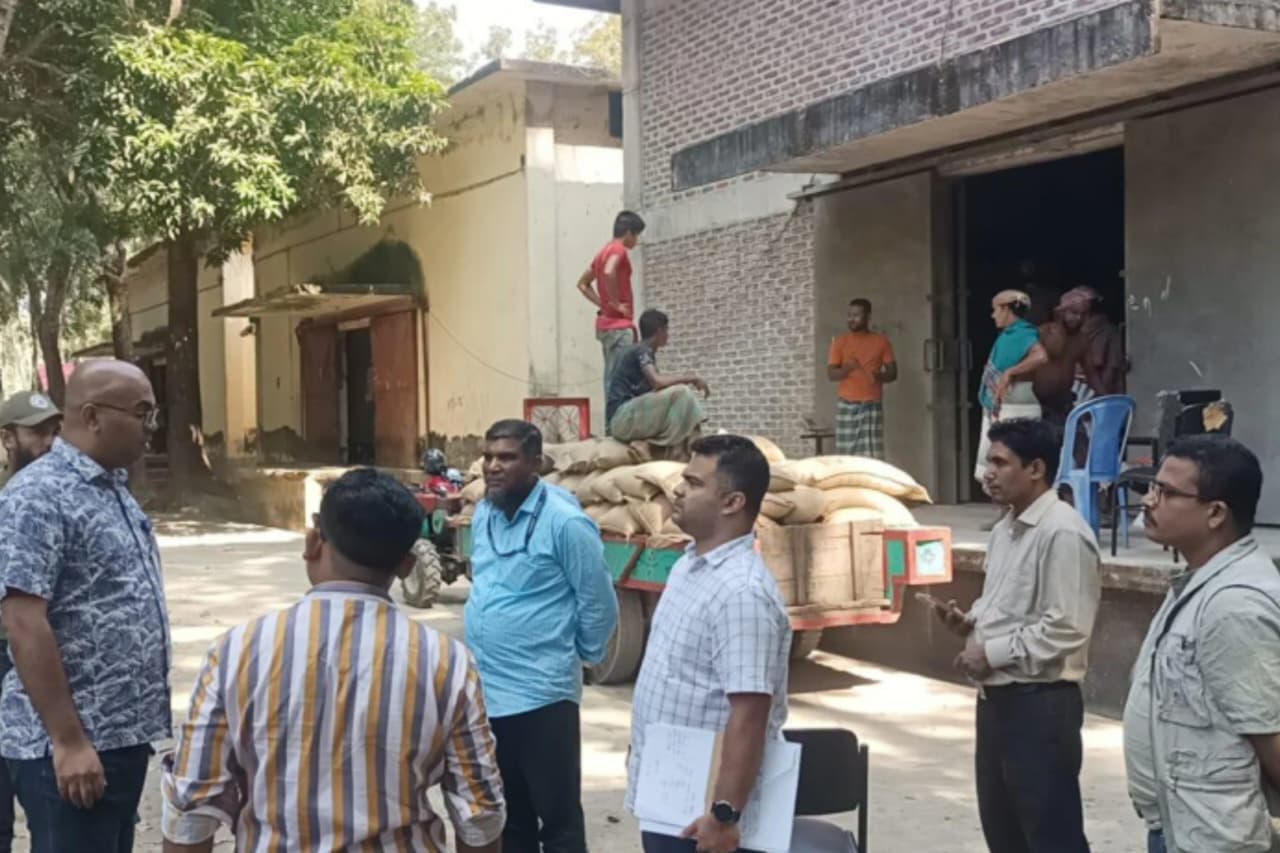
The Food-Friendly Programme is an important social security initiative that targets the low-income population in Bangladesh by offering them subsidised rice. But within the last two years, various cases of corruption, mismanagement and diversion of rice have cast a lot of concern over the transparency and effectiveness of the programme.
Shariatpur: Rice Seizure Provokes Troubles
Shariatpur: A major incident in Shariatpur turned out to be the long-lost government rice, and other items were retrieved from the home of a food agency employee. The findings have resurrected the allegations of a systematic diversion of subsidised rice from the State to those in need. Moreover, the most recent news indicates that about 400 sacks of rice have been confiscated, showing that there is evidence of an organised local theft of government-supplied rice.
Sherpur and Other Districts: Generous confiscations
At Sherpur, the officials confiscated about 8,000 kg of rice, and this also indicated the rampant irregularities in allocation. Like charges have been reported in several districts, including:
•rice smuggling of the subsidised rice.
•Under-distribution by dealers
•Inclusion of fake beneficiaries
These incidents indicate that the issue is not an isolated one, but it belongs to a larger systemic problem.
Discover More Stories Worth Your Time
See Why Boishakh Culture Matters?
Discover how Chhayanaut highlights the festival’s role in preserving Bengali heritage.
Find How To Cool Home?
Explore easy DIY ways to keep your house cool without air-conditioning in hot weather.
Learn What Farmer Card Changes?
Discover how the new pre-piloting initiative may strengthen farmer support in Tangail Sadar.
Explore Pixel 9’s Hidden AI?
Discover the smartest Google Pixel 9 features everyone is talking about right now.
See Why Baruni Mela Shines?
Explore how colour, culture, and devotion make Bogura’s annual gathering truly unforgettable.
Nationwide Pattern (2024–2025)
In the last two years, the programme has demonstrated regular trends in corruption:
•The government food programme was diverted before it got to the beneficiaries.
•Political impact on distribution at the local level.
•There is a weak monitoring system that permits repeat offences.
Statistical information and reports show that these irregularities are now structural as opposed to sporadic.
Types of Corruption
Among the risk areas of corruption, the following are the main ones:
•Smuggling and hoarding of government rice.
•Fake beneficiary lists
•Less quantity distribution by dealers.
•Corruption by local government officials.
Root Causes
According to experts, there are a number of underlying reasons:
•Absence of stringent controls and audits.
•Lack of strong accountability on the ground.
Political interference
•Lack of digital monitoring and visibility.
Conclusion
These two events in Shariatpur and Sherpur represent a larger problem in the Food-Friendly Programme in Bangladesh. Though the program continues to play a crucial role in the lives of millions, it is putting a strain on its effectiveness due to ongoing use of corruption. These measures such as increasing control, accountability, and digital monitoring, will be needed to revive trust and efficacy.