
On a Sunday morning in May 2026, an 11-member team of honey collectors moved quietly through the Pairatuni canal area of Kachikhata in Bangladesh’s Sundarbans, following a valid permit from the Forest Department’s Burigoalini Station. They had been in the forest for four days.
As 48-year-old Bablu Gazi worked, a tiger emerged suddenly from the bushes and attacked him from behind. His companions rushed in with sticks and machetes, fighting the animal off in a desperate struggle before rescuing him and rowing nearly 24 hours to reach medical treatment. He survived. Many do not. And yet, every honey season, thousands of men like him walk straight back into the same forest, fully aware of what waits for them there.
A Season Measured In Weeks, Not Months
The Sundarbans, a nearly 4,000-square-mile mangrove forest straddling southwestern Bangladesh and southeastern India, is the only mangrove ecosystem in the world that hosts a viable population of wild tigers. Each year, forest authorities issue a limited number of permits allowing men known as mawalis to enter the forest during April, May, and June to collect wild honey.
It is a narrow window, but a lucrative one. In those three months, a mawali can earn as much as he does the rest of the year combined through farming, fishing, or mud crab collecting, work that in the Sundarbans carries its own set of risks. The honey itself, harvested from wild bee colonies built deep in the mangroves, has become recognised as one of the purest, most medicinally valued honeys in the world, and in 2025 Sundarban Honey was formally registered as a Geographical Indication product in Bangladesh, covering honey collected specifically from the Khulna, Bagerhat, and Satkhira districts.
Entering A Predator’s Domain
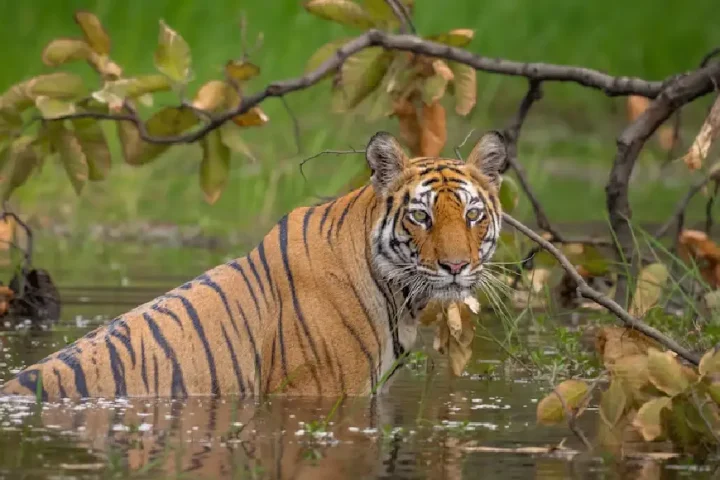
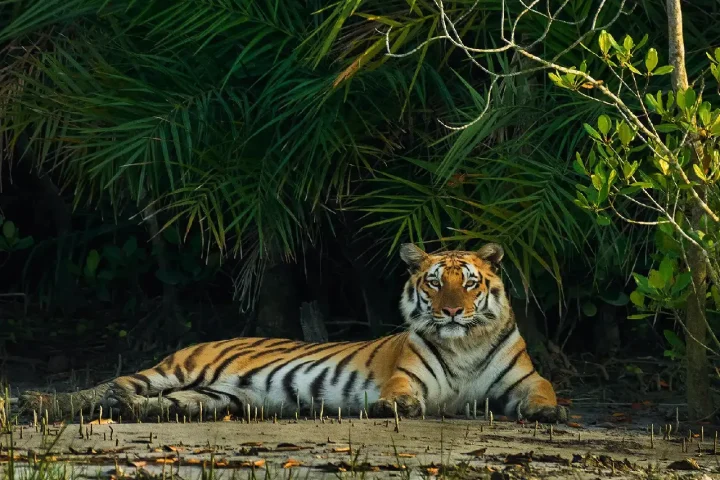
What makes the mawalis’ work so dangerous is simple: the Sundarbans belong to the Royal Bengal Tiger, and every honey-collecting expedition means walking into that ownership uninvited. Tigers here are adapted in ways that make them especially difficult to guard against.
They swim easily through the forest’s brackish waterways, move silently through dense root systems, and, as fellow honey collectors have described, favour ambush attacks from behind, aiming for the back of the neck and spine. Some forest officials and mawalis wear stiff pads rising up the neck specifically to blunt that attack method, while others wear masks on the backs of their heads in the hope that a tiger, believing it has been seen, will hesitate to strike.
Neither measure offers real certainty. By some estimates, more than fifty honey gatherers are killed by tigers in an ordinary year, a toll that climbs higher when conditions are poor, according to figures cited by Nobel laureate economist Amartya Sen.
A Spiritual Shield Against A Physical Threat
Long before modern protective gear, the mawalis developed their own answer to the forest’s danger: Bonbibi, the guardian goddess of the Sundarbans. According to local tradition, Bonbibi protects honest forest-goers from Dakshin Rai, a tiger demon she once defeated to become the forest’s spiritual guardian. Before any expedition, mawalis perform rituals in her honour, offering sweets and flowers and chanting prayers for safe passage and a good harvest.
They enter the forest not as conquerors but, in the words of those who study the tradition, as humble guests seeking permission from its divine protector. Whether or not the ritual offers any measurable protection, it reflects something real about how mawalis relate to the forest, not as a resource to be extracted without consequence, but as a domain they are permitted to enter only briefly, and only with respect.
Danger That Outpaces The Reward
For all the risk involved, the financial reward remains strikingly small. Some studies estimate mawalis earn as little as seventy to eighty US dollars across the entire three-month collecting season, even as Sundarban honey itself can retail for more than fifty dollars a pound in international markets.
The gap between what mawalis risk and what they are paid has drawn increasing attention from researchers and advocates who argue that the men bearing nearly all the danger in this supply chain capture almost none of its eventual value. Unlike the tigers themselves, which are protected as an endangered species under Bangladeshi and international conservation law, the mawalis who share their forest have no equivalent protection. Their safety net remains almost entirely their own skill, their companions’ quick reactions, and their faith in Bonbibi.
Discover More Stories Worth Your Time
Find Which Airport Hotels Fit?
Discover convenient hotels near Dhaka Airport for short layovers and overnight stays.
Learn How Rohingya Youth Lead?
Explore how young Rohingya are advancing education and gender equality in refugee camps.
Explore Why Colombia Declared Emergency?
Discover what the powerful earthquake means for Colombia and the latest emergency response.
Check Why Jaya’s Sarees Trend?
Discover why Jaya Ahsan’s elegant saree looks continue captivating fans online.
See Where Hasina’s Crisis Leads?
Explore the accountability debate surrounding Hasina, India, and Bangladesh’s political future.
Climate Change Is Raising The Stakes
The calculus facing honey collectors has grown harder in recent years as climate change reshapes the Sundarbans itself. Rising seas, stronger storms, and repeated flooding are eroding the forest and displacing the communities that live along its edges, forcing many mawali families to relocate again and again even as they depend on the same shrinking forest for their livelihood.
As habitable land and fresh water grow scarcer for both people and wildlife, the boundary between human and tiger territory has become less stable, a shift some longtime collectors say has changed the way tigers behave. One veteran gatherer, reflecting on decades of experience, put it simply: the old tricks that once offered some sense of safety no longer feel reliable, because the tigers themselves seem to be adapting faster than the humans trying to avoid them.
Why They Keep Going Back
It would be easy to frame the mawalis’ choice as one born purely of desperation, and economic necessity is undeniably central to it. But that framing alone misses something the mawalis themselves describe: a relationship with the forest built over generations, passed down through ritual, skill, and an intimate understanding of its dangers that outsiders rarely grasp.
Every entry into the Sundarbans is a calculated risk, weighed against alternatives, fishing, crab collecting, farming, that carry their own dangers and rarely pay better. For now, as long as the honey remains valuable and the alternatives remain scarce, mawalis will keep entering the tiger’s territory each spring, carrying sticks, prayers, and the knowledge that not everyone who enters the forest is guaranteed to walk back out of it.