
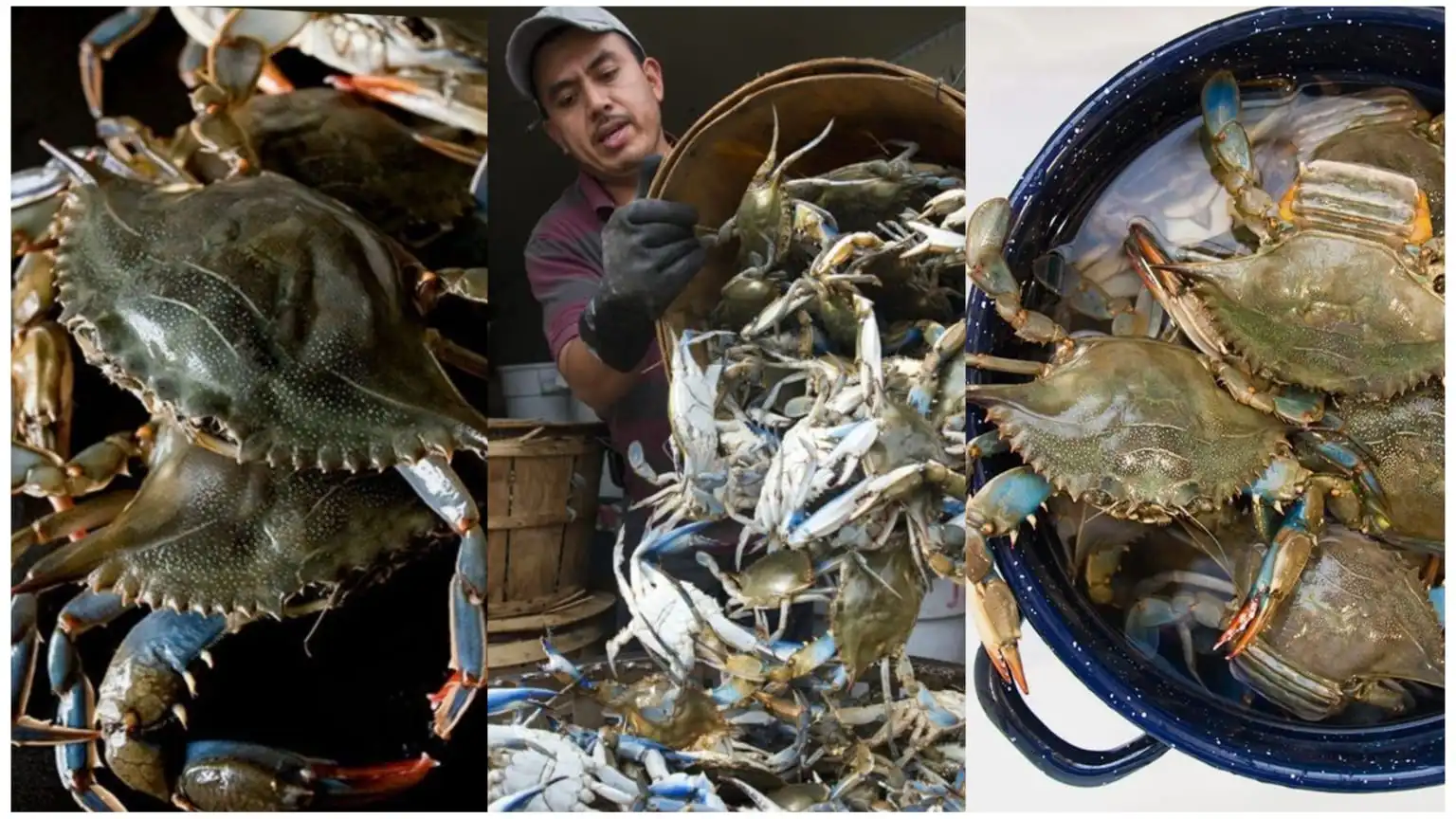
For a crab collector in Bangladesh, a working trip to the Sundarbans means days out on a small boat, deep in the tidal creeks. Usually collectors stay in the forest for three to five days using hooks, traps and push nets to pull crabs out of the mud. What they bring back feeds families, supplies farms along the coast and ends up on plates in other countries.” But the crabs that do this are becoming harder to find.
A living for thousands
The mud crab is one of the most valuable catches of Bangladesh’s southwest. The crab fishery provides direct or indirect support for an estimated 250,000 to 300,000 people in the region. Most are catchers, landless and low-income, but there are also farmers, traders and suppliers. It is one of the only income options for many families when floods, cyclones or disease hit other work like shrimp farming.
Previous research has shown that about 60 percent of Bangladesh’s crab exports come from the Sundarbans and that crab is one of the country’s top fisheries exports. The farming industry also begins with wild crabs. The small crabs are collected from the forest, fattened in ponds or cages and raised as soft-shell crab. Those under about 150 grams are used for soft-shell farming, and the larger ones are sold abroad as hard-shell crab.
Exports Still Small
Bangladesh earned around $14.2 million by exporting 1,166.88 tons of live and soft-shell mud crab in 2024-25, according to industry data. That’s well below the roughly $35 million reported for 2019-20, although the numbers come from different sources and may not be comparable. Either way, the industry still lags far behind regional competitors.
Symptoms of Stress
Researchers have warned about overfishing for years. A stock study in 2022 found that one of the main species of mud crab, Scylla olivacea, is overexploited in the Sundarbans. A 2020 study found heavy harvesting is damaging the genetic diversity of surviving crabs. Scientists also warn that losing so many crabs could upset the balance of the mangrove ecosystem.
Collectors are seeing it in water. One study found that as the amount of crab caught each day has decreased, so too has the number of crab harvesters over the years. Farmers, too, are feeling the pinch. Farming depends on wild seed crabs. The percentage of active soft-shell crab cages decreased slowly from 2018 to 2022. Some collectors and farmers also say they are not getting a fair price.
The Hatchery Gap
Hatcheries may relieve the pressure on the forest, but they are not there yet. Industry reports indicate close to 97 per cent of hatchery-produced mud crab larvae die before reaching maturity. Cox’s Bazar has the country’s only government hatchery and nursery complex for crabs, but it is plagued with outdated technology. This means farmers keep turning to wild seed.
What would help
Experts recommend better hatchery technology, better processing and cold-chain facilities, community-based conservation campaigns and alternative livelihoods for collectors. It is also important to protect the breeding stock. It’s all about keeping enough crabs in the mangroves.
Mud crabs are a promise and a problem for the Sundarbans. They feed thousands, but this food depends on a forest that cannot be cut without limit. If collection goes unchecked, the crabs and the families that depend on them will pay the price.
Discover Nature With Bangla Pulse
1. Which venomous snakes are a real threat in Bangladesh, and how can people identify them?
From cobras and kraits to vipers, discover the venomous snakes found across Bangladesh and why they remain a serious concern.
2. Did you know a new island has emerged in the Sundarbans?
Explore the story behind the new island in the Sundarbans and what its appearance could mean for this fragile ecosystem.
3. Why are Bangladesh’s wild birds increasingly at risk from poaching?
Take a closer look at the illegal bird trade and poaching threatening the country’s wildlife.
4. What makes Sundarbans honey collectors enter one of the world’s most dangerous forests?
Their search for honey can bring them face-to-face with Royal Bengal Tigers. Discover why these collectors continue to risk their lives.
5. Is there more to the Sundarbans than science can explain?
From mysterious stories to local beliefs, explore the fascinating debate between science and superstition in the Sundarbans.