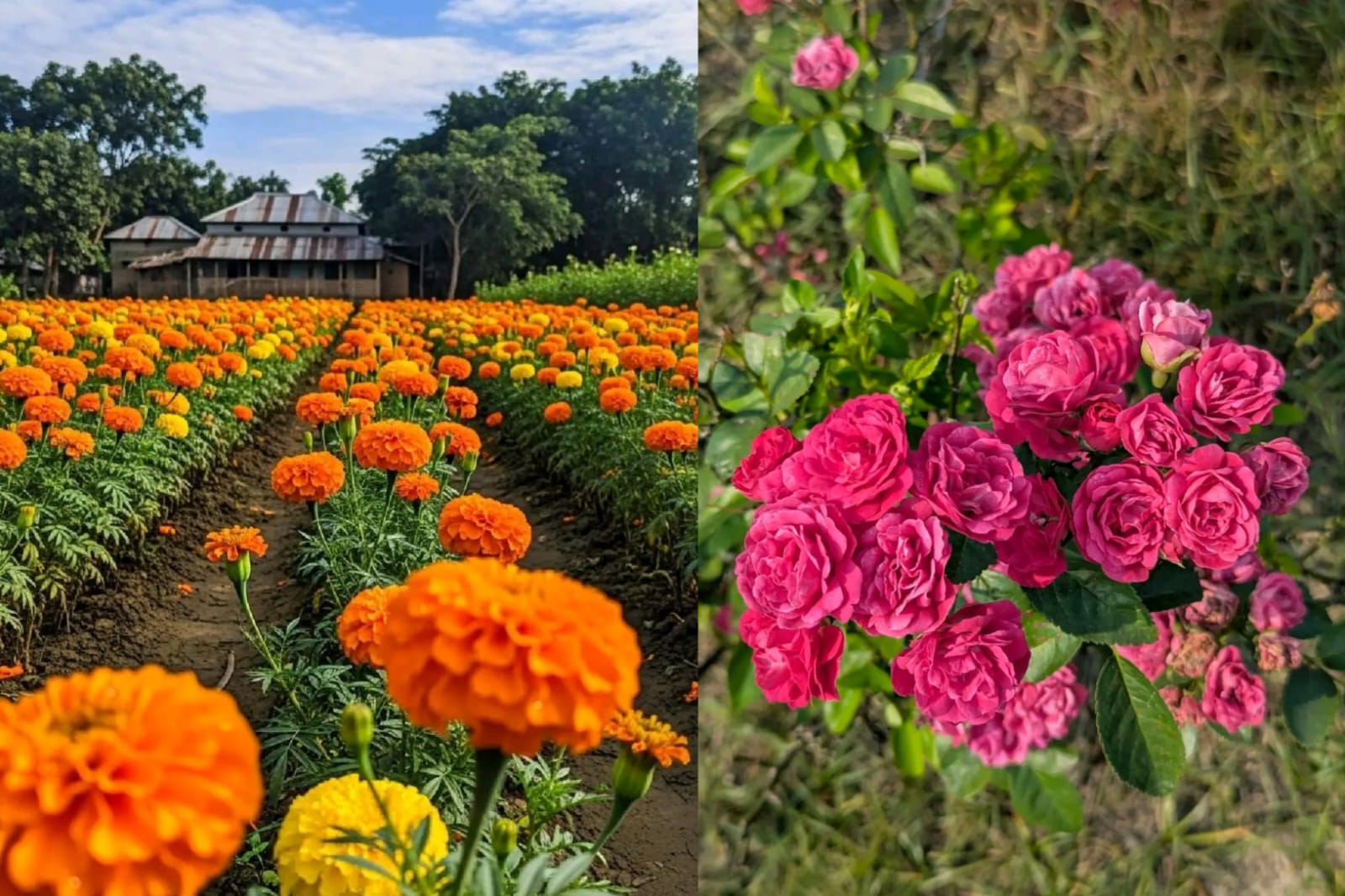
Floriculture is a growing area of agriculture in Bangladesh that is giving people in rural areas new ways to make a living. Many farmers who used to depend on rice and seasonal crops are now growing flowers as an alternative way to make money. Changes in farming methods are happening because of pressures from the environment, business needs, and the need to make money.
Today, Bangladeshi floriculture is becoming a bigger part of rural development. Flowers are now in high demand in the country’s growing consumer economy. They are used for everything from wedding garlands to religious events and urban markets.
Pressure from the environment and a wider range of crops
In many places in Bangladesh, conventional farming is less reliable because the weather changes all the time. Traditional crops aren’t making as much money as they used to because of floods, irregular rainfall, soil degradation, and rising input costs. Because of this, farmers have had to look for other ways to make money that give them faster returns and lower climate risk.
One way to do this is to grow flowers. Some crops, like marigolds, roses, gladiolus, gerberas, and tuberose, can be gathered more than once a year and need shorter growing cycles. This gives farmers more options for how to deal with uncertain weather conditions while keeping their cash flow steady.
Floriculture in Bangladesh Offers Ways to Make a Living
Floriculture requires a lot of work and has created jobs for people other than landowners. Landless workers and women, especially in rural and peri-urban areas, can make money by doing things like planting, gathering, sorting, packaging, and making garlands.
Flower growing has become a big way for people to make money in places like Jashore, Savar, Chuadanga, and Gazipur. It has made local economies stronger and made many families less dependent on seasonal movement. Similar changes in how people make a living are becoming more obvious in Bangladesh’s climate-sensitive farming areas.
Growth in the market and economic potential
Demand from cities has been a big part of Bangladesh’s floriculture rise. Every day, flowers are sent to Dhaka and other big towns for weddings, cultural events, religious events, and retail sales. Post-harvest losses have been cut down by making roads and cold storage sites easier to get to.
But there are still problems. Price changes, unorganized markets, a lack of export infrastructure, and weak institutional support are still problems for small-scale farmers. If these gaps are filled, the field could have more economic potential.
Bangladesh Floriculture: Key Insights
| Aspect | Impact |
| Climate stress | Reduced reliability of traditional crops |
| Crop diversification | Shift towards flower farming |
| Employment | Increased labour demand |
| Women’s participation | Expanded income-generating roles |
| Market access | Strong domestic demand, weak export systems |
Conclusion
In reaction to economic and environmental pressures, Bangladesh’s floriculture industry is growing. This is part of a larger trend in agriculture to become more diverse. Growing flowers could be a good way to make a living, but for it to be successful in the long run, market rules need to be better, people need to be able to get money and training, and farmers need to use methods that are resistant to climate change.
Bangladesh is still dealing with climate change uncertainty. Floriculture stands out as an industry that has the potential to help rural areas become more resilient, create jobs, and provide a steady income.
FAQs
Why is Bangladesh’s flower business growing?
Farmers are growing flowers because standard crops aren’t making as much money, and there is a lot of demand in the market.
What kinds of flowers do people in Bangladesh usually grow?
Some of the most famous kinds are the marigold, rose, tuberose, gladiolus, and gerbera.
Does floriculture make it easier for women to get jobs?
Yes. Flower farming and actions that happen after the harvest can help women make a lot of money.
What are the biggest problems that Bangladesh’s flower farming has to deal with?
Changes in prices, unorganised markets, a lack of export facilities, and climate risks are still big problems.
Read Also: Why Bangladesh’s Handwoven Sarees Are Highly Valued by Global Fashion Brands