
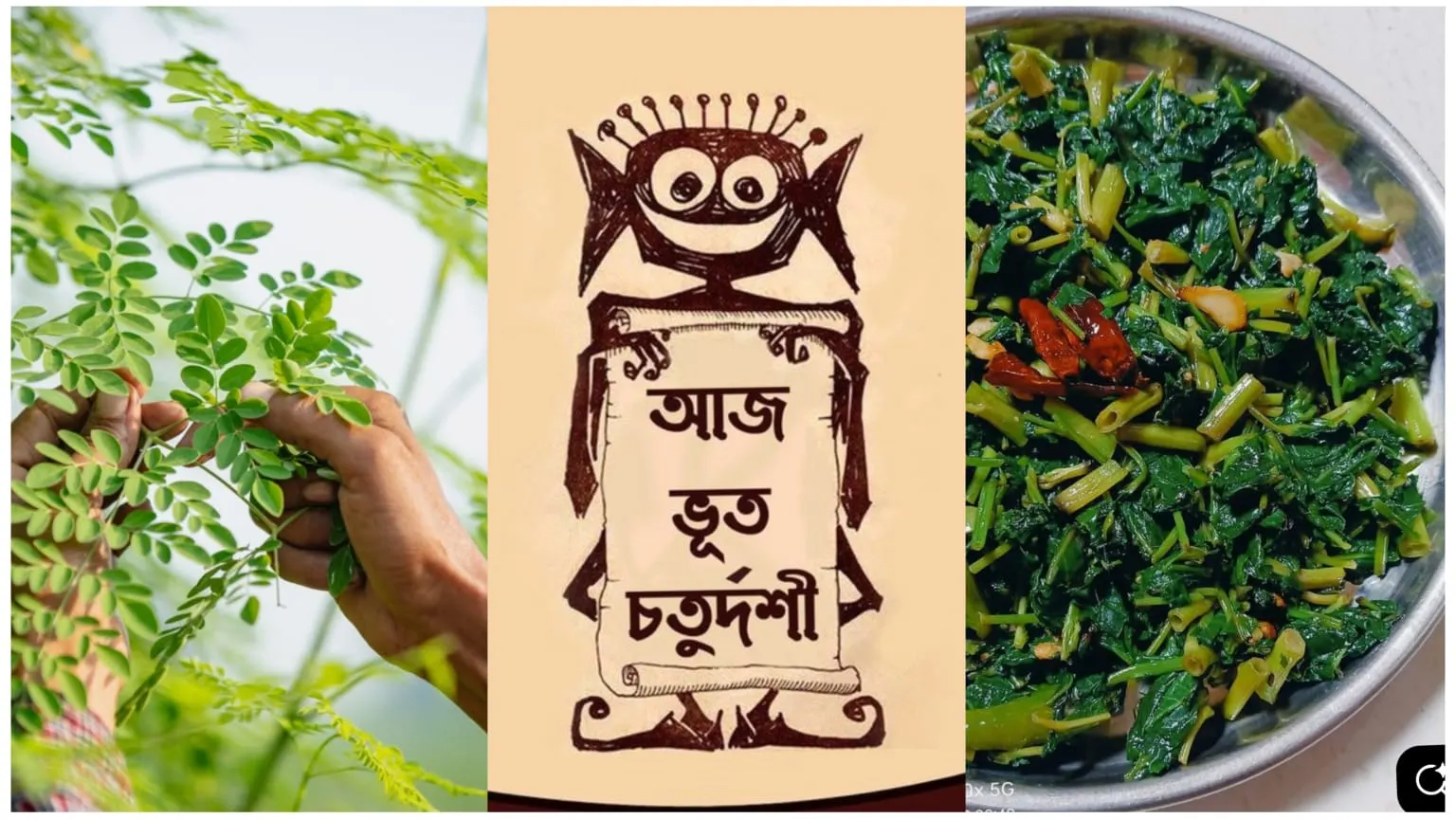
Most of India calls the day before Diwali Choti Diwali. In Bengal, it is Bhoot Chaturdashi, a night for ghosts, ancestors and a very particular lunch. Families cook 14 kinds of leafy greens and light 14 lamps to guide the dead home. In 2026, it falls on Saturday, November 7, the day before Kali Puja.
What Is Bhoot Chaturdashi?
It marks the 14th day of the dark fortnight, and in West Bengal and Bangladesh it is the day before Kali Puja. Tradition holds that 14 generations of ancestors visit their living relatives on this night, and 14 diyas are placed around the house to guide them and keep evil away. Sources give the tithi (lunar day) timing as 10:49 AM on November 7 to 11:29 AM on November 8. Most calendars list the festival as November 7, but one source lists November 8 for some cities, so check your local panjika.
The 14 Greens (Chaudda Shak)
Lunch is choddo shaak, 14 leafy greens eaten on the day. The greens are sold tied in bundles at bazaars that week. Here is the list used in many households:
- Kolmi (water spinach)
- Susni
- Kulpe
- Palong (spinach)
- Note (amaranth)
- Mulo (radish greens)
- Bandhakopi (cabbage leaves)
- Punornoba
- Thankuni (Indian pennywort)
- Moringa (sajne)
- Gima
- Kochu (taro leaves)
- Brahmi
- Methi (fenugreek)
The classical list differs. One often-cited version, attributed to Pandit Raghunandan, includes ol, keu, beto, kalkasunde, neem, mustard greens, jayanti, malancha, helencha, palta, gulancha, ghentu and shushni. Lists change by family, district, and what is available in the market.
Why 14 Greens?
Tradition ties the greens to the change of season. This is the time of year when illnesses tend to spread, and the greens are said to boost immunity. Many greens on the classical list are bitter or medicinal. The ancient Bengali traditional belief and the food habit have grown up together.
Why 14 Lamps?
At dusk, families light 14 earthen lamps, traditionally filled with mustard oil, in doorways and dark corners of the house. The lamps are meant to light the way for the 14 generations of ancestors and to keep away unfriendly spirits.
How to Observe It
- Buy or gather the greens in the morning and cook them together or as separate dishes for lunch.
- After dark, place the 14 lamps at thresholds, in corners and near the entrance.
- Follow your own family’s list, since the tradition varies by household.
The Bottom Line
Bhoot Chaturdashi mixes seasonal eating, remembrance and a little shiver. Whatever your list of 14 greens, the meal connects the household to the generations before it.
Discover More Recipes with Bangla Pulse
1. What are some healthy comfort foods to enjoy during the monsoon in Bangladesh?
Healthy monsoon comfort foods include warm soups, khichuri, seasonal vegetables and light homemade meals. Choosing fresh ingredients and balanced portions can make rainy-day meals both nutritious and satisfying. Explore our guide to healthy monsoon comfort food recipes.
2. What are the best light meals to eat during summer in Bangladesh?
Light meals such as fresh salads, yoghurt-based dishes, seasonal fruits, vegetables and lightly cooked meals can help keep the body refreshed during hot weather. Discover more ideas in our guide to light and cool meals that revitalise your body in summer.
3. What is Beef Kala Bhuna, and why is it popular in Bangladesh?
Beef Kala Bhuna is a traditional Bangladeshi meat dish known for its dark colour, rich spices and slow-cooked flavour. It is particularly associated with Chattogram’s culinary heritage and is popular at family gatherings and festive occasions. Read our ultimate guide to Beef Kala Bhuna.
4. How can people prepare healthy comfort food during the rainy season?
People can prepare healthier rainy-season meals by using fresh vegetables, lentils, seasonal ingredients and moderate amounts of oil and spices. Homemade soups and balanced rice-based dishes are also satisfying options. Find inspiration in our collection of healthy monsoon comfort food recipes.
5. How can traditional Beef Kala Bhuna be made tender and flavourful?
Slow cooking, proper marination and a balanced blend of traditional spices help develop Beef Kala Bhuna’s signature dark colour and rich flavour. Cooking the meat patiently allows the spices to blend with the gravy. Learn the preparation techniques in our ultimate Beef Kala Bhuna guide.