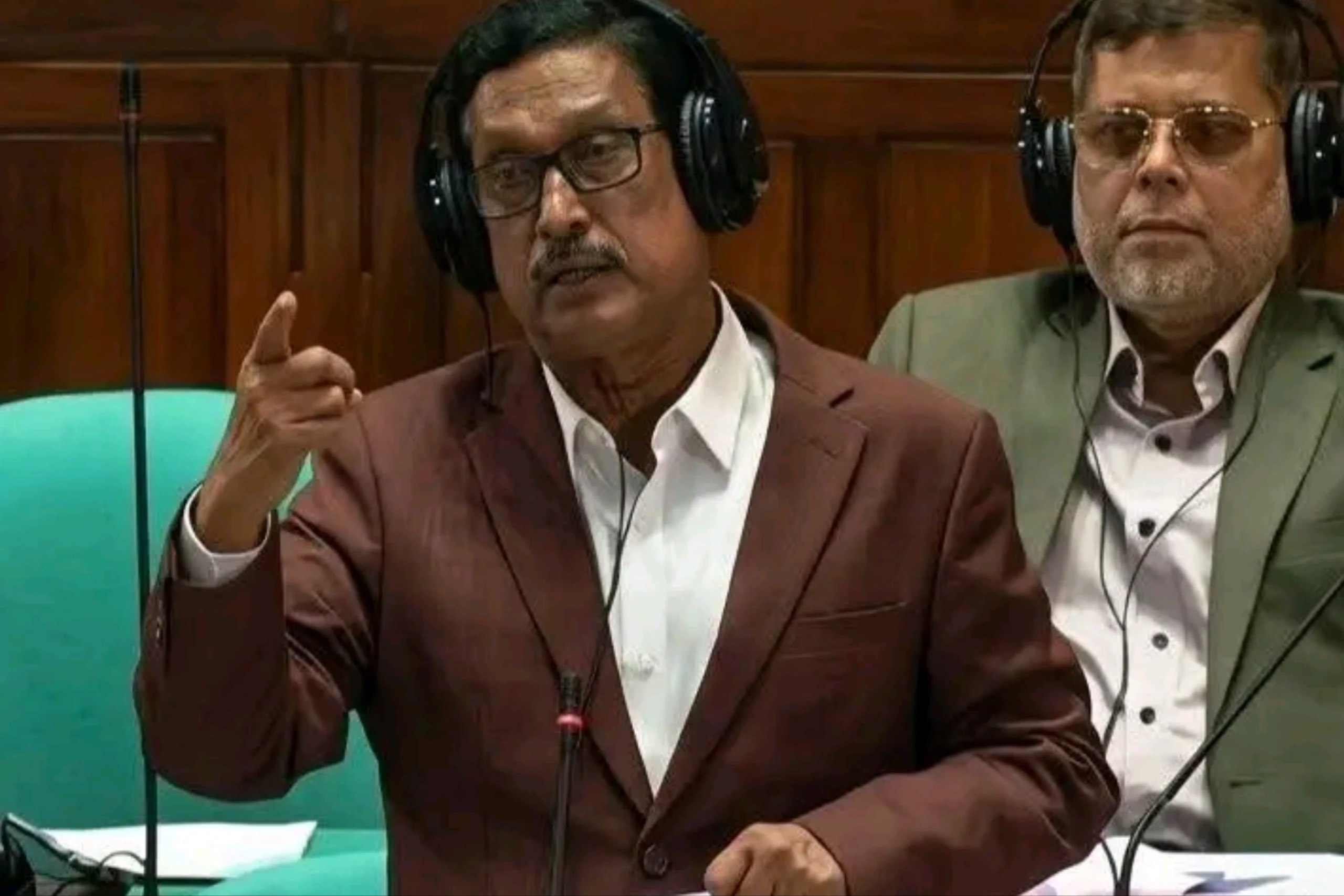
On April 28, 2026, the political temperature in Bangladesh went up again when veteran freedom fighter and Member of Parliament Fazlur Rahman revived one of the country’s most sensitive debates. That his statement in Parliament that members of martyr families aligning with Jamaat-e-Islami is a “double offence” was not just a political jab. It was a sign of a deeper historical wound that continues to affect the nation’s identity more than five decades after independence.
This blog revisits and contextualises Rahman’s statement in the context of historical truth, the legal process and current political realities – while explaining why such comments generate intense emotional and ideological responses across Bangladesh.
The Core Statement: Beyond Politics
Rahman’s comment was plain and simple. He said the families of those who sacrificed their lives during the 1971 Liberation War cannot be linked to a political party that opposed the independence of Bangladesh in the past. He termed such an alignment a “double offence” and saw it as a moral and historical contradiction.
The chaos that followed in Parliament was immediate. Opposition lawmakers protested, debates escalated into heated exchanges and proceedings were disrupted. But past the noise, the statement answered a fundamental question: Is it possible to divorce history from today’s politics?
1971: The Basis of the Argument
To understand Rahman’s position, we must return to the defining moment of the nation: the Bangladesh Liberation War.
During the war:
- Pro-independence forces, freedom fighters and civilians, fought for freedom from Pakistan.
- Some political and ideological groups, including Jamaat-e-Islami and associated militias such as Al-Badr, were opposed to independence.
- These groups were widely accused of collaborating with Pakistani forces and atrocities during the conflict.
For Rahman, who was a freedom fighter himself, this history is not abstract – it’s personal. This lived reality is the basis of his “double offence” rationale. In his opinion, supporting Jamaat is not only a political choice but a contradiction of martyrs’ sacrifices.
2026 Legal Context: Cementing Historical Labels
Rahman’s comments did not appear in a vacuum. The Jatiya Muktijoddha Council (Amendment) Bill, 2026, a major legislation that officially labelled them as collaborators in the war, paved the way for the entry of Jamaat-e-Islami and other groups as collaborators in the 1971 war.
“This law:
- State reiterated its position on historical accountability
- Some parties were declared as anti-liberation forces.
Strong objections from Jamaat leadership including its Ameer Triggered Strong objections from Jamaat leadership, including its Ameer Rahman’s statement can be seen as a direct response to these objections. With the phrase “double offence” he strengthened the story that history cannot be rewritten or selectively interpreted.
Jamaat’s Return to Politics
Recent political changes make the controversy even more complicated. After the political changes in Bangladesh in 2024, Jamaat-e-Islami has emerged as a political force after years of restrictions.
This revival has:
- Jamaat back in mainstream political discourse
- Even caused friction between former friends
- Reopened debates that were unresolved on the legacy of 1971
Interestingly, Rahman is from the BNP, a party with which Jamaat has traditionally been aligned. That makes his statement all the more revealing and it points towards contradictions within the opposition politics.
A Confrontation between Memory and Modernity
This is not just a debate about one statement or one party. It’s about how Bangladesh deals with its past as it moves forward.
Two views compete:
1. Historical Accountability First
Those who support Rahman say that:
- The Liberation War is the bedrock of Bangladesh identity
- Political affiliations should reflect a respect for that history
- Forgetting what we did before is disrespecting the martyrs’ sacrifices.
2. Political Development and inclusion
Critics claim that:
- Political parties change over time
- Generations should not be completely bound by the actions of earlier
- It needs space for varied engagement. Democracy
- This tension between memory and modernity is what makes the issue so explosive.
Public Response and Media Amplification
The statement soon spread beyond Parliament through news coverage and social media. Rahman’s comments were amplified by footage and clips of his comments that went viral on the internet, turning a parliamentary debate into a nationwide conversation.
Public opinion has been deeply split:
- Some lauded Rahman for defending the “spirit of 1971”
- Others dismissed the statement as divisive and politically motivated.
Media outlets such as popular news channels and social media reels have furthered this narrative. It is often seen as a clash between ideology and pragmatism.
The Impact of Rahman’s Persona
Fazlur Rahman has been no stranger to controversy. Known for his outspokenness and sometimes fiery rhetoric, he has built a reputation as a defender of the values of liberation war.
His nickname, synonymous with his frankness, reflects a personality that is comfortable with confrontation. That makes his statements more powerful — but also more polarising.
Discover More Stories Worth Your Time
Explore Why Dhaka Air Worst?
Discover how metro construction dust is choking key areas and affecting daily health.
Check Who Joins Notun Kuri?
Explore how 160,000 teens are gearing up for the nationwide sports launch.
Find How To Check Refund?
Explore steps to verify if your smart meter fee has been credited today.
Learn How Alerts Work Fast?
Discover how real-time mobile emergency alerts warn you during disasters.
Explore Which Dramas Redefined TV?
Discover Mehazabien Chowdhury’s standout performances that shaped modern Bangla television.
Why This Debate Matters Now
Why does this issue still provoke such strong emotions, more than 50 years after independence?
Because in Bangladesh:
- Liberation War is not just history, it is identity
- Political legitimacy is often about where you stand on 1971
Many of the questions about collaboration and accountability are open-ended. Rahman’s statement resonates with all these layers. It forces society to face uncomfortable questions of loyalty, memory and national values.
Dialogue or Division? The Way Forward
Bangladesh’s challenge is to strike a balance between respecting its past and handling its current political realities.
For continuing you need:
- Open and respectful discussion of history.
- Honouring alternative points of view without denying facts
- Political maturity to deal with sensitive matters without raising tensions
Rahman’s “double offence” comment might have created some controversy, but it also serves as a reminder that the past is never past, it remains present.
Conclusion
The debate about Fazlur Rahman’s statement is not about a single statement, it is about the power of history that gives meaning to political narratives. By associating Jamaat-e-Islami with its role in 1971 and challenging the morality of the latter’s support among martyr families, Rahman has reignited a debate that Bangladesh has never quite resolved.
Like it or not, he has done one thing with his words. Re-examine the nation’s founding story, and what it really means to carry forward the legacy of 1971 in the politics of today.