On August 20, Bangladesh will do something it has not done in more than three and a half decades: hold a genuinely contested election for president. The vote will not happen at ballot boxes across the country but inside the Jatiya Sangsad Bhaban, where sitting members of parliament alone will decide who becomes the nation’s 23rd head of state.
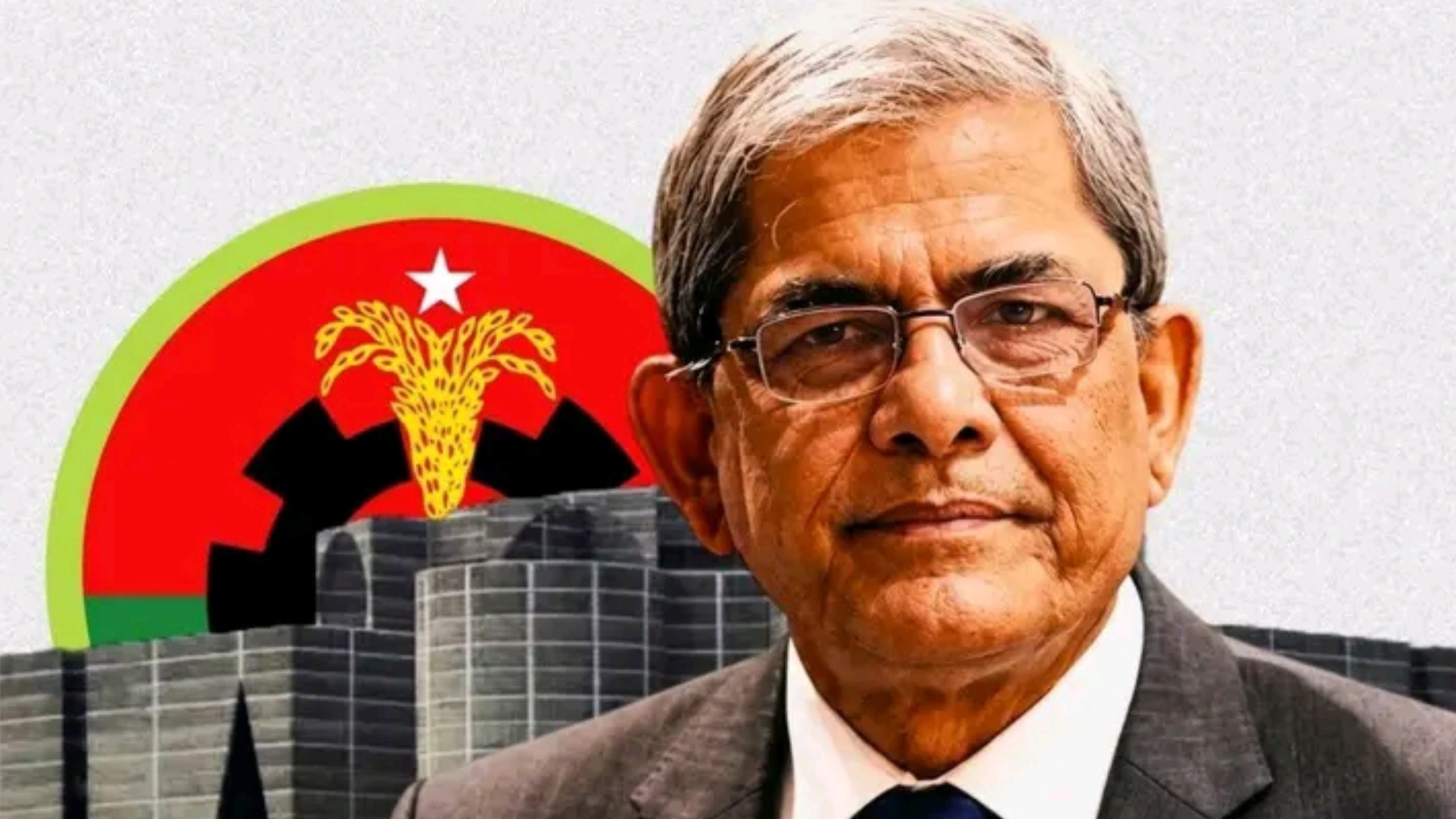
With BNP Secretary General Mirza Fakhrul Islam Alamgir facing Jamaat-e-Islami-backed Liberal Democratic Party chairman Colonel (retd) Oli Ahmed, the outcome is not seriously in doubt. What makes the moment significant is not suspense over who wins, but what the election reveals about how Bangladesh’s political institutions are being reshaped after the upheaval of the past two years.
How Bangladesh Actually Elects A President
Under Article 48 of Bangladesh’s constitution, the president is not chosen directly by voters but through an indirect election held among members of parliament. That structural detail matters enormously to how this contest will play out.
Because the constitution restricts cross-voting, the party or alliance holding a parliamentary majority effectively determines the outcome before a single vote is cast. In the February 2026 general election, BNP won 210 seats to the 77 secured by the Jamaat-led eleven-party alliance, giving BNP and its allies a combined 249 votes, comfortably above the threshold needed. That arithmetic is why every report on this election describes Fakhrul’s victory not as likely but as effectively certain.
Why This Election Is Happening At All
The vacancy at the centre of this election traces back to July 24, when President Mohammed Shahabuddin resigned roughly two years before the end of his term, citing serious health problems.
The Election Commission, working under the constitutional requirement to fill a presidential vacancy within a set timeframe, announced the election schedule on August 6, fixing August 20 for the vote and August 13 as the nomination deadline. Both BNP and the Jamaat-led alliance submitted nomination papers that day. Nomination papers underwent scrutiny on August 16, following verification of the candidates’ signatures by parliament secretariat officials, clearing the way for the vote itself.
Two Candidates, One Predictable Outcome
BNP’s nomination of Fakhrul came directly from Prime Minister and party chairman Tarique Rahman, who announced the decision at a meeting of senior party leaders at the Prime Minister’s Secretariat, with Standing Committee member Abdul Moyeen Khan proposing the candidacy and Gayeshwar Chandra Roy seconding it.
On the opposition side, Jamaat chief and leader of the opposition Shafiqur Rahman signed as proposer for Oli Ahmed’s nomination, with National Citizen Party MP Abdullah Al Amin serving as seconder, an alliance pairing that itself reflects how Bangladesh’s post-2024 opposition landscape has realigned.
Legal observers have been candid about what the contest actually represents. Senior Supreme Court Appellate Division advocate Manzil Morshed told Dhaka Tribune that the opposition already knows it will lose, but that fielding a candidate anyway amounts to a deliberate political strategy, a way of signalling the alliance’s presence and staking a claim to relevance even in a race it cannot mathematically win.
What Changes Inside BNP And Government
A Fakhrul presidency carries consequences well beyond the largely ceremonial powers of the office itself. As BNP’s long-serving secretary general and, since February 2026, Minister for Local Government, Rural Development and Cooperatives, Fakhrul currently holds three significant positions at once, and reporting from The Business Standard indicates his elevation to the presidency is expected to trigger a reshuffling of all three.
Party sources say discussions are already underway inside BNP over who might succeed him as secretary general, a position he has held since 2016 and one central to the party’s day-to-day organisational machinery. His cabinet portfolio will need a successor, and his parliamentary seat from Thakurgaon-1 will also fall vacant, requiring either a by-election or another arrangement under the constitution. Officials at the Secretariat, the administrative hub of the government, have reportedly been discussing the practical ripple effects of the transition even before the vote itself has taken place.
A Symbolic Break From Recent Precedent
The contrast with Bangladesh’s last presidential transition underscores just how different this moment feels politically. In 2023, Awami League’s Mohammed Shahabuddin was elected unopposed as the 22nd president after opposition parties declined to field any candidate at all, a reflection of the tightly controlled, single-party-dominated political environment of that era.
That Jamaat and its allies are now mounting an active, if unwinnable, campaign for the presidency, complete with formal nominations, a seconded candidate, and public campaign rhetoric, signals a return to at least the appearance of multi-party contestation at the highest level of the state, even within a system where the numbers make the outcome a foregone conclusion.
Discover More Stories Worth Your Time
Explore What Follows Shahabuddin’s Exit?
Discover how Bangladesh’s leadership could change after the president’s departure.
Check Why Assault Case Filed?
Explore the allegations involving actress Snigdha Chowdhury and the Ashiyan chairman.
See How Microplastics Spread?
Discover why Bangladesh’s rivers, salt pans, and fish markets are raising concern.
Find Why Wetlands Face Threat?
Explore how invasive turtles are disrupting biodiversity in Dhaka’s waterways.
Learn Why Army Took Custody?
Discover the latest developments in the Brig Gen Miftah Uddin tribunal case.
What August 20 Really Represents
For a country that spent much of the past two years consumed by mass protest, a change of government, and a reckoning with the previous ruling party’s fall, a presidential election decided by parliamentary arithmetic rather than public suspense might seem like a minor procedural event. But the symbolism runs deeper than the vote count. It marks Bangladesh’s first genuinely contested presidential race in 35 years, a reassertion, however limited, of competitive politics at the ceremonial pinnacle of the state.
It will reshape the leadership structure of the country’s ruling party at a formative moment in its return to power. And it will formally close the chapter opened by Shahabuddin’s resignation, installing in Bangabhaban a president whose own political biography, from a jailed student leader in 1969 to economics lecturer, civil servant, and finally party secretary general, mirrors much of the country’s own turbulent path over the past half century.
Whatever the certainty of Wednesday’s arithmetic, what Bangladesh does with a contested presidency, and how a Fakhrul-led Bangabhaban interacts with the Tarique Rahman government going forward, remains the more open question the vote itself will not answer.