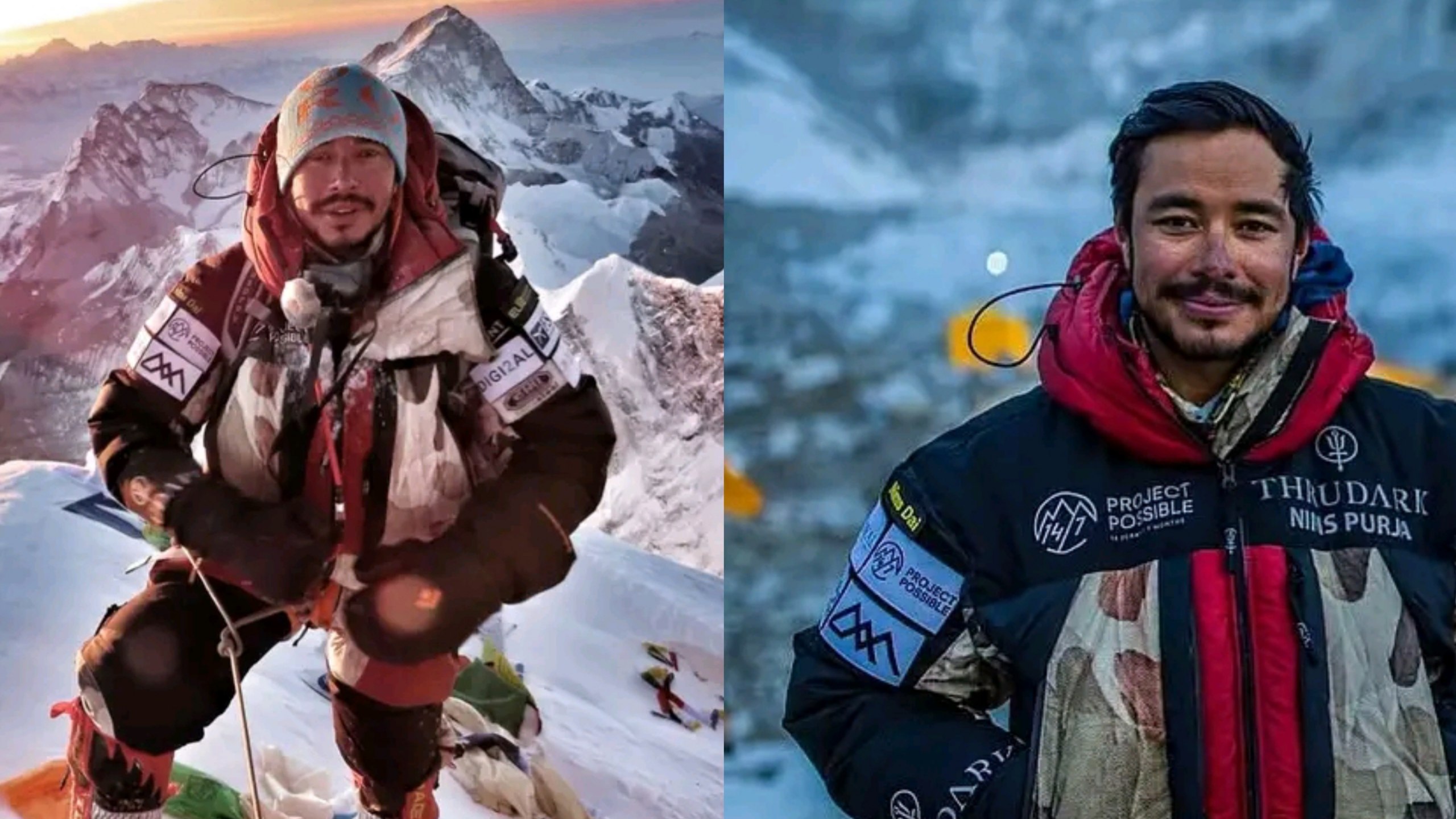
The death of Nirmal “Nims” Purja has stunned the global climbing community. The 43-year-old Nepali mountaineer, who rose to fame in 2019 by summiting all 14 of the world’s 8,000-metre peaks in just over six months, was killed on July 30 when an avalanche tore down Broad Peak’s main west-facing gully, sweeping ten climbers with it. Purja and nine others died.
His expedition company, Elite Exped, confirmed the loss two days later, describing him as one of the greatest climbers of his generation. The tragedy struck in Pakistan’s Karakoram range, a stretch of the Himalayan frontier that mountaineers have long regarded with a particular kind of dread — and Purja’s death has brought that reputation back into sharp focus.
A Range Built for Disaster
Of the fourteen mountains on Earth above 8,000 metres, four sit within the Karakoram: K2, Broad Peak, and the twin Gasherbrum peaks. That concentration alone sets the range apart, but it is the combination of factors surrounding those peaks — not simply their height — that has earned the Karakoram its fearsome reputation.
The range generates its own volatile weather systems, with storms capable of shifting from clear skies to whiteout conditions within hours. Its glaciated terrain is prone to serac collapse, where towering blocks of ice break loose from hanging glaciers without warning. And unlike Nepal’s more heavily trafficked Everest region, the Karakoram remains remote, with limited infrastructure and rescue capacity above base camp, meaning that when something goes wrong at altitude, help is often hours or days away rather than minutes.
K2’s Grim Arithmetic
No peak illustrates this better than K2 itself, the range’s crown jewel and the second-highest mountain on Earth at 8,611 metres. Nicknamed the “Savage Mountain” after a phrase coined by American climber George Bell in 1953, K2 has historically carried a death-to-summit ratio estimated between roughly 13 and 25 per cent, depending on the period measured — meaning that for long stretches of its climbing history, something close to one in four climbers who reached the top did not make it back down alive.
That figure has improved somewhat in recent years as record commercial seasons in 2022 and 2023 pushed summit numbers up faster than fatalities, but the underlying hazards have not gone anywhere. Much of K2’s danger concentrates in a single, narrow feature: the Bottleneck, a steep, ice-choked couloir sitting beneath a hanging serac at roughly 8,300 metres. A collapse there in August 2008 killed 11 climbers in a single day, the deadliest incident in the mountain’s history and one of the worst disasters in modern mountaineering. An earlier storm in 1986 killed 13 climbers over the course of that summer’s season, and a 1995 storm killed seven more, including British alpinist Alison Hargreaves.
Broad Peak’s Quieter but Real Danger
Broad Peak, where Purja died, has historically carried a lower fatality rate than its neighbour K2, and is often climbed by expeditions using it as a warm-up or secondary objective. But “lower risk” on an 8,000-metre Karakoram peak is a relative term, not an assurance of safety. The mountain sits directly beside K2 and shares its exposure to the same rapid weather shifts and avalanche-prone slopes.
Reporting on the disaster noted that heavy snowfall had blanketed Broad Peak in the week before the avalanche, and that several teams had already abandoned their attempts and left the mountain out of concern over the deteriorating conditions. Purja’s team, along with a handful of others, remained. Why they chose to stay is not yet fully known, but the outcome underscores a pattern seen repeatedly across the range’s disaster history: teams weighing a narrow summit window against worsening snowpack, sometimes with fatal consequences.
Not Evenly Distributed
It would be a mistake to treat the entire Karakoram as uniformly lethal. Gasherbrum II, the most frequently climbed of the range’s four 8,000ers, carries one of the lowest fatality rates of any peak on the list, at around 2 per cent, thanks to a comparatively straightforward standard route.
The Karakoram’s fearsome reputation, in other words, is real but concentrated — clustered around specific terrain features like K2’s Bottleneck and the exposed upper slopes of Broad Peak, rather than spread evenly across every mountain in the range.
Mountaineering researchers who track fatality data note that the single deadliest 8,000-metre peak by percentage isn’t in the Karakoram at all; that distinction belongs to Nepal’s Annapurna I, which has carried a historical death-to-summit ratio estimated between 27 and 32 per cent.
What sets the Karakoram apart is less an outlier death rate on any single peak and more the sheer density of extreme, high-consequence terrain packed into one remote corner of the world.
A Community in Mourning, and a Familiar Question
Nirmal Purja’s death has reignited a debate that resurfaces after nearly every major Karakoram disaster: how climbers and expedition operators weigh ambition against deteriorating conditions in a range where the margin for error is almost nonexistent.
Purja himself was no novice to risk — a former Gurkha and UK Special Boat Service soldier, his 2019 “Project Possible” expedition shattered a record that had previously taken more than seven years to achieve, completed instead in just over six months.
Before the fatal climb, he had reportedly posted online that Broad Peak would be a late addition to his season’s plans, asking the mountain, in his words, for safe passage up and back down. That passage was not granted.
Discover More Stories Worth Your Time
See Why Border Tensions Continue?
Discover what BGB-BSF talks reveal about push-in disputes and bilateral relations.
Find Why Pori Stays Trending?
Explore the relationship drama keeping Bangladesh fascinated with Pori’s personal life.
Learn Who Hurts Fishermen Most?
Discover how middlemen, rather than nature, are cutting into hilsa fishermen’s incomes.
Explore Which Water Project Matters?
Discover the scale and impact of Bangladesh’s biggest water project in years.
Check What Changed Six Months?
Explore the BNP government’s progress on major policies since the February election.
The Range Will Keep Drawing Climbers
None of this is likely to keep climbers away from the Karakoram. K2 alone has seen its summit count roughly double since 2000 as commercial expeditions have made the range more accessible than at any point in its history. But Purja’s death is a stark reminder that accessibility and safety are not the same thing.
The Karakoram’s mountains remain shaped by forces — sudden storms, unstable seracs, extreme remoteness — that modern equipment, satellite forecasting, and experienced guiding can manage but never fully neutralize.
For a range that has already produced some of mountaineering’s worst single-day disasters, the loss of one of its most celebrated climbers is a tragic, if familiar, chapter in a long and unresolved reckoning with what the Karakoram demands from those who attempt it.
Summary: On July 30, 2026, an avalanche swept down Broad Peak in Pakistan’s Karakoram range, killing famed mountaineer Nirmal “Nims” Purja and nine others on his expedition. The tragedy has turned fresh attention to the Karakoram’s reputation as one of the deadliest climbing zones on Earth — a range where remoteness, volatile weather, and technical terrain combine in ways few other mountain systems match.