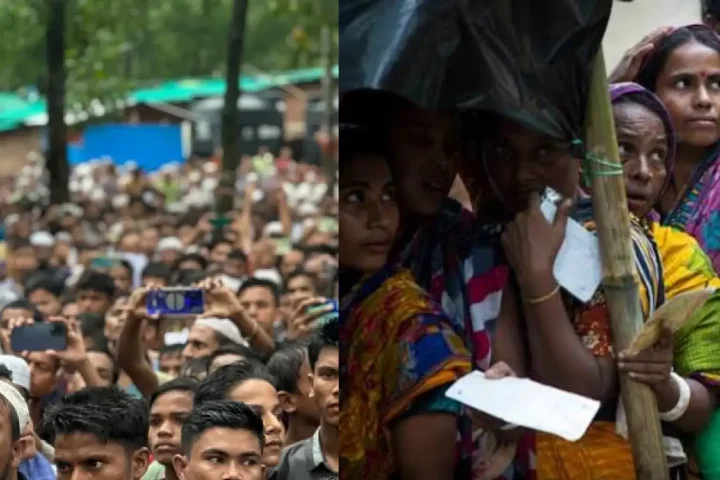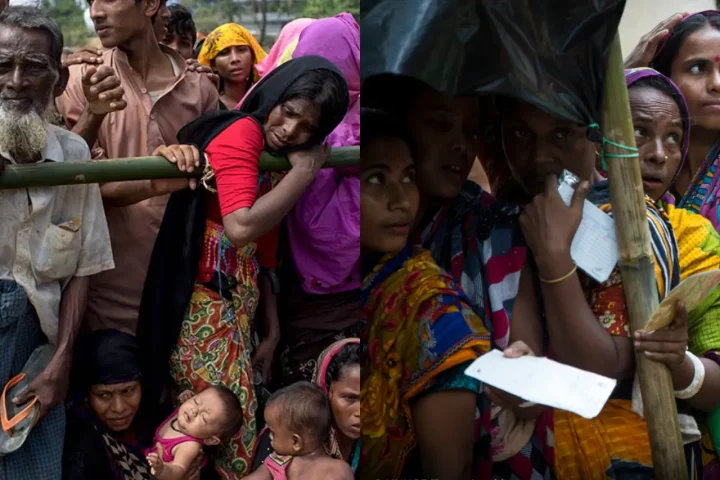
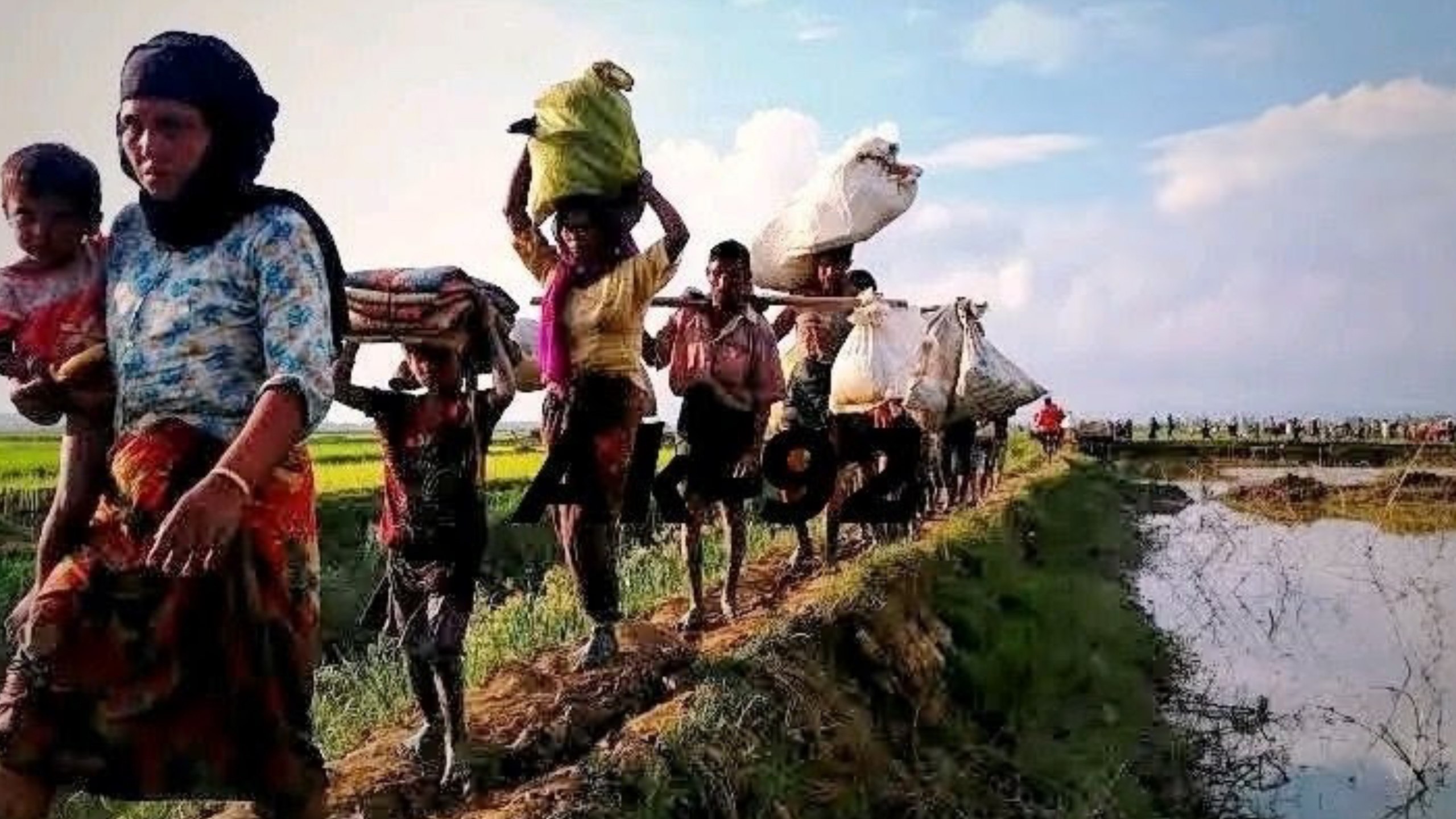
For nearly a decade now, the story of the Rohingya crisis has mostly been told through images of crowded camps, aid convoys, families waiting for some sign that returning home to Myanmar might one day be possible. But there’s a quieter, darker story unfolding alongside that one: a shadow economy of drugs, weapons, smuggling, and human trafficking that has taken root in the spaces displacement leaves behind. It’s worth being clear about what this is and isn’t. The Rohingya themselves aren’t the problem. What’s happened is that years of confinement, poverty, and blocked-off futures have created exactly the kind of conditions criminal networks know how to exploit.
A Crisis Now in Its Ninth Year
Bangladesh is currently home to more than a million registered Rohingya refugees, the vast majority packed into camps around Cox’s Bazar. UNHCR has been blunt about why the numbers keep climbing; the conflict in Myanmar hasn’t stopped pushing people out, even as the money to support them has gotten harder to find. The 2025–26 Joint Response Plan is asking for $710.5 million in 2026, meant to cover 1.6 million people between refugees and the Bangladeshi communities hosting them. That figure alone says a lot about how strained things have become, for refugees and their host communities alike. This matters because criminal networks don’t need chaos to operate; they just need people with no legal way to earn a living, move freely, or plan a future. Nine years of that is more than enough.
Drugs Are Still Moving Across the Border
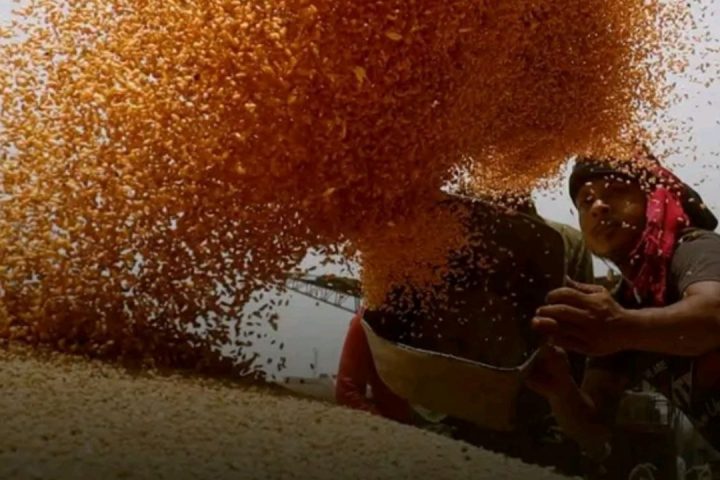
The Bangladesh-Myanmar border has long been a drug trafficking corridor, and that hasn’t changed. The UN Office on Drugs and Crime has tracked a steady westward flow of methamphetamine yaba tablets, especially moving out of Myanmar and into South Asia. Bangladesh’s southeastern border sits right in the path of that traffic. What has changed is the product mix. UNODC has flagged the appearance of crystalline methamphetamine alongside the more familiar yaba pills, which suggests traffickers are diversifying rather than slowing down. Myanmar still shows up in the agency’s 2026 World Drug Report as one of Asia’s key source countries for meth trafficking.
Trafficking Is Where Desperation Turns Into Profit
If there’s one part of this story that’s hardest to sit with, it’s human trafficking. Families with little access to education, work, or freedom of movement are easy targets for smugglers offering the things that displacement has taken away a job, a marriage, a shot at a better life somewhere else. The sea routes toward Southeast Asia have proven especially deadly, with refugees facing ransom demands, abuse, and sometimes death along the way. Reports of people attempting these crossings out of Bangladesh have picked up again recently. Women and children bear the worst of it. Earlier U.S. government reporting documented Rohingya trafficking victims being pushed into forced labor and other forms of exploitation, made worse by movement restrictions and reporting systems too weak to catch what was happening.
Weapons and the Wider Security Picture
The arms side of this is tangled up with what’s happening across the border more broadly. As fighting inside Myanmar drags on and armed factions fight over territory, people, and weapons, the border communities on both sides absorb more of the fallout, more smuggling, more opportunities for criminal groups to move things and people through. Cox’s Bazar’s location doesn’t help. It sits near major land and sea routes, which means the same networks moving drugs can just as easily be moving weapons, migrants, or all of it at once. Still, it’s worth repeating: this is about criminal networks operating in and around the crisis, not about the refugee population itself. Most people in the camps are exactly what they appear to be civilians trying to survive a situation they didn’t create.
Discover More Stories Worth Your Time
Explore Why Colombia Declared Emergency?
Discover what the powerful earthquake means for Colombia and the latest emergency response.
Check Why Jaya’s Sarees Trend?
Discover why Jaya Ahsan’s elegant saree looks continue captivating fans online.
See Where Hasina’s Crisis Leads?
Explore the accountability debate surrounding Hasina, India, and Bangladesh’s political future.
Find Which Airport Hotels Fit?
Discover convenient hotels near Dhaka Airport for short layovers and overnight stays.
Learn How Rohingya Youth Lead?
Explore how young Rohingya are advancing education and gender equality in refugee camps.
Why It Matters Beyond Cox’s Bazar
None of this stays contained. Drug trafficking feeds addiction and organized crime well beyond the border region. Human trafficking tears families apart and puts women and children directly in harm’s way. Weapons flows make an already fragile border even harder to secure. Meanwhile, Bangladesh is still shouldering an enormous humanitarian load. The UN puts the number of Rohingya refugees in the country at nearly 1.2 million and it’s leaning on international funding just to keep basic services running. The takeaway isn’t complicated, even if the situation is: you can’t separate humanitarian protection from security. Not here. As long as Rohingya refugees are stuck without a real, safe path home and without meaningful opportunities in the meantime, there will be criminal networks looking to profit from people who’ve run out of options.
FAQ
Is the crisis itself causing the drug trafficking?
Not directly. These trafficking routes existed long before the current refugee crisis. But prolonged displacement and a lack of economic opportunity make it easier for criminal groups to operate.
Are Rohingya refugees driving the rise in organised crime?
No, and this distinction matters. Refugees shouldn’t be blamed collectively for crimes committed by individual criminals or networks. Many Rohingya are victims of trafficking themselves, not perpetrators.
Why is Cox’s Bazar particularly exposed?
Its proximity to the Myanmar border and the Bay of Bengal, combined with a large displaced population and difficult terrain, makes it a natural target for smuggling operations.
What drugs are most associated with the region?
Yaba, a methamphetamine tablet, has been tied to Myanmar-Bangladesh trafficking routes for years. UNODC has also noted rising seizures of crystalline methamphetamine.
What actually fixes this?
International agencies and Bangladesh keep pointing to the same answer: a safe, voluntary, and dignified path home for refugees, paired with stronger protections, better law enforcement, and real support for the communities hosting them in the meantime.