Cox’s Bazar has always been Bangladesh’s most visited coastal destination, but 2026 has brought changes significant enough to reshape how people travel there and what they encounter once they arrive.
Between new air and rail connectivity, a sweeping government development plan, and a tighter crackdown on illegal beach encroachment, the town is in the middle of a genuine transformation, even as old safety concerns on the beach itself remain far from resolved.
A Newly International Airport
Cox’s Bazar Airport was formally upgraded to international status through a government gazette notification, making it Bangladesh’s fourth international airport after Dhaka, Sylhet, and Chattogram. A separate runway expansion project, extending the airstrip from 6,775 feet to 9,000 feet to accommodate wide-body aircraft, is expected to be completed by December 2026, with part of the extension built out over the sea.
Officials have said the upgrade is intended to draw international tourists directly to the region, support exports of perishable goods, and position Cox’s Bazar as a regional aviation hub, rather than requiring every foreign visitor to connect through Dhaka first.
Rail Connectivity Has Changed The Journey
The 100-kilometre Dohazari to Cox’s Bazar railway line, which opened in late 2023, has already begun reshaping how domestic travellers reach the coast, offering the first direct rail connection from Dhaka and Chattogram to the southeast. The line’s oyster-shaped station at Hajipara has become something of a landmark in its own right, and the government has floated plans to introduce Wi-Fi on trains serving the route.
Local business owners in the area have reported land prices rising sharply since the railway’s opening, driven partly by hotel and motel operators moving to acquire property near the station in anticipation of more visitors arriving by rail rather than road.
A Government Master Plan For The Whole District
In July 2026, Bangladesh’s Finance and Planning Minister chaired a high-level meeting to review an integrated development action plan for Cox’s Bazar district, with the Civil Aviation and Tourism Minister describing an ambition to transform the area into a major regional tourism hub through improved connectivity and an eco-tourism-based approach.
The plan includes modernising government-run Parjatan Corporation hotels, developing international-standard hotels on state-owned land, expanding tourist information centres, and installing broader CCTV coverage at popular sites.
A separate island-based tourism economic zone is being developed at Sabrang in Teknaf, following a land lease agreement between the Bangladesh Economic Zone Authority and a Singapore-based development group, aimed specifically at drawing in foreign tourists and investors.
A Crackdown On Illegal Beach Structures
Alongside the infrastructure push, authorities have moved more aggressively against illegal commercial encroachment on the beach itself. In March 2026, the Home Minister directed local authorities to clear beach dunes of unauthorised structures, prompting an eviction drive that removed more than a thousand temporary shops and structures over four days.
The district administration has since gone further, cancelling all temporary permits for beach dune shops entirely and announcing that no new temporary cards will be issued going forward, citing repeated non-compliance with permit conditions and directives from the High Court and the Department of Environment.
The moves follow a long history of unresolved tension in the area, which was designated an Ecologically Critical Area back in 1999, with construction banned within 300 metres of the tidal zone, a restriction that has been only unevenly enforced over the years.
What Travellers Should Know About Beach Safety
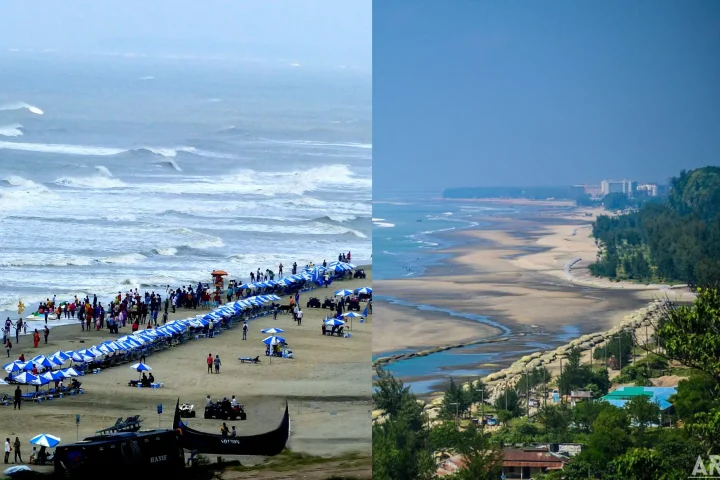
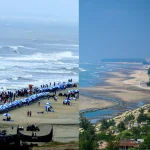
Despite the wave of new development, basic safety infrastructure on the beach has struggled to keep pace with visitor numbers. On peak holiday periods, tens of thousands of tourists can be on the beach at once, while lifeguard coverage remains limited to a small number of designated points along the 120-kilometre coastline, with red and red-yellow flags used to mark safe and unsafe swimming zones based on tidal conditions.
Drowning incidents remain a recurring problem, particularly when visitors swim outside marked zones or during periods of strong rip currents, which can form unpredictably along different stretches of the beach depending on tide and weather. Visitors are strongly advised to swim only in actively monitored, flagged areas, avoid isolated stretches of beach even if they look calm, and treat sightseeing activities like sunset walks or horse rides as separate from any decision to enter the water.
Discover More Stories Worth Your Time
Explore What Follows Shahabuddin’s Exit?
Discover how Bangladesh’s leadership could change after the president’s departure.
Check Why Assault Case Filed?
Explore the allegations involving actress Snigdha Chowdhury and the Ashiyan chairman.
See How Microplastics Spread?
Discover why Bangladesh’s rivers, salt pans, and fish markets are raising concern.
Find Why Wetlands Face Threat?
Explore how invasive turtles are disrupting biodiversity in Dhaka’s waterways.
Learn Why Army Took Custody?
Discover the latest developments in the Brig Gen Miftah Uddin tribunal case.
Where To Stay
Cox’s Bazar’s hotel landscape now spans everything from budget guesthouses to five-star international properties, with more than 600 multistorey hotels and resorts across the district, most concentrated along the main Kolatoli and Laboni beach stretches near the town centre.
Travellers seeking a quieter experience increasingly look toward Inani Beach, roughly 30 kilometres south of the main town, where larger resort properties offer more secluded beach access away from the crowds. Booking early during winter months, the region’s peak tourist season, remains essential given how quickly popular properties fill up.
Planning A Trip In 2026
For travellers weighing a visit this year, the practical upshot of all these changes is a destination in transition: easier to reach by air and rail than ever before, backed by a government development plan aimed at professionalising its tourism infrastructure, but still carrying real safety risks that predate any of this year’s changes.
Checking current beach conditions and posted safety flags on arrival, staying within lifeguard-monitored zones, and booking accommodation well ahead of peak season remain the most practical steps any visitor can take, regardless of how much the airport, railway, or master plan continues to evolve around them.